Clear Sky Science · en
Olakwa Ndani? commodity fetishism and resistance in Evison Matafale’s reggae music
Why This Song Still Matters
What can a late‑1990s reggae song from Malawi tell us about today’s world of designer brands, smartphones, and social media? This article argues: quite a lot. It explores how Evison Matafale’s track “Olakwa Ndani?” (“Who is to blame?”) uses music and spirituality to question why poverty and injustice persist even as shiny consumer goods flood African cities. By weaving together Karl Marx’s ideas about how objects hide the human stories behind them, and Rastafarian images of a corrupt global order called Babylon, the paper shows how one song becomes a powerful lens on everyday life in postcolonial Africa.

Things We Buy, Stories We Don’t See
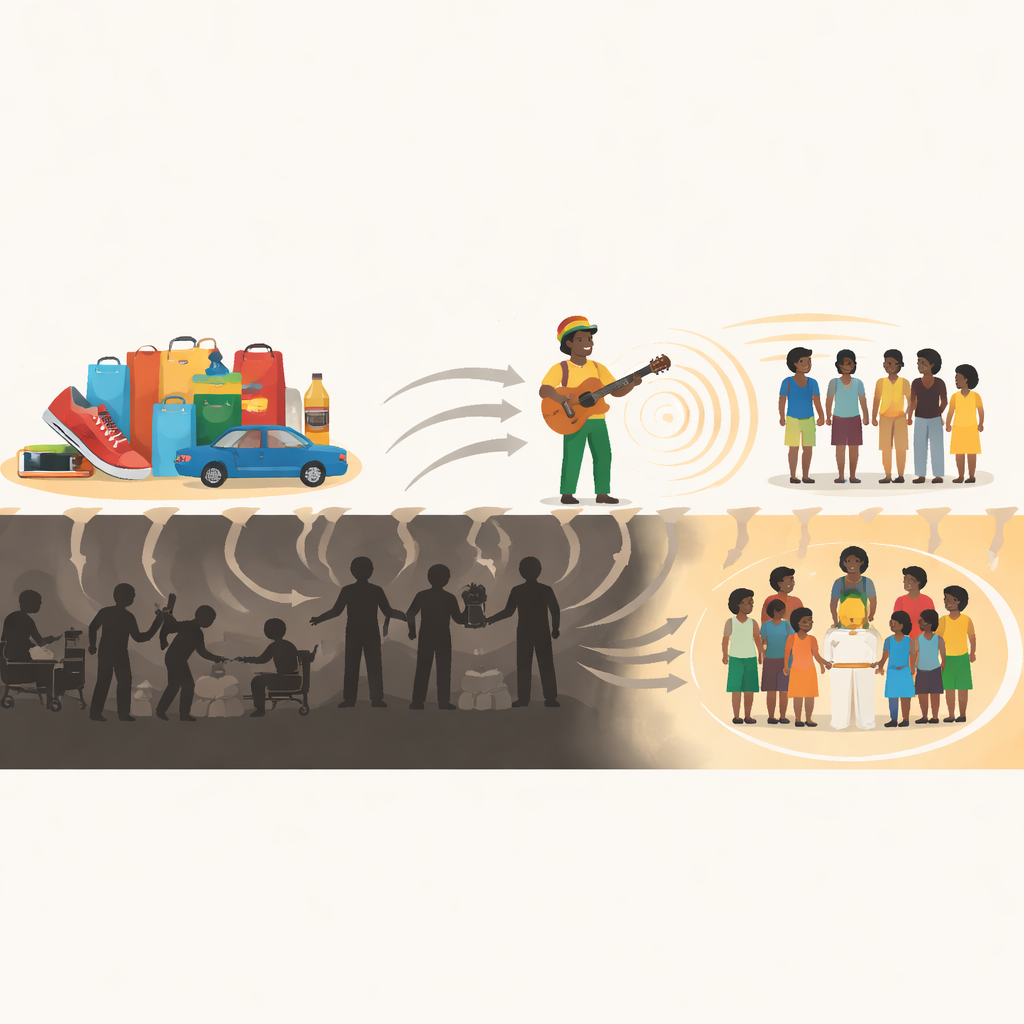
At the heart of the article is Marx’s concept of “commodity fetishism,” the idea that we treat products as if they have magic value in themselves while forgetting the workers, power struggles, and exploitation that make them possible. The author argues that this concept still helps explain life in African cities, but it needs adapting. In Malawi and many other countries, imported clothes, gadgets, and cars are more than practical items: they act as badges of modernity and success, especially for urban youth. Satellite TV, the internet, and global pop culture feed desires that are often far removed from local wages and working conditions. Rather than hiding factory floors alone, mystification in this setting also hides unfair global trade, corrupt local leadership, and the emotional strain of never “measuring up.”
Music as a Voice of Everyday Struggle
The paper places Matafale in a long African tradition where music is both entertainment and social commentary. From Fela Kuti’s Afrobeat protests in Nigeria to Lucky Dube’s reggae critiques in South Africa and Bobi Wine’s activism in Uganda, popular musicians have challenged dictatorships, inequality, and broken promises of democracy. In Malawi, where formal politics can feel distant or untrustworthy, songs become an unofficial newspaper and parliament. Lyrics draw on Christian and Rastafarian language familiar to ordinary listeners, turning familiar rhythms and phrases into sharp questions about who benefits from economic reforms and who pays the price.
A Song That Refuses Easy Answers
“Olakwa Ndani?” is read as a layered story about walking through town, feeling poor and alone, then realizing that many others are worse off—without shelter, clothing, or basic security. The repeated question “Who is to blame?” never receives a simple answer. Instead, the song gently pushes listeners away from blaming themselves or isolated “bad apples” and toward seeing broader patterns: structural poverty after harsh economic reforms, the lure of imported goods that few can afford, and a political system in which bribes are often needed for basic services. By mixing personal emotion, collective suffering, and spiritual despair, Matafale shows how poverty is at once material and moral: it damages bodies, relationships, and a sense of dignity.
Faith, Babylon, and Quiet Revolt
The article also traces how Rastafarian ideas deepen this critique. Babylon stands for a global order that prizes profit over people, glorifies consumption, and erodes local cultures. Zion represents a hoped‑for community of justice, unity, and peace. Matafale’s reggae, performed with his band the Black Missionaries, draws on this imagery to connect Malawian hardships to wider African and diasporic struggles. As digital platforms now intensify the chase for Western brands and lifestyles, his warnings feel newly relevant. Young Malawians may scroll through glamorous online worlds while facing unemployment, precarious work, or the dangerous dream of migration, yet the song invites them to see these pressures as linked, not as private failures.
What the Paper Leaves Us With
For a general reader, the article’s message is that a single reggae song can help us see how the things we desire—shoes, phones, cars, even the idea of life abroad—are tied to hidden systems of power. By joining Marx’s critique of how goods disguise exploitation with Rastafarian visions of Babylon and Zion, the paper shows that theory does not live only in books: it also lives in drum patterns, street Chichewa, and the uneasy feeling that something is wrong when luxury gleams alongside extreme poverty. Matafale’s unanswered question, “Who is to blame?”, becomes an invitation to look beyond individuals and confront the wider economic and spiritual forces that shape suffering—and to imagine, together, more just ways of living.
Citation: Kainja, J. Olakwa Ndani? commodity fetishism and resistance in Evison Matafale’s reggae music. Humanit Soc Sci Commun 13, 516 (2026). https://doi.org/10.1057/s41599-026-06879-9
Keywords: reggae, Malawi, commodity fetishism, Rastafari, African politics