Clear Sky Science · en
Exposure effects to China’s digital diplomacy in Africa: perceptions, engagement, and the role of education as a soft power tool
Why this story matters
Across Africa, more and more political messages now arrive not through embassies or state visits, but through smartphones. This study asks what happens when African social media users regularly see China’s official messages about its role on the continent. Focusing on Burundian followers of Chinese diplomatic accounts on Twitter/X, the researchers explore how these online campaigns shape people’s views of China and whether studying in China gives those messages extra sway.
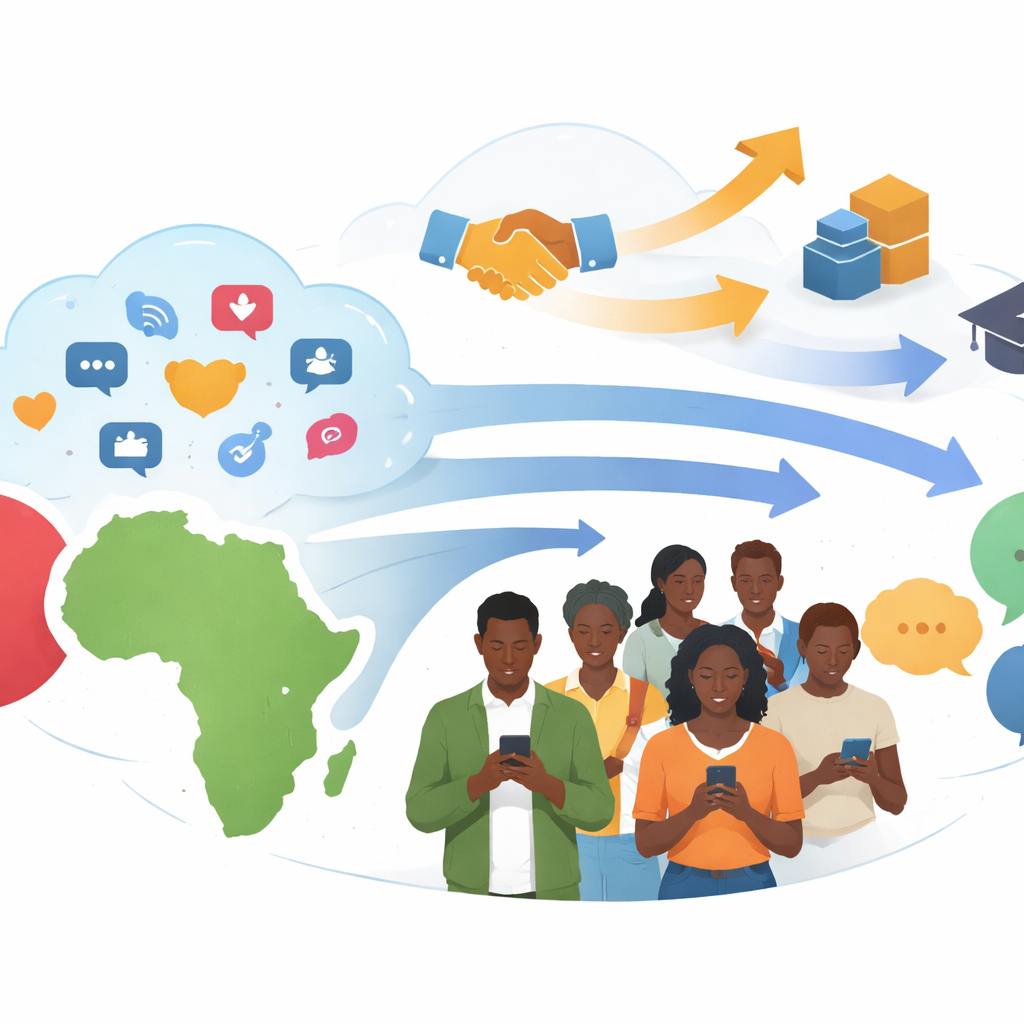
How China talks to Africa online
The authors began by examining 1,681 English-language tweets posted by the African Affairs Department of China’s Ministry of Foreign Affairs between late 2020 and early 2022. This account is the ministry’s main voice dedicated to China–Africa relations. By carefully reading and coding each tweet, the team grouped the messages into major themes such as international relations, economic partnership, health, values, and education. This allowed them to see what China chose to spotlight in its digital outreach to African audiences, and what it mentioned only rarely.
A focus on partnership, not security
The tweet analysis showed a clear pattern. Nearly half of all posts centered on international relations and economic cooperation, highlighting forums, high-level meetings, trade, investment, and development projects. Another large share emphasized COVID-19 assistance and vaccines, China’s political and cultural values, and cooperation in education, technology, and innovation. In contrast, security and climate issues appeared only in a small fraction of tweets. The overall tone presented China as a respectful partner and defender of African sovereignty, stressing shared histories of colonialism and a mutual commitment to non-interference—positioning China as a kind of “decolonial” ally rather than as a rival power.
What Burundian followers think and do
To see how these messages land with real people, the researchers surveyed 308 Burundian adults who followed at least one Chinese diplomatic Twitter/X account and who had some form of Chinese educational experience, either in China or at a Confucius Institute in Burundi. Respondents reported how often they visited or searched for content from these accounts, how they felt about China’s digital diplomacy, and how frequently they liked, shared, or replied to that content. The analysis found that greater exposure to China’s tweets was linked to more positive perceptions of China’s role in Africa and higher levels of active engagement, such as liking and retweeting posts. In other words, the more often Burundian users encountered this digital diplomacy, the better they tended to feel about it and the more they interacted with it.

Education’s soft power: direct but limited
The study then examined education as a “soft power” tool—an attractive influence based on ideas and experiences rather than pressure or payments. Many respondents had studied in China or learned Chinese language and culture locally. These educational ties, the researchers found, had a direct and positive effect: people with richer Chinese educational experiences viewed China’s digital diplomacy more favorably and were more likely to engage with it online. However, when the authors tested whether education changed the strength of the link between exposure and outcomes, the effect was weak and statistically insignificant. Education boosted positive views and engagement on its own, but it did not fundamentally alter how additional exposure to Chinese tweets translated into those outcomes.
What the findings mean
For a lay reader, the study’s message is straightforward: China’s official social media outreach in Africa appears to work, at least among Burundian followers. By consistently stressing partnership, development, and respect for African sovereignty, China’s digital diplomacy helps build more favorable views and encourages people to interact with its content. Educational programs, scholarships, and language institutes further improve attitudes and activity online, but they do so as a separate source of goodwill rather than as a special amplifier of every tweet. Together, these results show how carefully crafted online messages and long-term educational ties can quietly shape how African audiences see China in the age of digital diplomacy.
Citation: Vincent, M., Vu, D.H.A.T., Xu, M. et al. Exposure effects to China’s digital diplomacy in Africa: perceptions, engagement, and the role of education as a soft power tool. Humanit Soc Sci Commun 13, 536 (2026). https://doi.org/10.1057/s41599-026-06853-5
Keywords: digital diplomacy, China–Africa relations, social media, soft power, Burundi