Clear Sky Science · en
Public engagement and climate change: exploring the role of hairdressers as everyday influencers
A Surprising Place for Climate Conversations
Many of us chat to our hairdresser about holidays, families, and everyday life. This paper asks a simple but powerful question: what if those easy-going conversations also helped us tackle climate change? By looking closely at salons across the United Kingdom and Ireland, the researchers show that hairdressers are not just stylists—they can also be trusted guides who quietly shape how people think and act on environmental issues in their daily routines.
The Salon as a Social Living Room
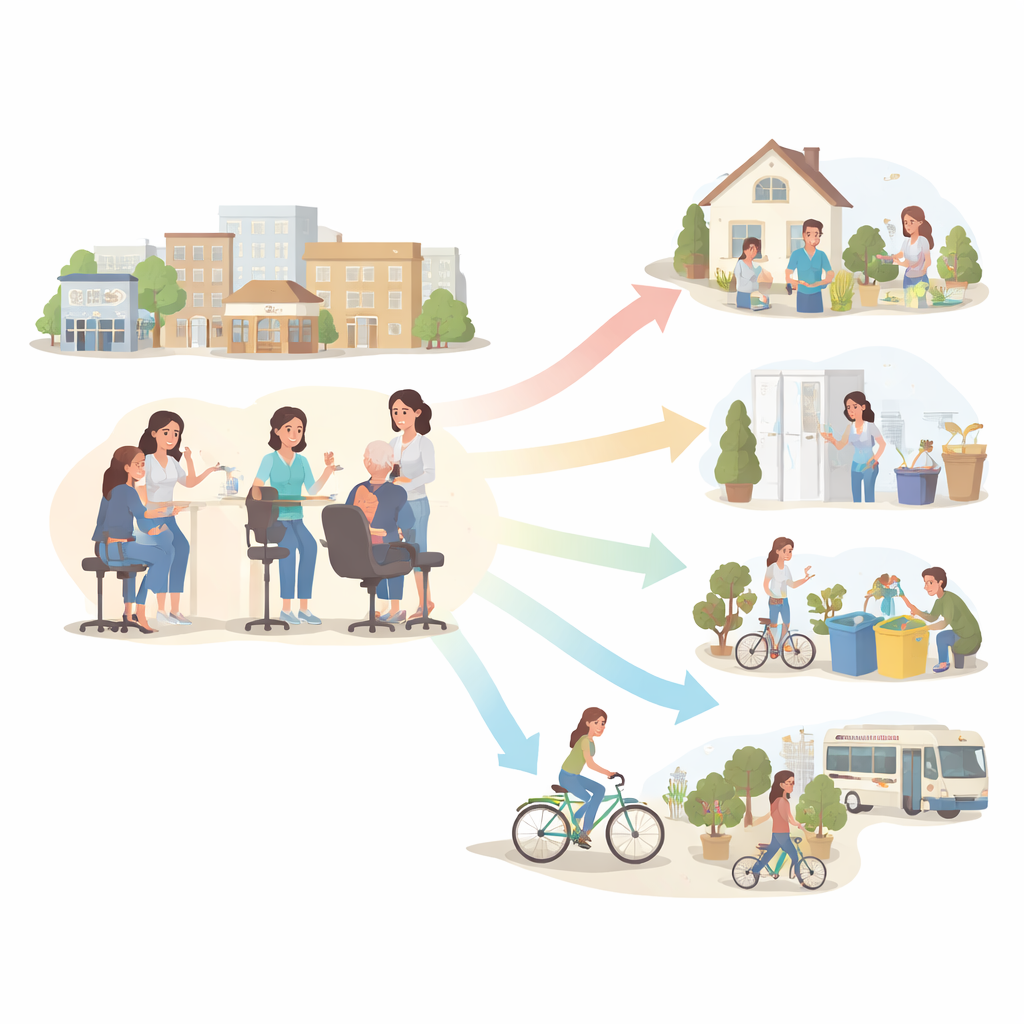
Hair salons turn out to be unusual social spaces. People return regularly, often for years, and often see the same stylist each time. Appointments last long enough for more than small talk, and the setting is relaxed and familiar. Salon owners described knowing whole families, sometimes across three or four generations. Clients frequently treat hairdressers as confidantes, sharing worries and life events in what feels like a safe, friendly “third place” away from home and work. This steady stream of face‑to‑face contact gives hairdressers a rare opportunity: they spend focused time with a broad cross‑section of the public who already trust them.
Reading the Room and Guiding the Chat
The study found that hairdressers are highly skilled communicators. Through experience, they learn to “read” body language, pick up on clues such as clothing and interests, and sense what each person is comfortable discussing. Many described gently “fishing” for topics to find common ground, then steering the conversation accordingly. When it comes to climate and sustainability, stylists rarely launch into lectures. Instead, they weave these subjects into everyday talk—linking weather to climate, chatting about travel, food, or energy bills, or simply explaining why the salon recycles foil or uses refillable products. If a client seems uninterested or uneasy, they quickly shift the topic, protecting the relationship while keeping the door open for future discussions.
Objects That Spark Greener Choices
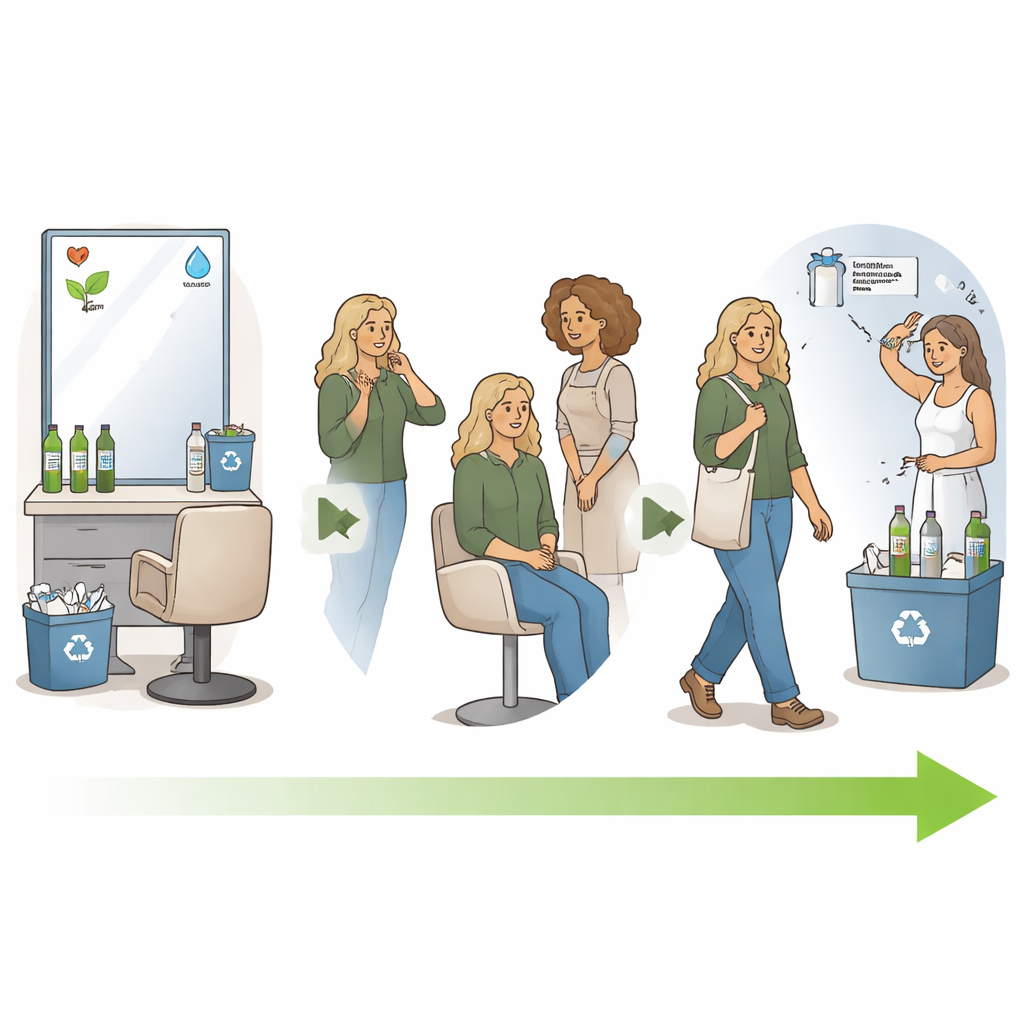
Physical features in salons are powerful conversation starters. Many participating salons already used visible signs of greener practice: unusual towels and gowns, refill stations, recycling bins for hair and metals, plants, and awards on the wall. The researchers also tested “Mirror Talkers”—eye‑catching stickers placed on mirrors that highlighted simple eco‑tips for haircare and invited clients to scan a code for more information. These prompts made it easy for either stylist or client to begin talking about hot water use, product choices, or waste. Surveys showed that most clients enjoyed these chats and over a quarter said they learned something new. Nearly three‑quarters reported that they were likely to change at least one aspect of their hair routine afterwards, such as using less hot water or trying lower‑impact products.
Everyday Influence Beyond the Salon Chair
Salon owners reported many examples of influence reaching far beyond shampoos and styling. Some clients started refilling bottles instead of buying new plastic, switched to different toilet paper or cleaning products after seeing what the salon used, or reconsidered how long they spent in the shower. In a few cases, conversations nudged people to rethink bank accounts or diets in light of their environmental impact. Many hairdressers believed they could do even more, but were uncertain how much difference they were already making—despite clear signs that clients noticed and sometimes copied their choices. Training and simple tools like the Mirror Talkers appeared to boost stylists’ confidence to raise these issues without sounding pushy or political.
Why This Matters for Climate Action
The authors argue that hairdressers are “everyday influencers”: ordinary professionals who quietly shape habits and attitudes through countless small interactions. Unlike celebrity campaigns or one‑off public meetings, salon conversations are frequent, personal, and rooted in long‑term relationships. This makes them a promising, and currently underused, way to build support for greener living and climate policy. The paper concludes that if governments and businesses provided better training, information, and recognition, hairdressers could play a much larger part in spreading climate‑friendly ideas—one relaxed conversation, and one haircut, at a time.
Citation: Latter, B., Hampton, S., Baden, D. et al. Public engagement and climate change: exploring the role of hairdressers as everyday influencers. Humanit Soc Sci Commun 13, 415 (2026). https://doi.org/10.1057/s41599-026-06781-4
Keywords: climate conversations, hair salons, public engagement, everyday influencers, sustainable haircare