Clear Sky Science · en
Enriching and mobilizing participation of Whampoa elder residents: a mixed-methods outcome evaluation of an empowerment-based intervention
Older Neighbours as Community Problem-Solvers
Across much of the world, programmes for older people focus on keeping them occupied or caring for their health, but rarely invite them to help shape decisions about their own neighbourhoods. This study follows a project in the Whampoa district of Singapore that did something different: it trained local seniors to study their own community, speak up about what they found, and work with officials to improve daily life. For anyone interested in ageing, cities, or citizen participation, the story shows how older residents can become powerful partners in building better places to grow old.
From Quiet Recipients to Active Citizens
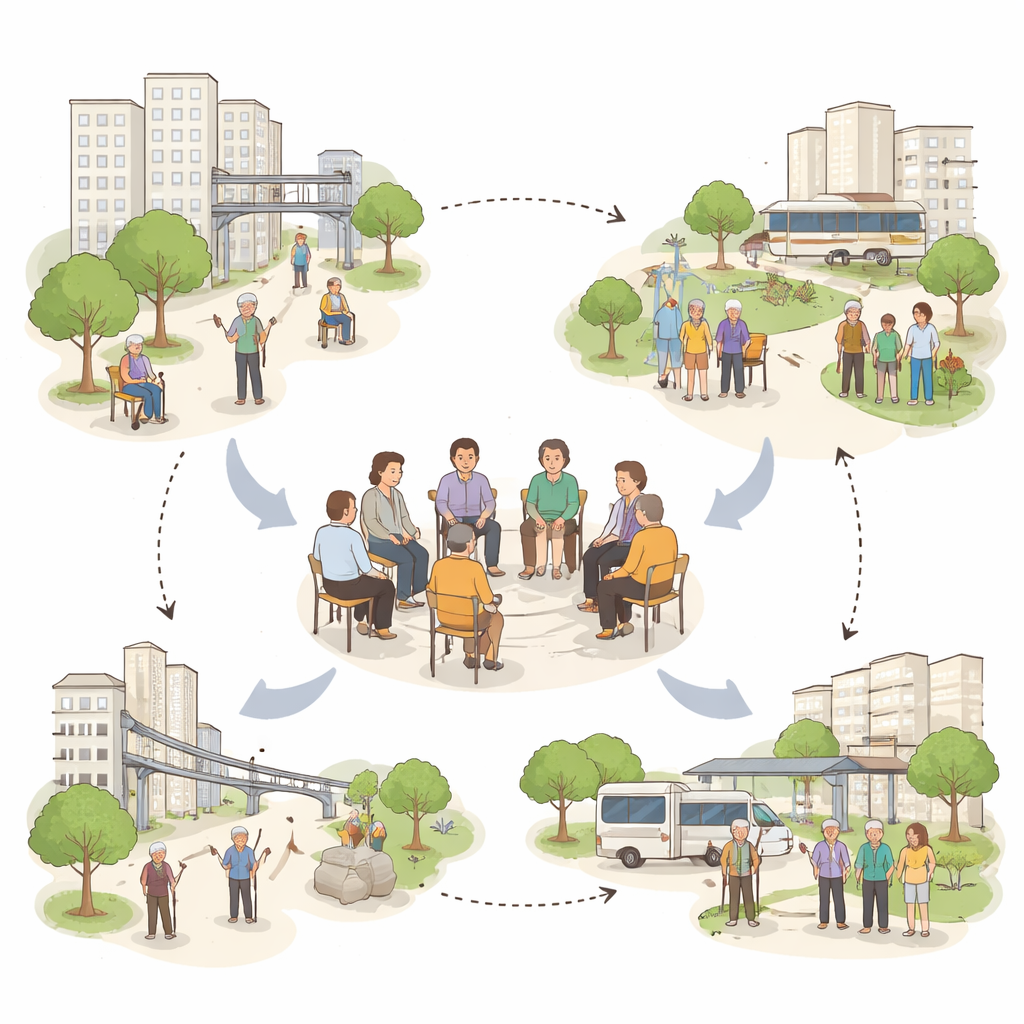
In Singapore, activities for seniors tend to revolve around services and recreation, leaving decisions about housing, transport and services to professionals. The EMPOWER programme, run from 2019 to 2022, set out to change that pattern in one housing estate. Organisers invited residents aged 50 and above to join a series of gatherings where they could reflect on their own lives, learn basic research and communication skills, and discuss what mattered most for ageing well in their neighbourhood. Instead of treating them as passive beneficiaries, the project framed them as experts on their own experience and as potential community advocates.
Learning to Listen, Ask, and Design Solutions
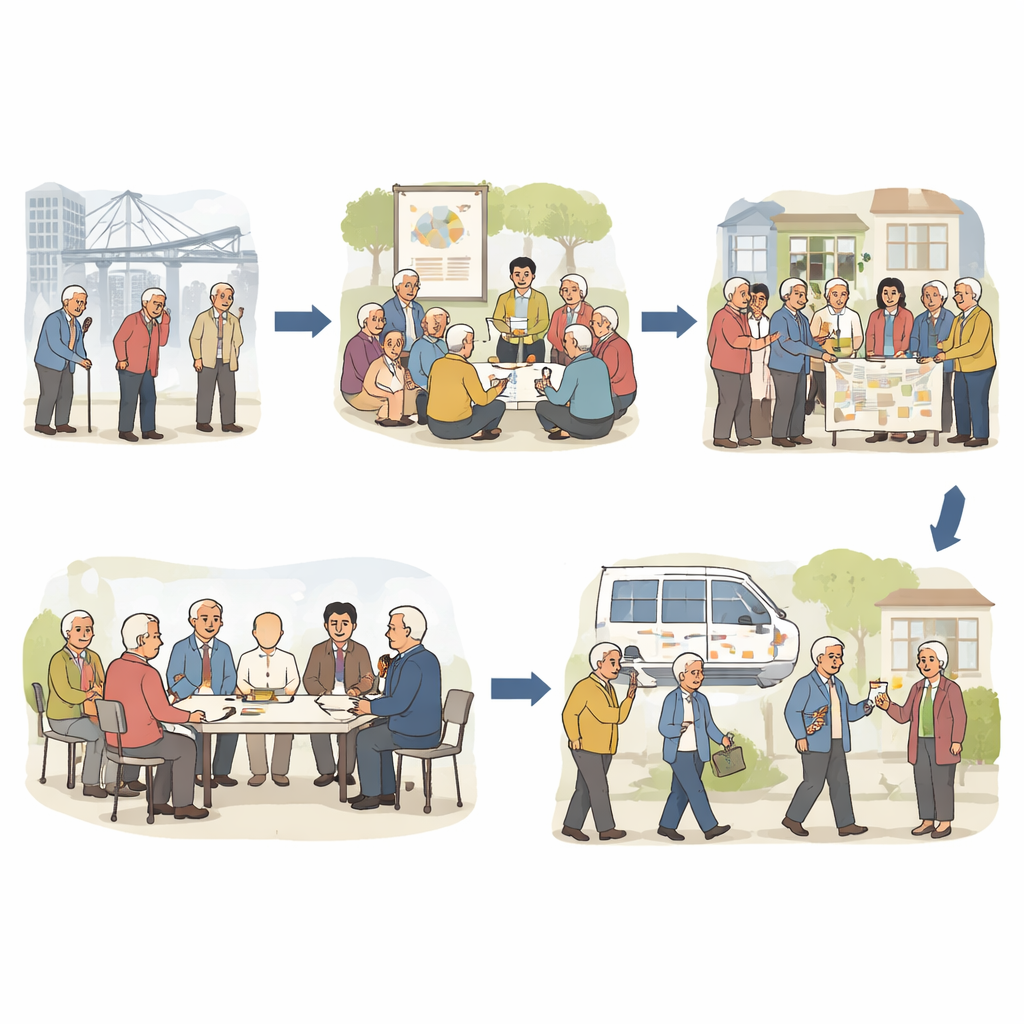
The programme unfolded in several stages. First, “campfire” sessions offered training in simple interviewing, listening, and digital skills, so participants could comfortably talk with other older residents and record their stories. They then went out into Whampoa to conduct more than a hundred interviews about everyday challenges, such as getting to markets and clinics, coping with loneliness, or juggling caregiving and money worries. Back in group workshops, they sorted through these stories, voted on which problems to tackle first, and used design-thinking exercises to imagine practical fixes—from new transport options to ways of reaching isolated neighbours.
Meeting Officials and Making Changes
Next, the seniors prepared to present their ideas to transport planners, local agencies and social service groups. With coaching from facilitators, they practised speaking in front of others, organising their key points, and asking for specific forms of support. Some conversations were encouraging: officials expressed genuine interest, explained how decisions are made, and explored possibilities such as shuttle services for those unable to climb steep overhead bridges. In other cases, the seniors met limits—rules, budgets or professional boundaries that made some of their ideas hard to realise. Even then, they learned how the system works and where community-led efforts could still make a difference.
What Changed for Participants
To understand the impact of EMPOWER, the researchers compared participants with a similar group of older residents who did not join the programme. Surveys before and after, combined with in-depth interviews, showed that those who took part felt noticeably more confident speaking up about community issues. During the COVID-19 pandemic, when many older adults everywhere felt more helpless and cut off, both groups reported some drop in their general sense of control and in belief that neighbours could work together. Yet these declines were smaller among EMPOWER participants, suggesting the programme cushioned some of the pandemic’s emotional and social strain.
Finding Voice in a Tightly Run City
At the same time, participants’ sense that they truly had a say in wider decisions did not rise—and in some cases slipped. The study highlights an important tension: learning to speak and organise does not automatically translate into power to change big systems, especially in a city where planning and budgets remain highly centralised. Still, many seniors described feeling less lonely, more purposeful, and proud of what they had achieved together. They talked about discovering new strength in their peers, realising that government agencies were more open to dialogue than they had assumed, and gaining a clearer, if more realistic, view of what community action can and cannot do.
Why This Matters for Ageing Societies
For readers wondering what ageing could look like in future cities, the Whampoa experience offers a hopeful but grounded picture. It shows that older adults are not only users of services but also potential researchers, designers and advocates for their own communities. With the right support—safe spaces to talk, skills training, small project grants and channels to reach decision-makers—they can help create neighbourhoods that work better for everyone. The authors argue that truly age-friendly policies should move beyond treating seniors as vulnerable recipients and instead build systems that recognise their agency, voice and local knowledge as essential ingredients of healthy urban ageing.
Citation: Lam, J.Y., Mahtani, R., Dutta, M. et al. Enriching and mobilizing participation of Whampoa elder residents: a mixed-methods outcome evaluation of an empowerment-based intervention. Humanit Soc Sci Commun 13, 345 (2026). https://doi.org/10.1057/s41599-026-06586-5
Keywords: older adults, community empowerment, civic participation, age-friendly neighbourhoods, Singapore