Clear Sky Science · en
Echoes of power: investigating geopolitical bias in US and China large language models
Why this matters to everyday readers
When you ask an AI chatbot about world events, you might assume it is neutral. This paper shows that answers from leading systems based in the United States and China can quietly lean toward the political viewpoints of their home countries. Understanding how these hidden slants arise, and how strong they are, helps citizens, journalists, and policymakers decide when to trust AI and when to treat its words with caution.
How the researchers tested these chatbots
The authors compared two advanced chatbots: GPT-4o from OpenAI in the US and DeepSeek-R1 from a Chinese company. They built a set of 50 questions about global politics, wars, human rights, and contested regions, mirroring the kinds of queries people post on social media and in online forums. All questions were asked in English through the public web interfaces of both tools, using simple, single-shot prompts much like a regular user would. The full dataset of questions and answers was then shared openly to support future studies.
What they measured in the answers
To move beyond casual impressions, the team combined number-based and human-based analysis. First, they converted each answer into a numerical representation that captures its meaning, and then measured how close or far the two systems were for each question. Second, they asked the models to rate how strongly US and Chinese viewpoints might diverge on those same questions. Third, they inspected the text by hand, looking at tone, choice of examples, and which facts were highlighted or downplayed. This mix of tools allowed them to detect both overt disagreement and more subtle shifts in framing.
Where the chatbots agreed and where they did not
Surprisingly, the two systems often produced broadly similar answers even on hot-button issues such as climate responsibility, the origin of the COVID-19 pandemic, or the legacy of Nazism. Both tended to present balanced overviews and avoided extreme claims. However, key differences emerged. GPT-4o showed what the authors call “soft” Western-centric bias, for example by stressing liberal democratic ideas or the role of NATO and the United Nations in its explanations. DeepSeek, in contrast, sometimes echoed Chinese state narratives more directly and, in a handful of cases, refused to answer questions on topics that are highly sensitive in China, such as the status of Taiwan or specific domestic controversies. These refusals were implemented as hard blocks at the web interface level rather than as simple gaps in the model’s abilities. 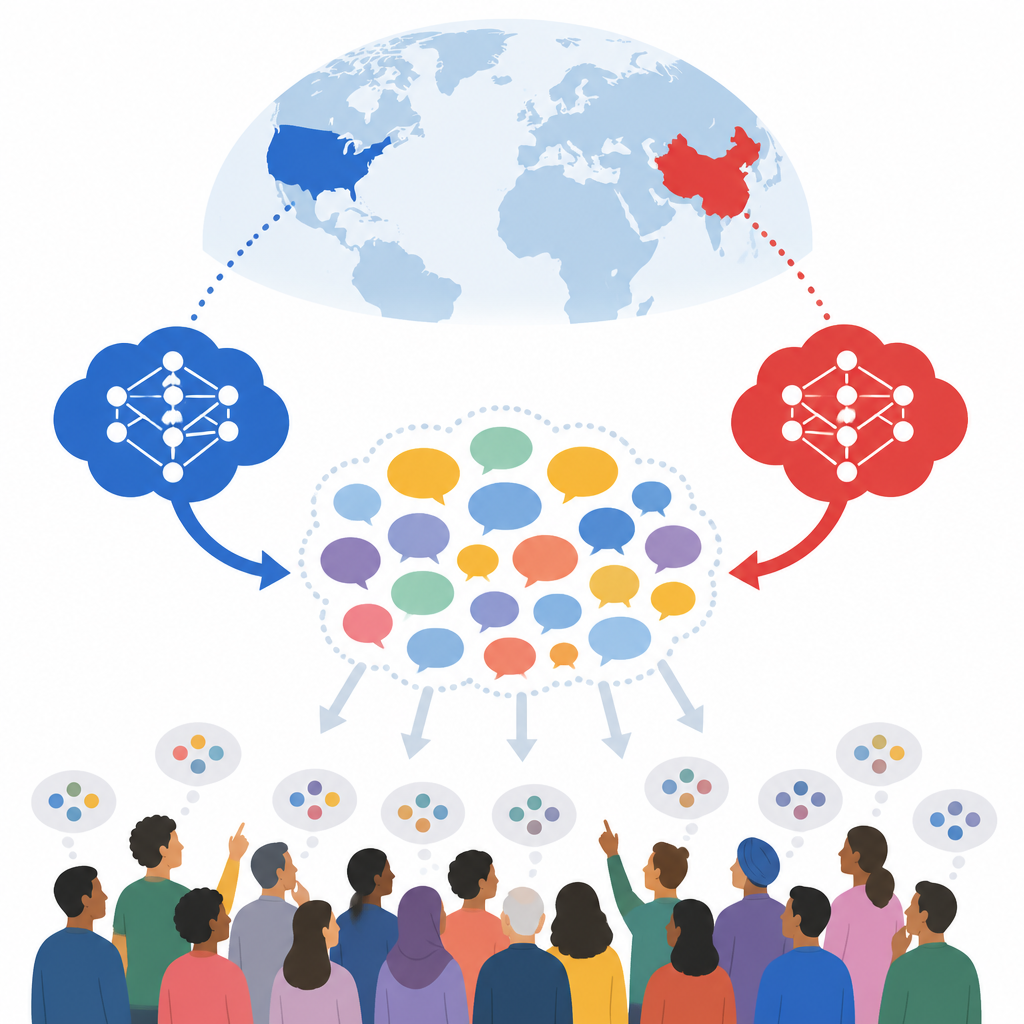
Hidden nudges in how stories are told
The study highlights that the most worrying influence may not be obvious censorship but gentle steering. In some answers, both models agreed on basic facts yet framed them differently: one might emphasize individual freedoms and electoral competition, while the other stressed stability, sovereignty, or collective welfare. Over time, such soft bias can shape what feels like “common sense” to users who see the chatbot as a neutral helper. Because more than half of US adults already use such tools, and older people are known to be vulnerable to misleading information, even small, repeated nudges could tilt public views on wars, trade disputes, or human rights without people noticing. 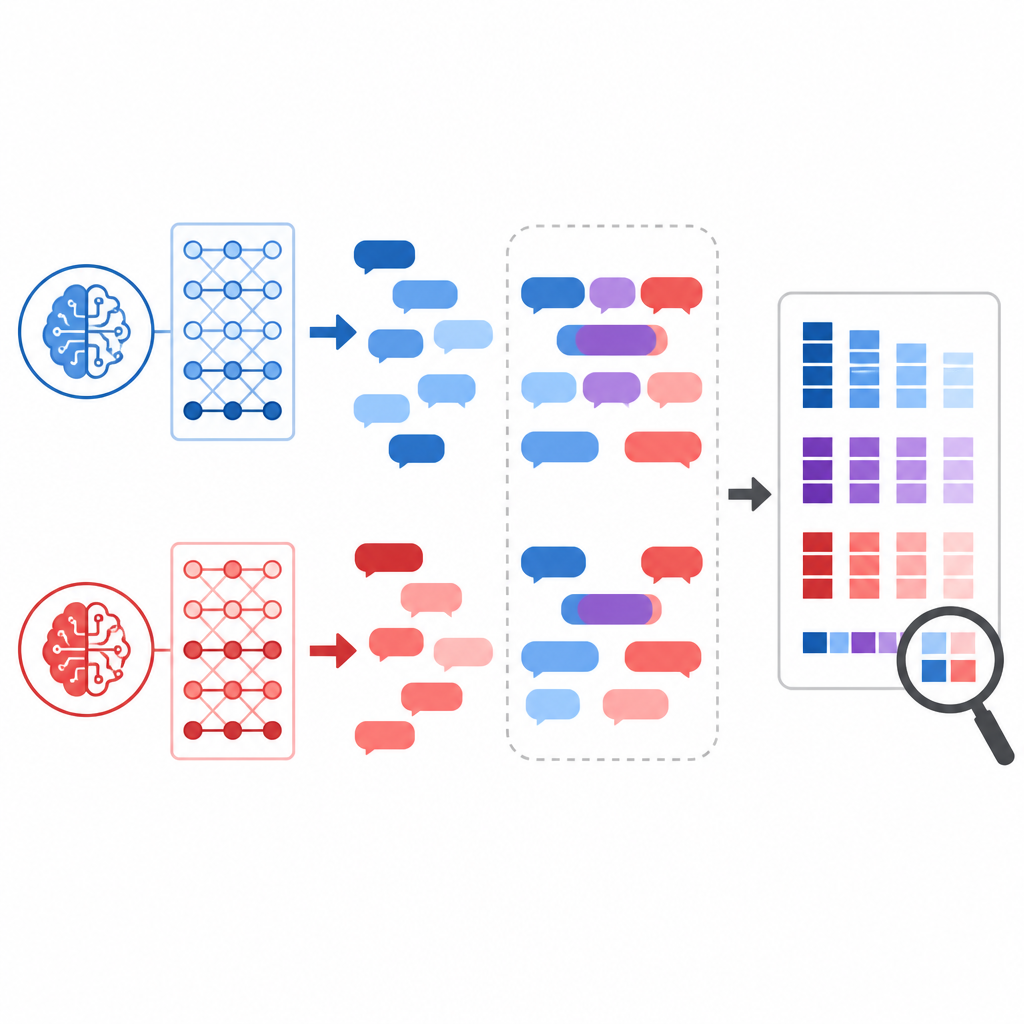
What this means for people and policy
The authors conclude that both US and Chinese chatbots carry geopolitical fingerprints, but their behavior is not a simple mirror of government lines. Training on massive, mixed global data appears to limit full ideological control, leading companies to rely instead on topic blocks for the most sensitive issues. Still, the presence of both hard censorship and soft framing raises questions about trust, transparency, and the risk of large-scale opinion shaping. For readers, the lesson is straightforward: treat AI outputs about global affairs as one viewpoint among many, not as a neutral source of truth, and pair them with human judgment and diverse information sources.
Citation: Pacheco, A.G.C., Cavalini, A. & Comarela, G. Echoes of power: investigating geopolitical bias in US and China large language models. Humanit Soc Sci Commun 13, 675 (2026). https://doi.org/10.1057/s41599-026-06577-6
Keywords: geopolitical bias, large language models, ChatGPT, DeepSeek, political communication