Clear Sky Science · en
Peptide-based targeted drug delivery strategies for osteoarthritis treatment
New Ways to Get Medicines Into Aching Joints
Osteoarthritis is one of the most common causes of joint pain and disability, yet today’s treatments mostly ease symptoms rather than halt the disease. One big reason is surprisingly simple: it is very hard to get drugs to reach and stay in the right parts of the joint. This review explores how tiny molecules called peptides can be custom-designed to ferry medicines deep into diseased joint tissues—potentially turning short-lived pain relief into true, long‑lasting repair.
Why Treating Wear-and-Tear Arthritis Is So Hard
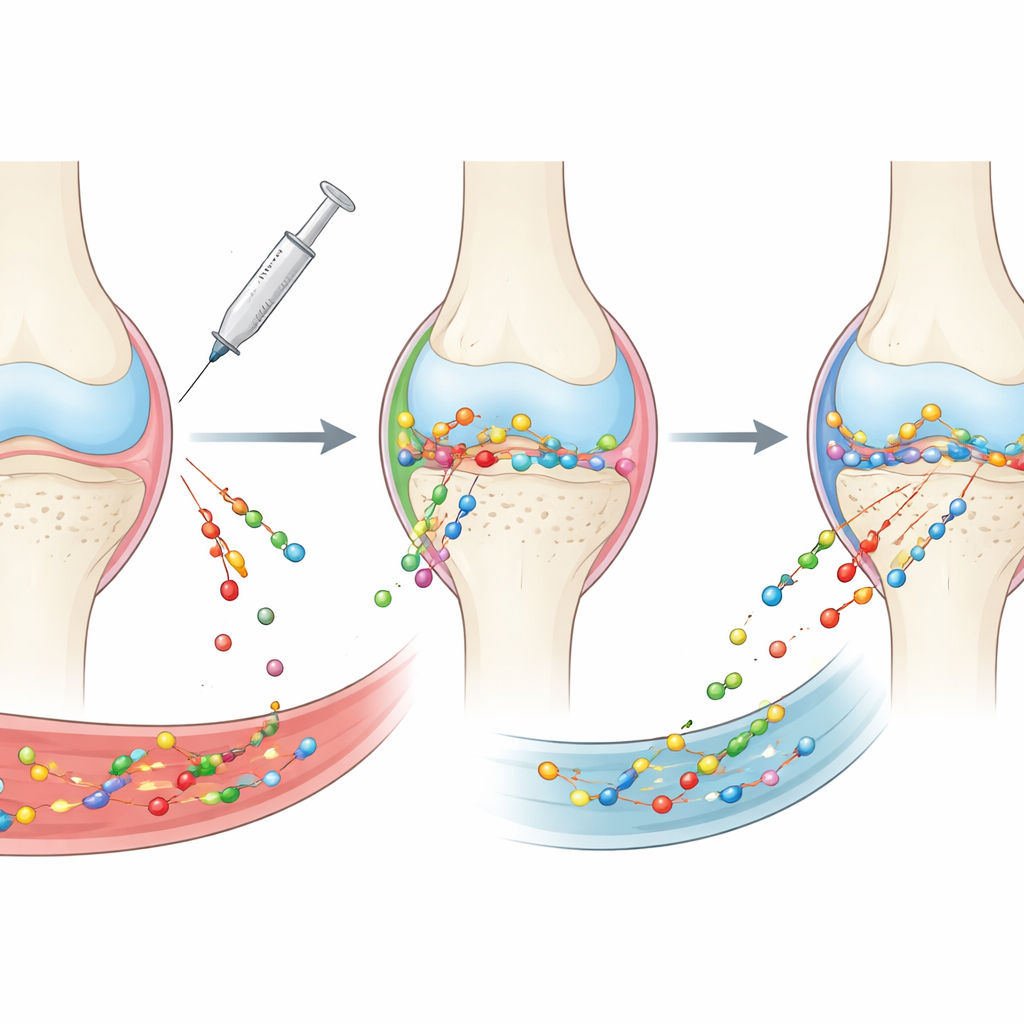
Osteoarthritis is no longer seen as mere “wear and tear” of cartilage. It is a whole‑joint disease involving cartilage, the synovial lining, the underlying bone, ligaments, fat pads, and the fluid that bathes them. Each of these tissues has its own structure and chemistry, which together form a gauntlet of barriers for any drug. Medicines injected into the joint space are swept out quickly by joint fluid and blood vessels, and they struggle to pass through dense, mesh‑like tissue. Drugs given by mouth or vein reach the blood‑rich joint lining and bone, but only a tiny fraction makes it into cartilage and much is lost to the rest of the body. As a result, many promising molecules never reach the places where they are most needed or do not linger there long enough to help.
Peptides as Smart Homing Devices
Peptides—short chains of amino acids—sit between small‑molecule drugs and large antibody therapies. Because scientists can tune their sequence almost one building block at a time, peptides can be made to latch onto very specific targets: a type of collagen, a sugar‑rich gel, a cell surface, or even tiny mineral crystals in bone. The authors describe two main ways such “homing” sequences are found: broad screening of huge peptide libraries, and rational design based on known features of a tissue, such as its overall charge. Once identified, these homing peptides can be glued onto drugs, nanoparticles, or biological carriers like exosomes, steering them toward cartilage, synovium, or subchondral bone and helping them stay put.
Reaching Cartilage, Joint Lining, and Bone
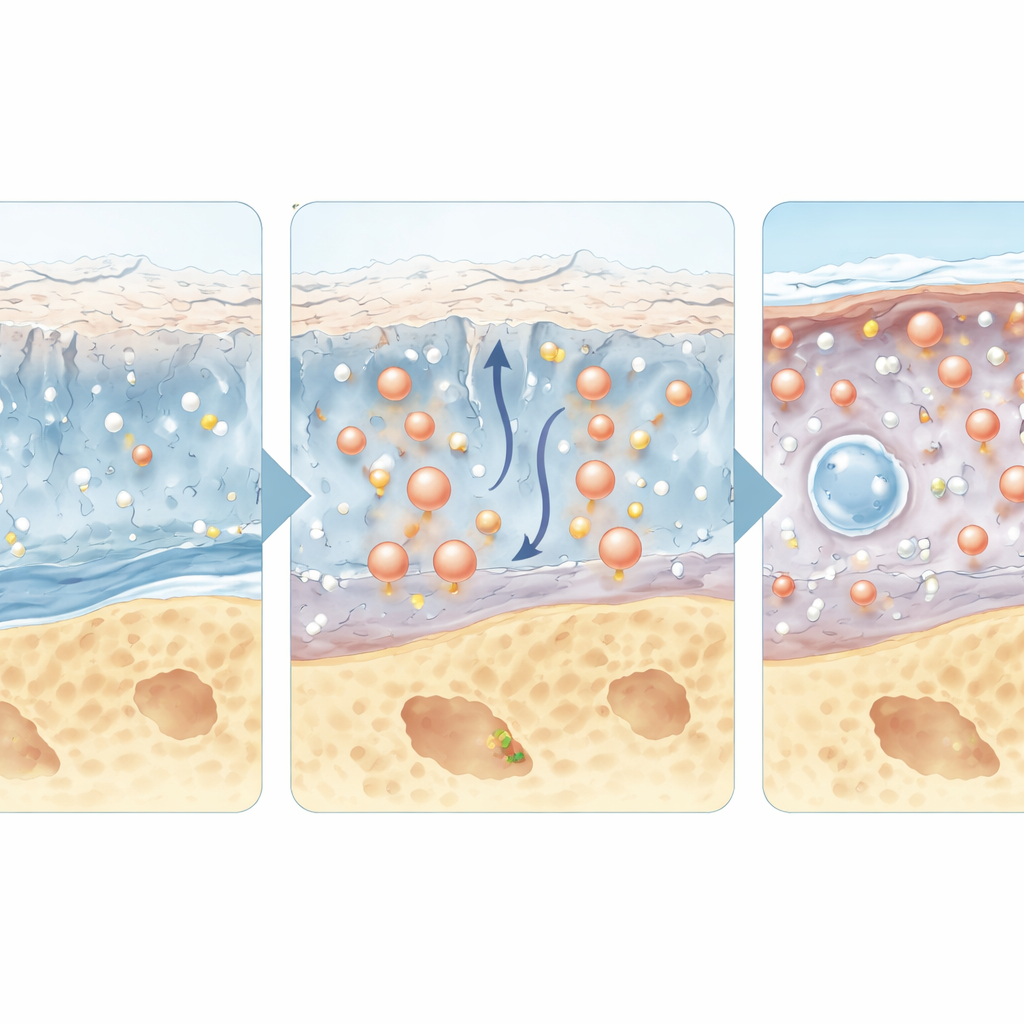
Cartilage, the smooth coating at the ends of bones, is especially hard to reach because it is dense and lacks blood vessels. Here, peptides that recognize cartilage’s main building blocks are useful. Some bind to collagen fibers that give cartilage its strength; others exploit the tissue’s strong negative charge by using positively charged sequences that are pulled in and held like magnets. These carriers can drag in anti‑inflammatory proteins, growth factors that boost repair, imaging agents, or even gene‑carrying exosomes, allowing drugs to penetrate through the full depth of cartilage and remain there for days. Similar strategies extend to the synovial lining, where specific peptides hone in on fibroblast‑like cells, immune cells, or the abnormal new blood vessels that sprout during disease, concentrating drugs that calm inflammation. In the bone just beneath cartilage, peptides can guide therapeutics to bone‑forming cells, bone‑resorbing cells, or the mineral itself, helping rebalance bone remodeling that otherwise worsens osteoarthritis.
Peptides That Are Medicines Themselves
Beyond serving as homing beacons, some peptides act directly as drugs. A growing list of hormone‑like and signaling peptides can dial down inflammation, protect cartilage cells from damage, spur new matrix production, or dampen pain signals from nerves in the joint. For example, modified versions of glucagon‑like peptide‑1, already used to treat diabetes and obesity, can also shield joint tissues from inflammatory stress. Other peptides mimic natural factors that encourage cartilage growth, or block molecules that trigger pain. Many such candidates have shown benefits in animal models, and some build on drugs already in clinical use for other conditions, making them attractive for repurposing to osteoarthritis.
Making Peptide Treatments Last and Testing Them Better
One major hurdle is that peptides are normally short‑lived; enzymes in blood and joint fluid quickly chew them up, and the kidneys clear them from the body. The review outlines several workarounds. Chemists can swap in non‑standard amino acids at vulnerable spots, stitch peptides into loops with disulfide bonds to stiffen their shape, or hitch them to larger partners like polymers, fats, or proteins that slow breakdown and clearance. At the same time, computer‑aided design and simulation are beginning to speed up the search for new stable sequences and to predict how they bind their targets. On the testing side, advanced “joint‑on‑a‑chip” models that combine human cartilage, synovium, bone, and controlled fluid flow may offer a more realistic proving ground than traditional cell cultures or animal studies, helping screen many designs before moving to costly trials.
Toward Smarter, Longer-Lasting Joint Therapies
Taken together, the work surveyed in this article points toward a future where osteoarthritis is treated not just by numbing pain, but by precisely delivering potent therapies to each of the joint’s key tissues and keeping them there long enough to change the course of disease. Custom‑built peptides can act as both address labels and active drugs, navigating the complex geography of the joint while limiting exposure to the rest of the body. As stability engineering, computer‑guided design, and human‑relevant test systems continue to mature, peptide‑based strategies may finally unlock disease‑modifying treatments that restore movement and comfort for people living with osteoarthritis.
Citation: Hakim, B., Zhang, H., Selvadoss, A. et al. Peptide-based targeted drug delivery strategies for osteoarthritis treatment. npj Biomed. Innov. 3, 27 (2026). https://doi.org/10.1038/s44385-026-00082-w
Keywords: osteoarthritis, peptide drug delivery, cartilage targeting, joint inflammation, regenerative medicine