Clear Sky Science · en
Eastern coastal Chinese diet associated with reduced obesity and improved cardiometabolic health
A New Way of Eating from China’s Coast
People around the world are searching for eating habits that are both realistic and protective against obesity and heart disease. This study looks not to a lab-designed meal plan, but to the everyday plates of people living in eastern coastal China. The researchers asked a simple question with far-reaching consequences: could the traditional foods favored in this prosperous, long‑lived region form a pattern of eating that naturally guards against weight gain and serious heart problems?
What Is Special About This Coastal Diet?
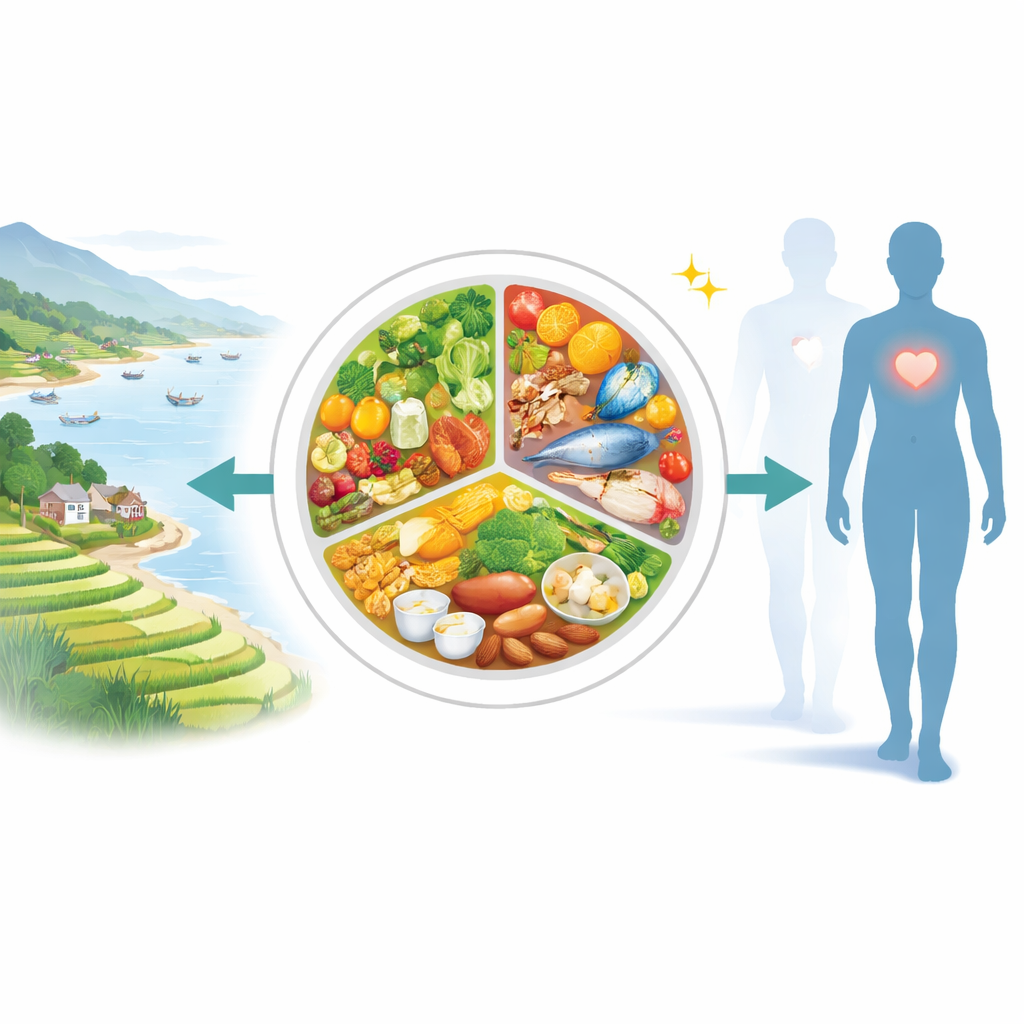
Drawing on detailed food questionnaires from nearly 9,000 adults in Hangzhou and nearby areas, the team used data‑driven clustering to see how people actually ate, without forcing any preset rules. Two clear patterns emerged. One, which they named the "EastDiet," included more vegetables of all colors, fruits, seafood and freshwater fish, whole grains, soy products like tofu, dairy, eggs, nuts, starchy roots and tubers, and edible fungi such as mushrooms. People in this group ate less refined white rice and wheat, fewer fried foods, and less red and processed meat and alcohol. Nutrient analysis showed that, despite lower total calories, this pattern delivered more protein, fiber and many vitamins and minerals than the other common way of eating.
About 46% of participants followed the EastDiet pattern, and they tended to be older, more often women, and more likely to prefer lighter, less salty flavors. These characteristics were repeated in an independent group of almost 2,000 people from Shanghai and Hangzhou, suggesting that the pattern is stable and recognizable, not a statistical fluke. In both groups, the contrast with the alternative pattern was clear: the EastDiet looked more like a balanced, plant‑forward table with modest animal foods, while the other pattern leaned more heavily on refined grains, meat and fried dishes.
Links to Body Fat and Serious Heart Events
The researchers next asked how these eating styles related to people’s bodies and long‑term health. Over a median of 6.3 years of follow‑up, 456 participants suffered a major adverse cardiovascular event—such as stroke, heart attack, coronary procedures, or death. After taking into account age, sex, smoking, exercise, and other factors, those who followed the EastDiet had about a 22% lower risk of such events than those who did not. The protective effect was especially strong in men, while in women the trend was similar but not statistically certain, possibly because women already ate more healthfully overall.
Weight and fat distribution told a similar story. People whose diets matched the EastDiet were less likely to have general obesity and, in particular, less likely to have central obesity—extra fat around the waist, which is especially risky for metabolic and heart health. Detailed body scans showed that EastDiet followers carried less fat around the abdomen and trunk and relatively more on the hips and legs, a pattern considered safer. These relationships were confirmed in the validation cohort, suggesting that the diet consistently aligns with a leaner, more favorable shape.
Inside the Body: Microbes and Molecules
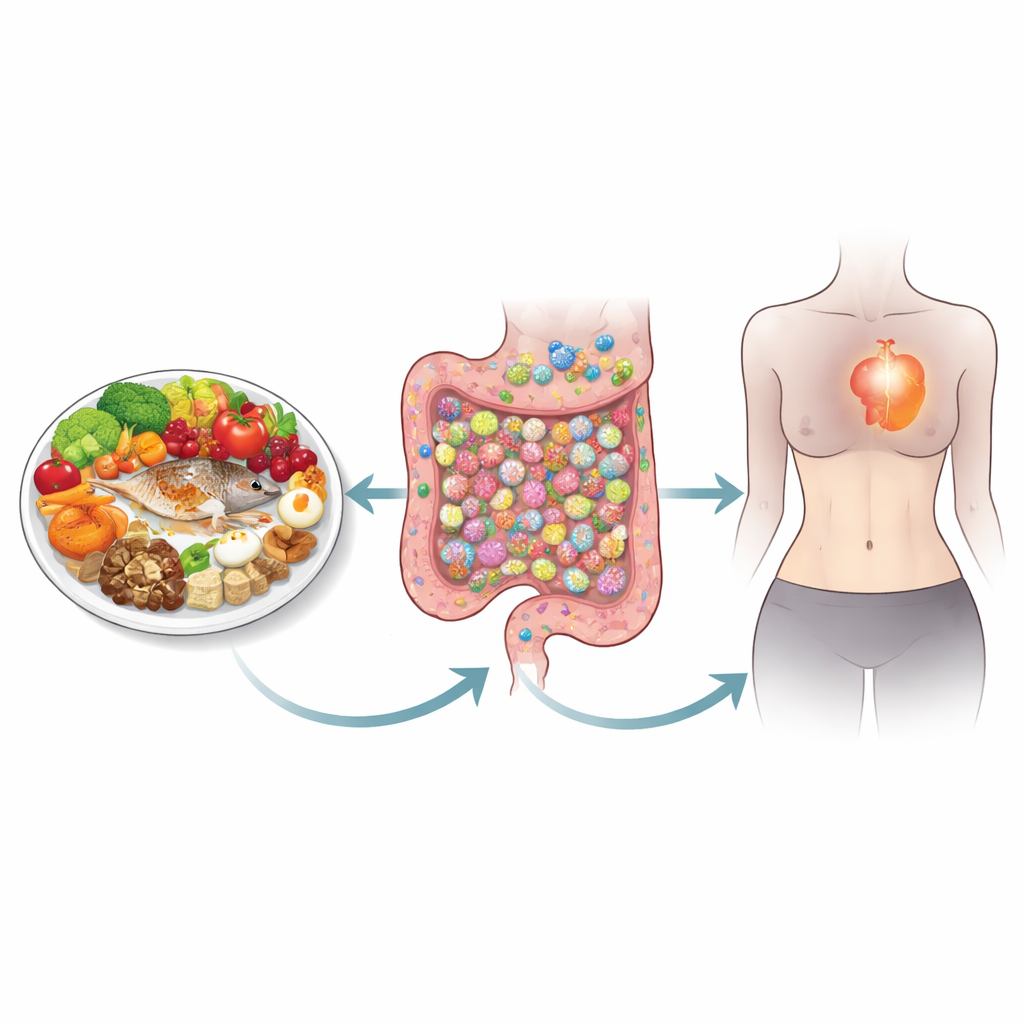
To explore how this way of eating might exert its effects, the team measured hundreds of small molecules in the blood and examined the mix of bacteria in participants’ guts. People adhering to the EastDiet showed higher levels of compounds linked to whole grains, citrus fruits and fish, including healthy fat markers such as DHA. They also had more of certain products made when gut microbes break down plant components, notably a molecule called indole‑3‑propionic acid. Many of these substances were associated with less belly fat and a lower chance of major heart events.
The gut microbiome also shifted with diet. EastDiet followers had more bacteria from groups known to ferment fiber and produce butyrate, a short‑chain fatty acid thought to support gut and metabolic health. These helpful microbes were strongly tied to intakes of tubers, roots and other fiber‑rich foods. When the researchers built a network linking bacteria and blood molecules, they saw that clusters enriched by the EastDiet tended to relate to lower central fat and reduced cardiovascular risk, while clusters depleted by this diet were linked to worse profiles.
What This Means for Everyday Eating
Taken together, the findings suggest that an eating pattern rooted in eastern coastal Chinese traditions—rich in vegetables, fruits, fish and freshwater fish, soy foods, dairy, nuts, whole grains, and starchy roots, while light on refined staples, fried fare and heavy meats—aligns with lower levels of belly fat and fewer serious heart problems. The study cannot prove cause and effect, but it shows that a real‑world, culturally familiar way of eating can match or rival famous patterns like the Mediterranean diet in its potential for cardiometabolic health. For people in China and beyond, the EastDiet offers a practical blueprint: build meals around diverse plant foods and modest portions of fish and other animal products, keep frying and refined grains in check, and let the gut’s microbes help do the rest.
Citation: Shi, Y., Kan, J., Yu, Y. et al. Eastern coastal Chinese diet associated with reduced obesity and improved cardiometabolic health. Nat. Health 1, 416–427 (2026). https://doi.org/10.1038/s44360-026-00079-0
Keywords: EastDiet, cardiometabolic health, gut microbiome, dietary patterns, central obesity