Clear Sky Science · en
Differentiating GM technologies: South African consumer perceptions of water efficient maize for Africa
Why this story about maize and drought matters
For many South Africans, a simple bowl of maize porridge is a daily staple. But as droughts become more frequent and severe, that everyday meal is under threat. This study asks a deceptively simple question with big consequences: if people better understood a new kind of drought-tolerant maize, would they be more willing to eat it—and could that help keep food both available and affordable when rains fail?
Hungry seasons and a changing climate
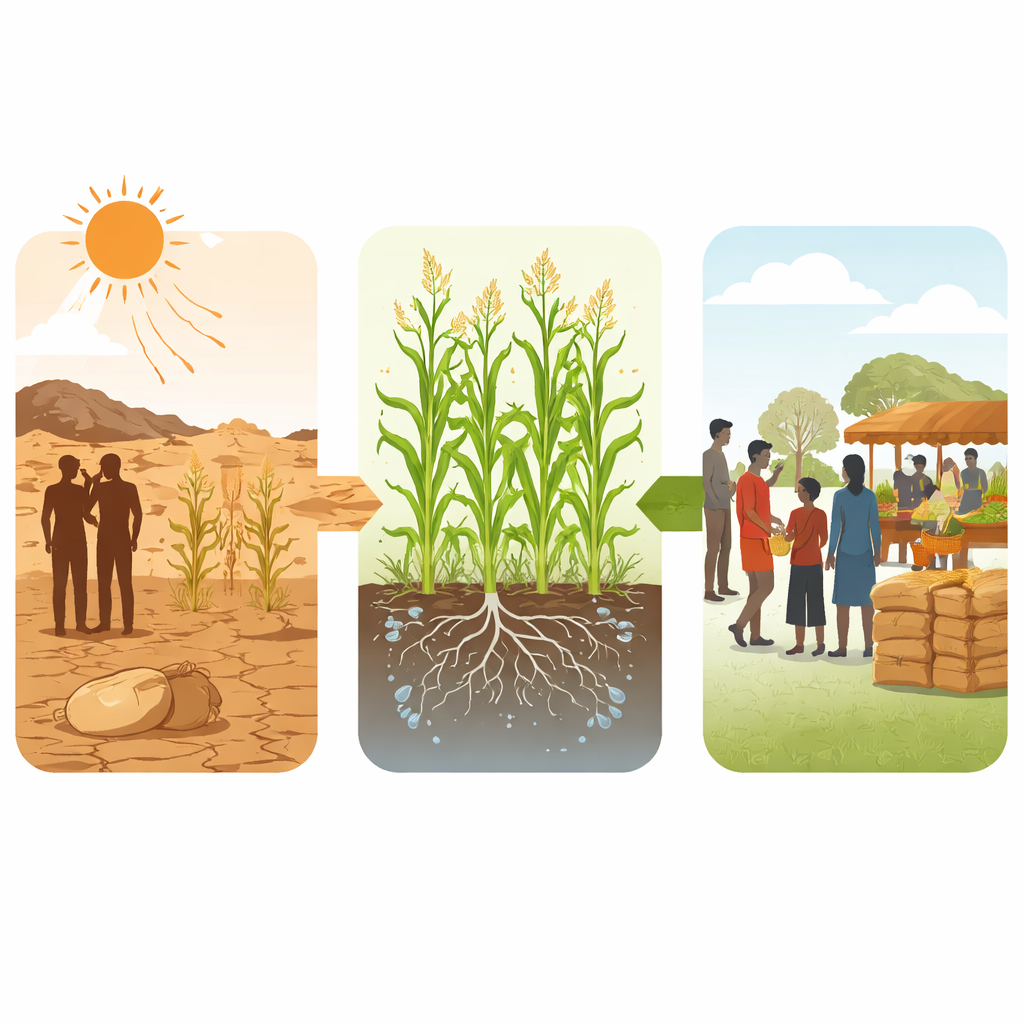
South Africa has been hit by a string of serious droughts that have slashed maize harvests, doubled staple food prices, and pushed millions closer to hunger. White maize, the preferred type for human consumption, is grown mostly under rain-fed conditions and is difficult to replace with imports because most of the world grows and trades yellow maize, used mainly for animal feed. When drought strikes, farmers lose crops, prices soar, and poorer households are often forced to cut back on food. Against this backdrop, any technology that can help maize survive with less water has potentially enormous social importance.
A new kind of maize and a court battle
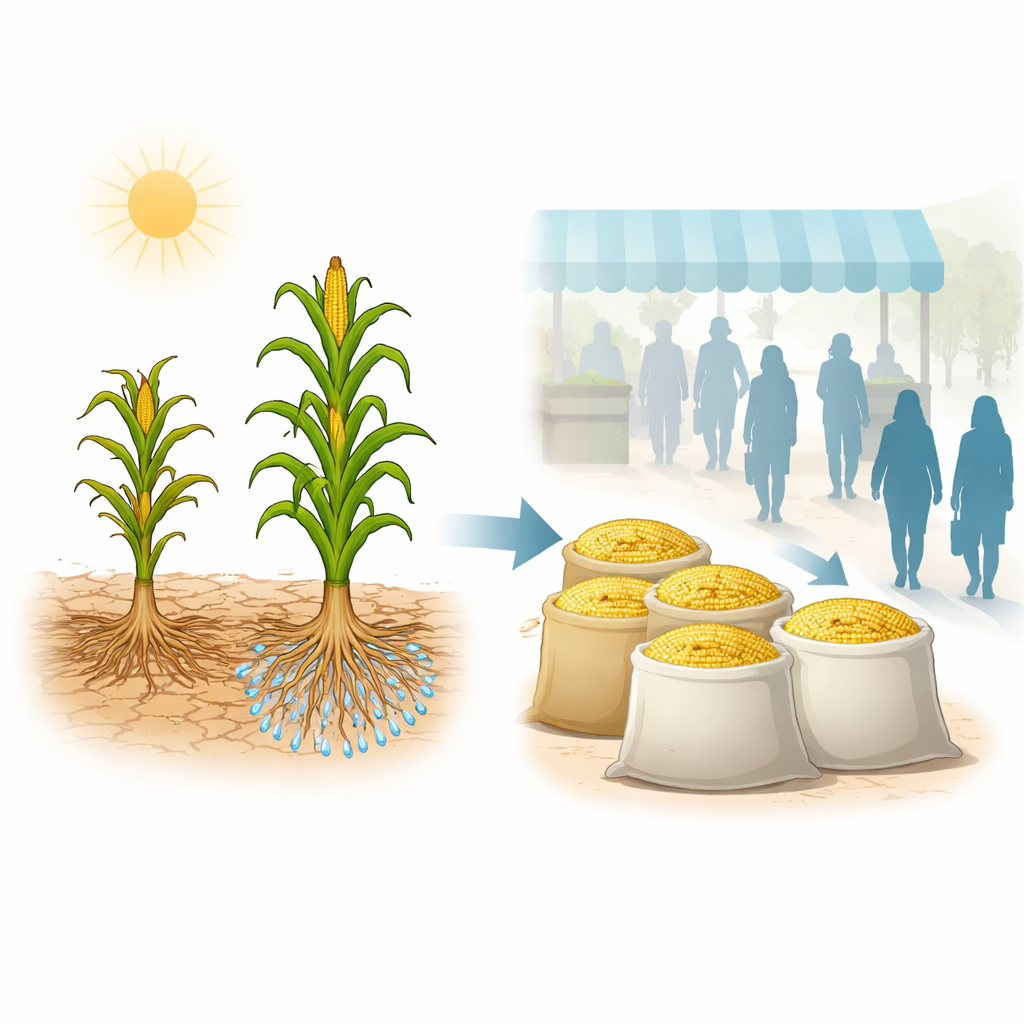
The Water Efficient Maize for Africa (WEMA) project set out to develop maize varieties that can better withstand dry spells, using both conventional breeding and genetic modification. One genetically modified line, known as MON87460, carries a gene that helps the plant cope with stress so it sheds less yield during drought. Field trials across Africa suggest such maize can produce roughly a quarter to a third more grain under moderate drought than standard varieties. Yet in 2024, South Africa’s Supreme Court of Appeal overturned MON87460’s commercial approval, citing regulatory shortcomings and the need for a more cautious approach. The ruling reflects a broader tension: while scientists see drought-tolerant maize as a tool against hunger, public mistrust and political disputes have kept its future uncertain.
How the researchers tested public choices
To understand what ordinary shoppers actually prefer, the authors ran large online choice surveys with nearly 2,600 South African maize consumers in normal-price conditions and another 600 in a simulated drought, when prices were raised to reflect the 2015/2016 crisis. Participants repeatedly chose between differently priced bags of maize meal: conventional white maize, genetically modified (GM) white maize, GM yellow maize, and—depending on the group—WEMA white maize. Some participants simply saw the labels; others also received a short, clear explanation that WEMA is a drought-tolerant GM maize that can yield much more grain under dry conditions and help stabilize food supplies.
What people picked when they knew more
Without extra explanation, most shoppers leaned toward conventional white maize and away from GM options, and there was a strong cultural preference for white over yellow maize. But when participants were told specifically how WEMA works and why it matters during drought, their choices shifted. In non-drought conditions, the predicted share choosing WEMA maize jumped from about one-third to almost half when information was provided, while the share for conventional white maize dropped. Under simulated drought, WEMA’s appeal grew even more: informed shoppers chose WEMA maize roughly twice as often as non-GM white maize, despite WEMA being priced higher than GM yellow maize. Among Black consumers—who face the highest levels of hunger and rely most heavily on white maize—information led to particularly strong support for WEMA.
Race, color, and the limits of importing yellow maize
The study also highlights that switching to yellow maize during drought is no silver bullet. Even when prices were much lower, GM yellow maize attracted far less interest than white maize varieties, especially among Black South Africans, who make up the majority of the population and associate yellow maize with animal feed and hardship. The authors conclude that importing cheap yellow maize in future droughts would likely leave many people dissatisfied and might not meaningfully reduce hunger. In contrast, a white, drought-tolerant maize like WEMA fits existing food habits while adding resilience.
What this means for food security and rules
To a lay reader, the central message is straightforward: people do not see all GM crops as the same, and their acceptance rises when the benefits are concrete, personal, and clearly explained. When shoppers learn that a particular GM trait can help keep their staple food on the table during a drought—and that it is designed to stabilize prices rather than just help farmers—they become markedly more willing to buy it. The authors argue that public information campaigns and balanced regulation could allow South Africa to use drought-tolerant maize as a practical adaptation to climate change, while still addressing safety and environmental concerns. If policymakers, scientists, and consumer groups can work together to build trust and understanding, WEMA-style maize could become an important part of protecting households from the next severe dry spell.
Citation: English, M., Nalley, L.L., McFadden, B.R. et al. Differentiating GM technologies: South African consumer perceptions of water efficient maize for Africa. npj Sustain. Agric. 4, 34 (2026). https://doi.org/10.1038/s44264-026-00143-y
Keywords: drought-tolerant maize, genetically modified crops, South Africa food security, consumer attitudes, climate-resilient agriculture