Clear Sky Science · en
Antimicrobial resistance, conjugative plasmids and pathogenicity in wastewater and freshwater Escherichia spp. in Stockholm, Sweden
Why Water and Germs Matter to Everyday Life
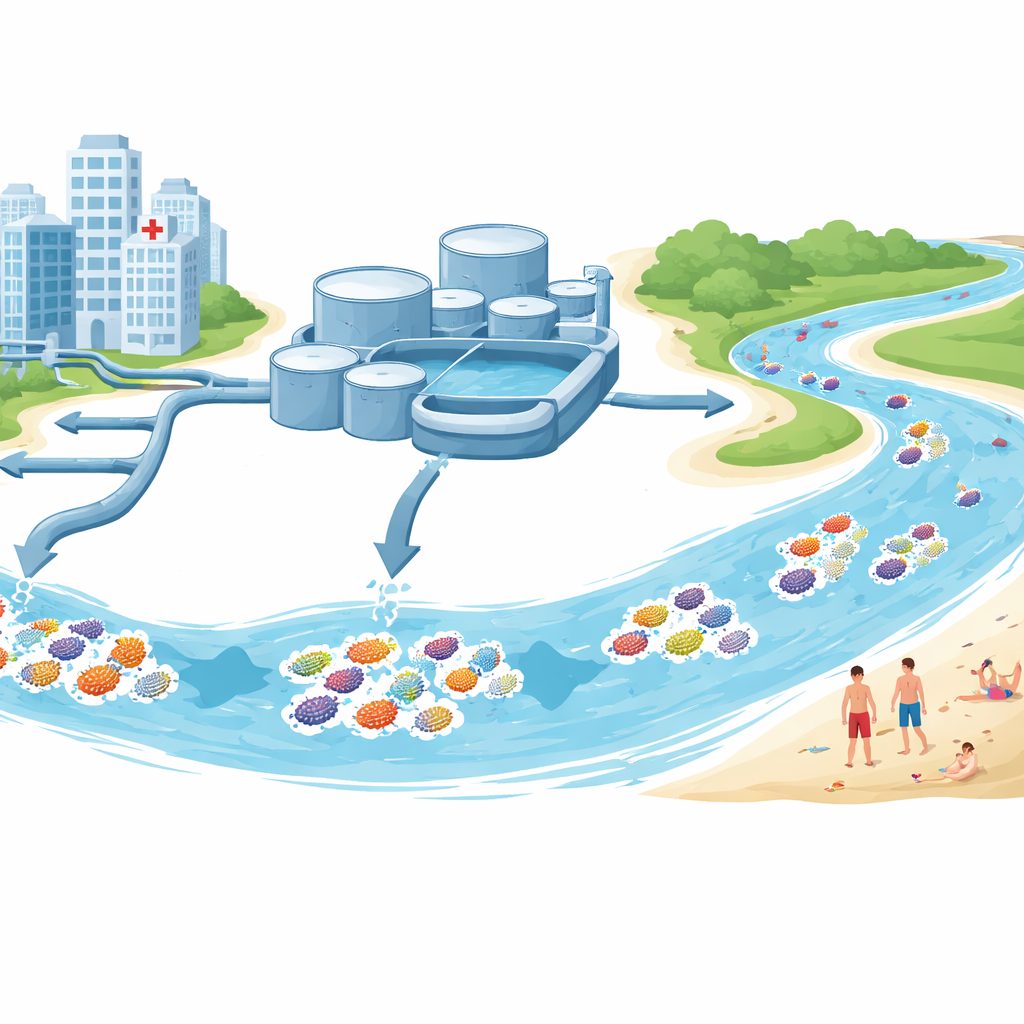
Most people think of antibiotic resistance as something that happens in hospitals, but this study shows how it can also be shaped by the water flowing beneath our cities and lapping at our beaches. Researchers in Stockholm, Sweden, tracked bacteria from sewage treatment plants and nearby lakes and coastal waters to ask a simple but pressing question: are our waste pipes helping to spread hard‑to‑treat germs back into the environment where people swim, play, and draw drinking water?
Where the Samples Came From
The team collected water and sediment in and around Stockholm during the summer of 2022. Some samples came from the inlets and outlets of major wastewater treatment plants that receive sewage from homes and hospitals. Others were taken from freshwater lakes and brackish Baltic Sea beaches used for recreation. From these sites they isolated 68 strains of Escherichia species, mostly E. coli, a common gut bacterium that is also a standard marker of fecal contamination. Each strain was tested in the lab to see which antibiotics it could withstand and was then decoded at the DNA level to reveal its resistance genes, disease‑related genes, and the small DNA circles called plasmids that can hop between bacteria.
Stronger Resistance in Sewage than in Natural Waters
The contrast between sewage and natural water was striking. More than half of the E. coli strains from wastewater were resistant to at least three classes of antibiotics, and many carried clusters of resistance genes, including those that disable widely used third‑generation cephalosporin drugs. In particular, genes of the CTX‑M family, and especially the CTX‑M‑15 variant, were common in wastewater strains but entirely absent from strains taken from lakes and beaches. Several wastewater bacteria belonged to well‑known lineages that cause urinary tract and bloodstream infections in humans, including the globally problematic ST131 group, and these carried some of the heaviest burdens of resistance genes.
Antibiotic Residues and Mobile DNA
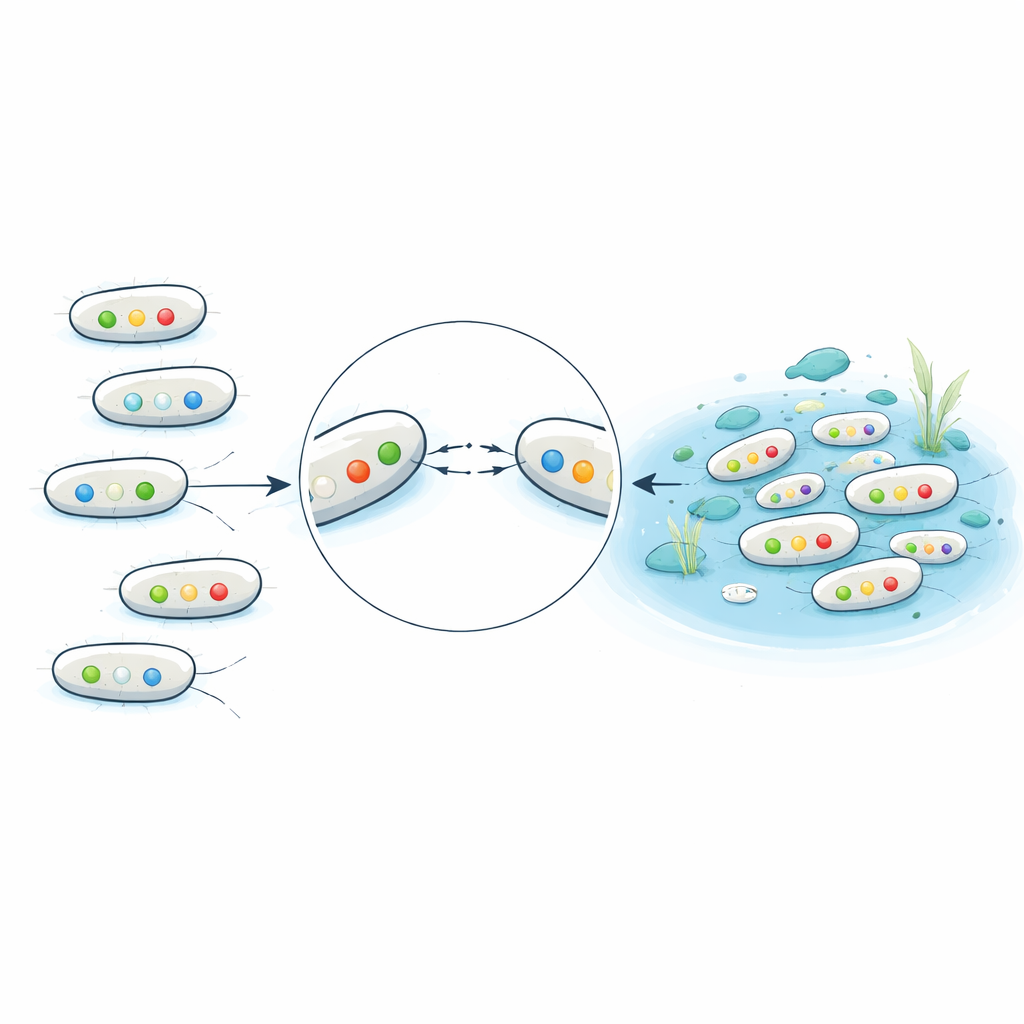
Chemical tests on the water showed that antibiotic residues were consistently higher in wastewater inlets and outlets than in natural sites. Levels of the drug ciprofloxacin at one inlet and one outlet exceeded published thresholds above which resistance is expected to be favored. This chemical backdrop matters because many resistance genes were located on conjugative plasmids—mobile DNA circles that can move from one bacterium to another. In lab mating experiments, plasmids from 16 strains successfully transferred into a standard recipient strain, often bringing along resistance to multiple drugs at once. Plasmids of certain families, especially IncN and IncI, moved with particularly high efficiency, suggesting they are potent vehicles for spreading resistance in the crowded, nutrient‑rich environment of sewage systems.
Disease‑Linked Traits in Everyday Waters
Beyond drug resistance, the scientists searched the genomes for genes that help E. coli cause disease, such as those for toxins, adhesins that let bacteria stick to the gut or urinary tract, and factors that protect them in the bloodstream. Many wastewater isolates carried combinations of genes typical of extra‑intestinal and urinary tract pathogens, echoing patterns seen in clinical infections. Surprisingly, a large fraction of E. coli from seemingly clean lakes and beaches also carried some of these virulence genes, even though they generally had fewer resistance genes and no extended‑spectrum beta‑lactamase genes. The study also found environmental relatives like Escherichia marmotae that carried disease‑associated genes, hinting that wildlife and natural waters can harbor pathogens in waiting.
What This Means for People and Policy
Taken together, the findings paint wastewater treatment plants as important crossroads where human, animal, and environmental bacteria mix, are exposed to leftover antibiotics, and exchange mobile DNA that can make them both more drug‑resistant and more capable of causing disease. Although treatment plants remove many contaminants, they do not fully eliminate resistant or pathogenic E. coli, and some of these strains and their plasmids are discharged into rivers and coastal waters used by the public. For lay readers, the core message is that antibiotic resistance is not confined to hospitals: it is shaped by how we handle wastewater and protect natural waters. Monitoring sewage and nearby recreational waters, reducing antibiotic use, and improving treatment technologies can all help slow the environmental “recycling” of dangerous germs back to people.
Citation: Justh de Neczpal, A., Thorell, K., Tuts, L. et al. Antimicrobial resistance, conjugative plasmids and pathogenicity in wastewater and freshwater Escherichia spp. in Stockholm, Sweden. npj Antimicrob Resist 4, 32 (2026). https://doi.org/10.1038/s44259-026-00208-5
Keywords: antibiotic resistance, wastewater treatment, E. coli, environmental microbiology, plasmid transfer