Clear Sky Science · en
A critical appraisal of emerging obesity diagnostic frameworks to bridge gaps and refine clinical stratification
Why a weight number is not the whole story
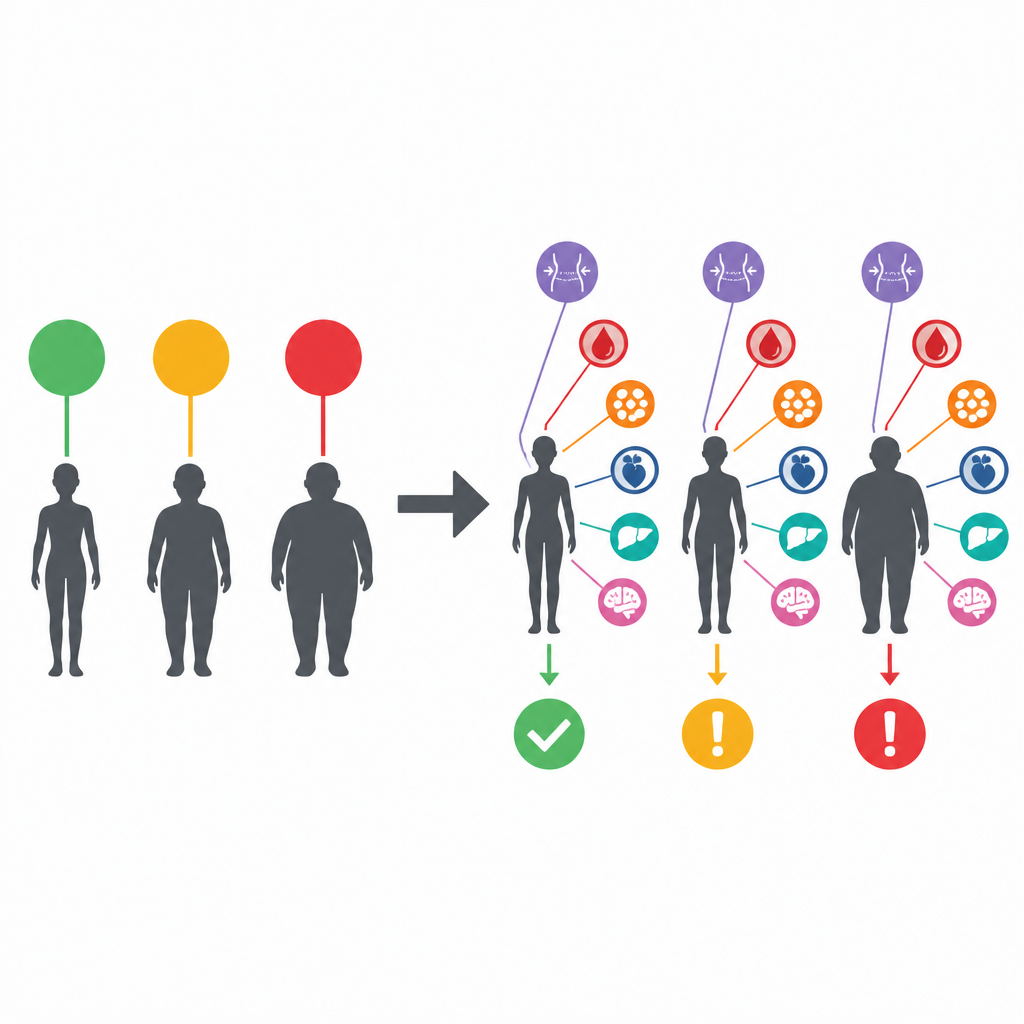
Many people know their body mass index, or BMI, and have been told it defines whether they are at a healthy weight. But doctors and researchers are finding that this single number can miss people who already carry serious hidden risks to their heart and metabolism. This study looks at new ways to diagnose obesity that try to go beyond BMI and asks a simple question with big consequences: who is actually at risk, and who gets missed, when we rely on different rules?
New ways to judge weight and health
Traditional BMI compares weight to height and sorts adults into normal weight, overweight, or obesity. It is quick and cheap, but it ignores how fat is stored in the body, how it affects organs, and whether a person already has problems such as high blood sugar or abnormal cholesterol. Two newer systems have been proposed to fix this. One, from a Lancet expert group, separates “preclinical” obesity, where extra fat is present but clear organ damage is not, from “clinical” obesity, where disease is evident. The other, from the European Association for the Study of Obesity, builds a broader picture that includes waist size, medical complications, and even functional limits to daily life.
How the study was carried out
The researchers looked back at data from 789 adults who visited an endocrinology clinic in Spain. All had detailed measurements, including BMI, waist and hip sizes, body fat percentage, blood pressure, and a wide panel of blood tests such as glucose, insulin, cholesterol, and triglycerides. Each person was classified three different ways: by standard BMI categories, by the Lancet group’s preclinical and clinical obesity rules, and by the European framework, which labels people as normal weight, overweight, or obesity based on both body size and health complications.
Who gets counted as at risk
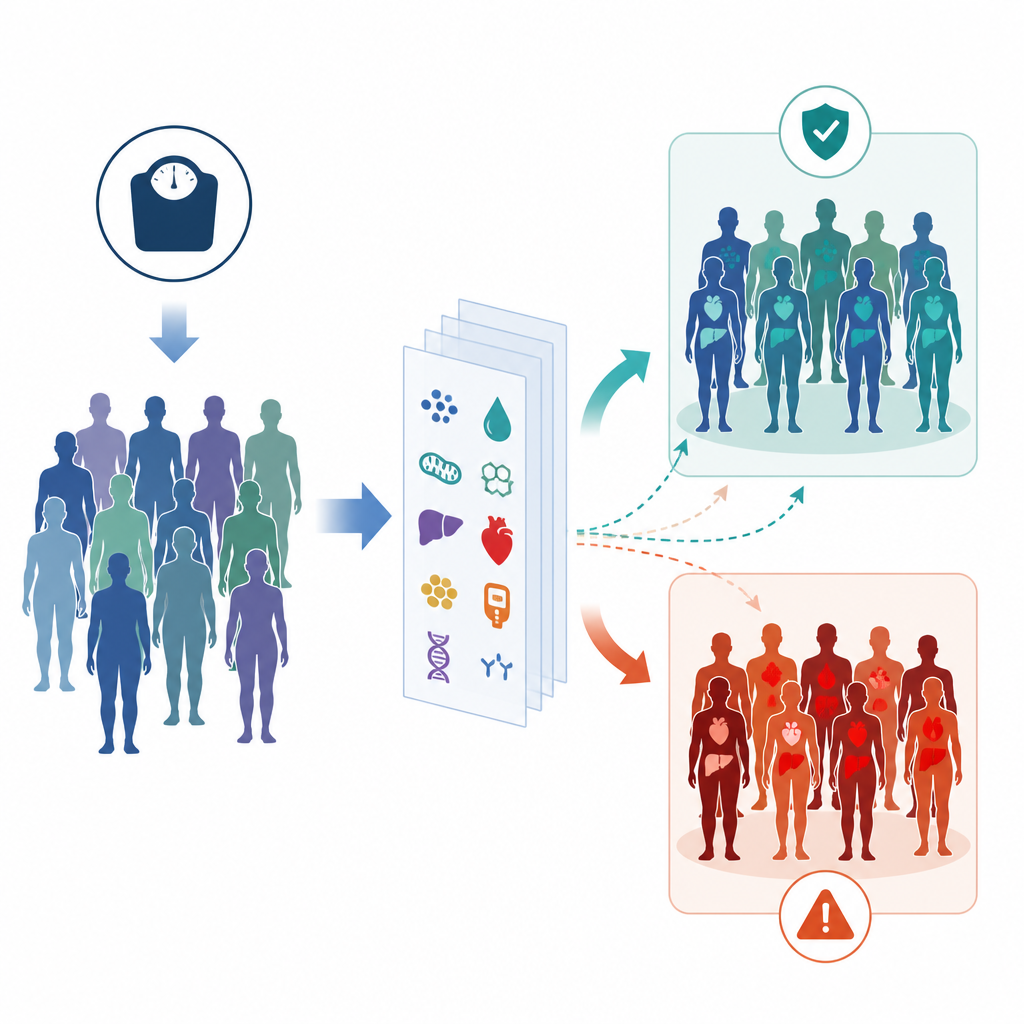
The three systems did not agree. By simple BMI, about half of the group had obesity. When the Lancet rules were used, nearly half were labeled as having clinical obesity and a large share as preclinical, even among people whose BMI fell in the normal or overweight range. The European framework told a different story again: almost seven in ten people were classed as having obesity, because many in the BMI “overweight” band already had signs of medical or functional trouble. Men were more likely than women to be shifted into different categories as the rules changed, and mismatches grew more common with age.
Hidden metabolic trouble in the gray zone
The most striking finding came from people tagged as having preclinical obesity by the Lancet system. When those same people were re-sorted by the European framework, nearly two thirds were labeled as having obesity. This was not just a naming issue. The group counted as having obesity by the European rules had clearly worse blood sugar levels, greater insulin resistance, higher triglycerides, more unfavorable cholesterol ratios, and higher scores on a combined measure of metabolic syndrome. In other words, many people sitting in a supposed gray zone without “true” disease already showed patterns linked to future heart disease and diabetes.
What this means for patients and doctors
For a layperson, the main message is that BMI alone, and even some newer definitions, can overlook people whose bodies are already under silent strain. Someone may be told they are only overweight or in a preclinical stage, yet their blood tests reveal real metabolic damage. The authors argue that obesity should be diagnosed with a more unified and comprehensive approach that blends body size, fat distribution, and simple blood markers of metabolic health. Such a system would help doctors spot high-risk individuals earlier and tailor care before serious complications emerge, rather than waiting until clear organ disease is present.
Citation: Gómez-Ambrosi, J., González-Alva, M.U., Silva, C. et al. A critical appraisal of emerging obesity diagnostic frameworks to bridge gaps and refine clinical stratification. Commun Med 6, 291 (2026). https://doi.org/10.1038/s43856-026-01532-7
Keywords: obesity diagnosis, body mass index, cardiometabolic risk, metabolic health, clinical obesity