Clear Sky Science · en
Systematic evaluation of medication adherence determinants across 137 active substances on population-level real-world health data
Why remembering your pills really matters
Many of us struggle to take our medicines exactly as the doctor prescribed, especially when we need several drugs for months or years. This study asks a simple but powerful question: is there such a thing as a person’s usual “medication-taking personality,” and does it matter for their future health? By tracking how tens of thousands of people in Estonia picked up their prescriptions over time, the researchers tried to measure each individual’s typical habit of sticking with treatment and to see whether that habit predicts who later ends up in the hospital or develops new illnesses.
Looking at real life, not just a single disease
Most earlier research on medication habits has zoomed in on one disease at a time, such as diabetes or high blood pressure. That leaves a big blind spot, because many older adults take a mix of drugs for several long-term conditions at once. In this work, the team analysed health records, insurance claims, and pharmacy data from a randomly selected 10% of the Estonian population between 2012 and 2019—over 150,000 people. They focused on 64,837 individuals who repeatedly filled prescriptions for at least one of 137 long-term medicines. For each person and drug, they calculated how many days in a year the person actually had the medicine in hand, a standard way to estimate how closely they followed their treatment plan. 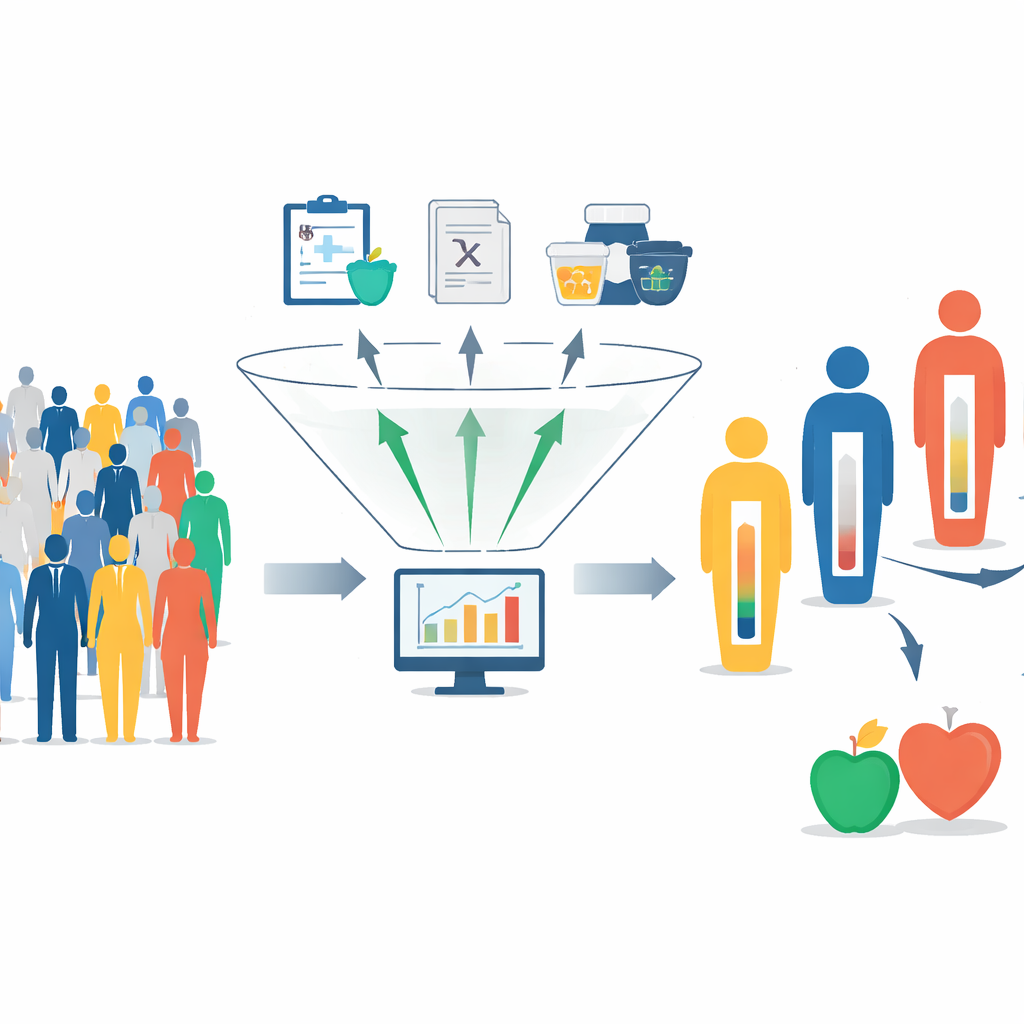
Different illnesses, very different habits
The researchers found that adherence—the share of days covered by medication—varied widely between drugs and diseases. Some medicines, such as those used for asthma, were on hand for only about five months out of the year on average, while blood thinners like warfarin were available for almost the entire year. People being treated for thyroid problems, glaucoma, breast cancer, or Parkinson’s disease were especially likely to keep up with their medicines, with most patients having pills available for at least 80% of the year. In contrast, those taking drugs for digestive or chronic lung diseases were much less consistent. Women had slightly better coverage than men, and the oldest adults tended to be more reliable than teenagers and young adults.
A personal “baseline” for taking medicine
Beyond these differences between drugs and diagnoses, the key idea in the study is that each person also seems to have their own baseline level of diligence. To uncover this, the scientists used a statistical model that separated the influence of age, sex, illness type, and drug properties from what was left over for each individual. That leftover piece became the Individual Medication Adherence Score, or IMAS. Someone with a low score typically had about half a year less medicine on hand than a similar person with an average score, no matter which long-term drug they were taking. Crucially, this personal tendency was fairly stable from year to year and carried over from heart medicines to non-heart medicines, suggesting that it reflects deeper habits and life circumstances rather than just the quirks of a single prescription. 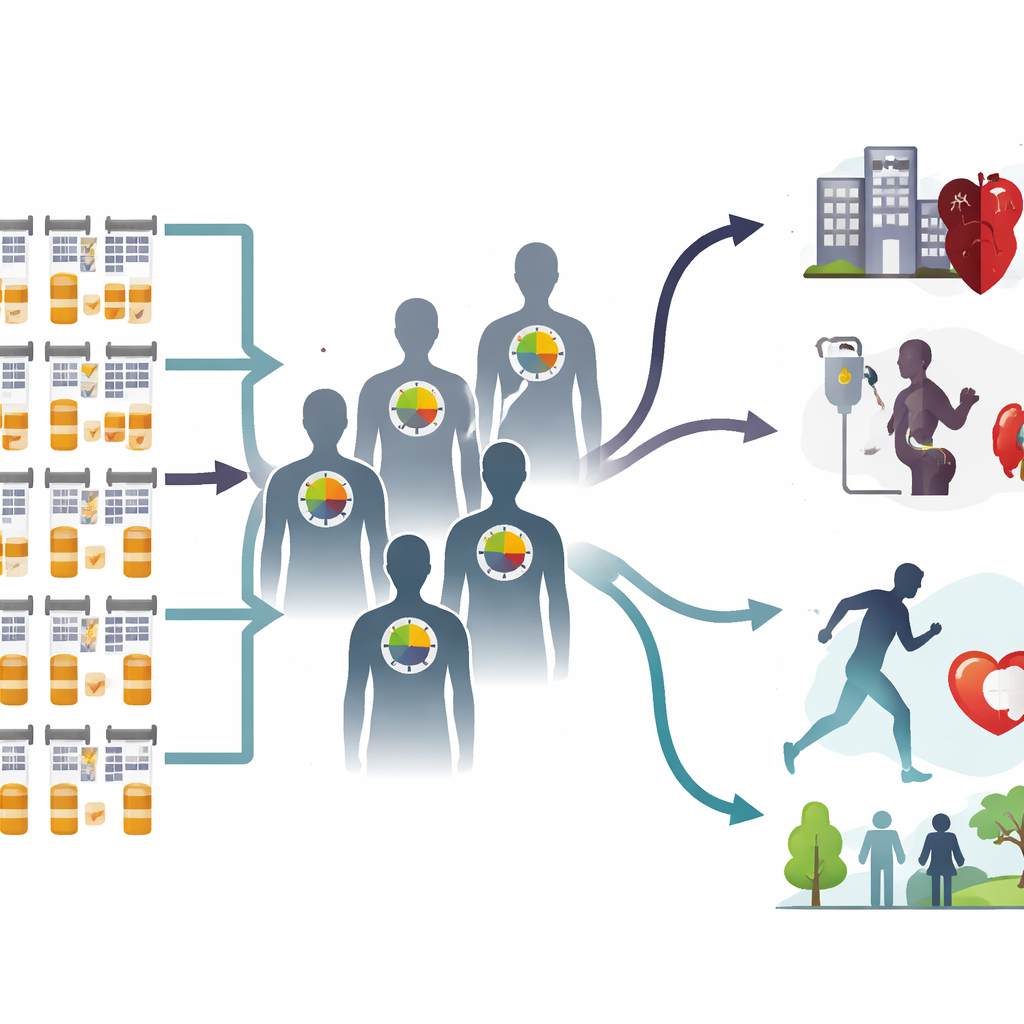
From daily routines to future health
To test whether this personal score actually mattered for health, the team looked ahead. They used data from 2012–2016 to calculate each person’s IMAS and then tracked who was hospitalized or developed new chronic conditions between 2017 and 2019. People with higher scores—those who usually stayed on top of their medicines—were less likely to be admitted to hospital overall. They also had a lower chance of being newly diagnosed with a range of serious problems, including heart and blood vessel disease, liver disease, stomach disorders, and others. For some conditions, the risk difference between low- and high-score individuals amounted to roughly a one‑quarter to one‑half reduction in new cases.
What this means for patients and doctors
In plain terms, the study suggests that the way a person handles their medicines is a meaningful and fairly consistent trait, and that this trait has real consequences for their future health. Rather than only asking whether patients are taking a specific drug correctly, doctors and health systems could use a measure like IMAS to spot people whose overall medication habits put them at higher risk. Those individuals might benefit from extra reminders, simpler regimens, or more support when life circumstances change. While the work was done in one country and cannot see whether pills were actually swallowed, it demonstrates that large health databases can be used to move from one‑size‑fits‑all advice toward more personalised help in staying on track with long‑term treatment.
Citation: Mooses, K., Oja, M., Malk, M. et al. Systematic evaluation of medication adherence determinants across 137 active substances on population-level real-world health data. Commun Med 6, 237 (2026). https://doi.org/10.1038/s43856-026-01515-8
Keywords: medication adherence, chronic disease, real-world data, personalized medicine, health outcomes