Clear Sky Science · en
Development of an innovative nanopolymer-lncRNA-SRHC complex as therapeutic modalities for targeted hepatocellular carcinoma therapy
Why this research matters for liver cancer
Primary liver cancer, especially hepatocellular carcinoma, is one of the world’s deadliest cancers and often goes undetected until treatment options are limited. This study explores a new way to halt liver tumors in their tracks by combining a protective “nano” carrier with a naturally occurring RNA molecule that healthy livers use to keep cell growth under control. The work, done in mice but grounded in human data, points toward a gentler, more precise therapy than traditional chemotherapy.
A missing safety switch in liver cells
Healthy liver cells produce a long RNA molecule called SRHC, which does not code for a protein but helps keep growth signals in balance. In liver cancer, SRHC levels drop sharply, removing an important brake on cell division. Earlier studies suggested that restoring SRHC can slow or stop liver cancer cells in the lab, but the molecule is fragile and easily destroyed in the body. The authors first used large databases of human tumors to confirm that SRHC is abundant in normal liver tissue yet consistently reduced in hepatocellular carcinoma, reinforcing the idea that it acts as a tumor suppressor and could serve as a therapeutic handle.
Building a tiny delivery vehicle
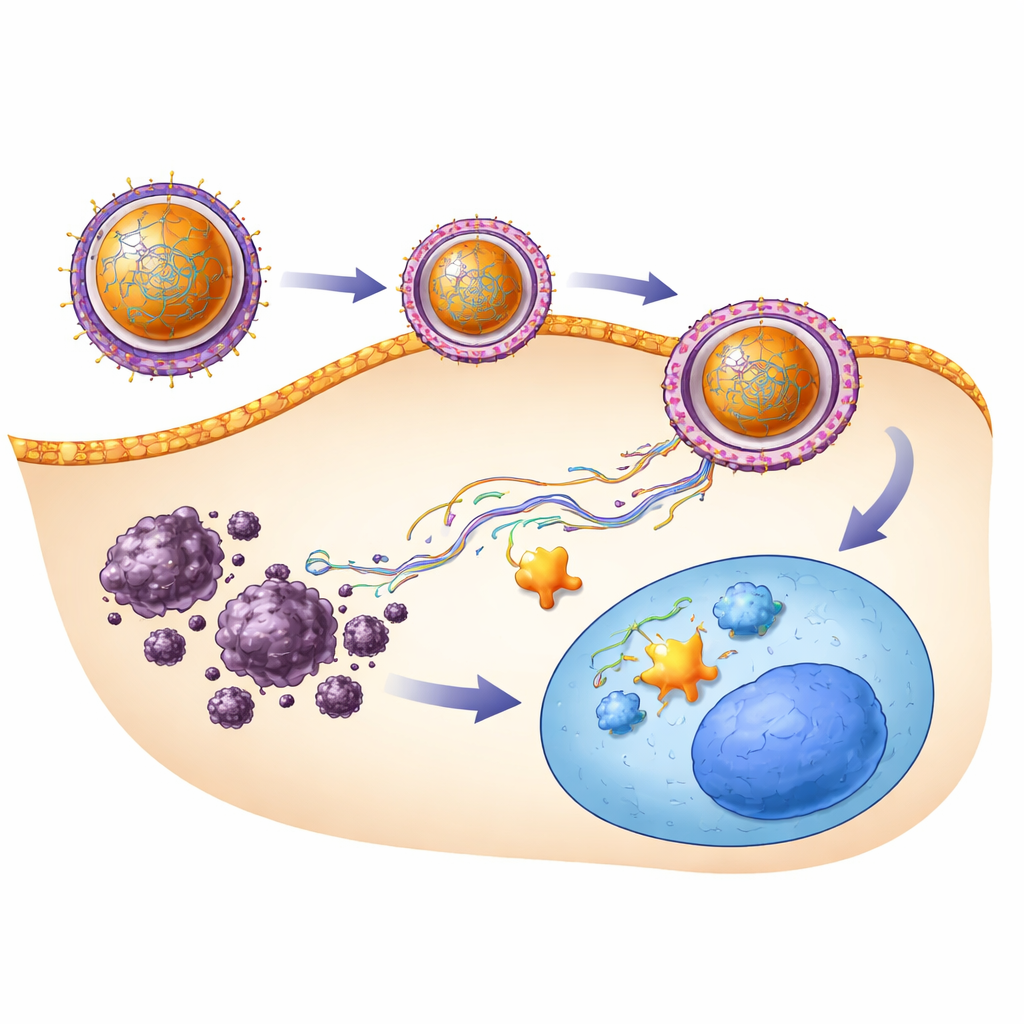
To bring SRHC back into damaged livers, the team turned to nanotechnology. They built microscopic spheres from a well-known biodegradable material called PLGA, already used in medical products. SRHC strands were mixed into the forming particles so that the RNA became tightly embedded within the polymer shell. Measurements showed that the resulting nanoparticles were about 200 nanometers across—small enough to pass through leaky tumor blood vessels but large enough to avoid rapid loss in the kidneys—and carried a strong surface charge that keeps them from clumping and helps them interact with cell membranes. In cell culture tests using human liver cancer cells, both free SRHC and SRHC-loaded nanoparticles reduced cancer cell survival, with the nanoformulation showing slightly stronger activity.
Testing the therapy in a living organism
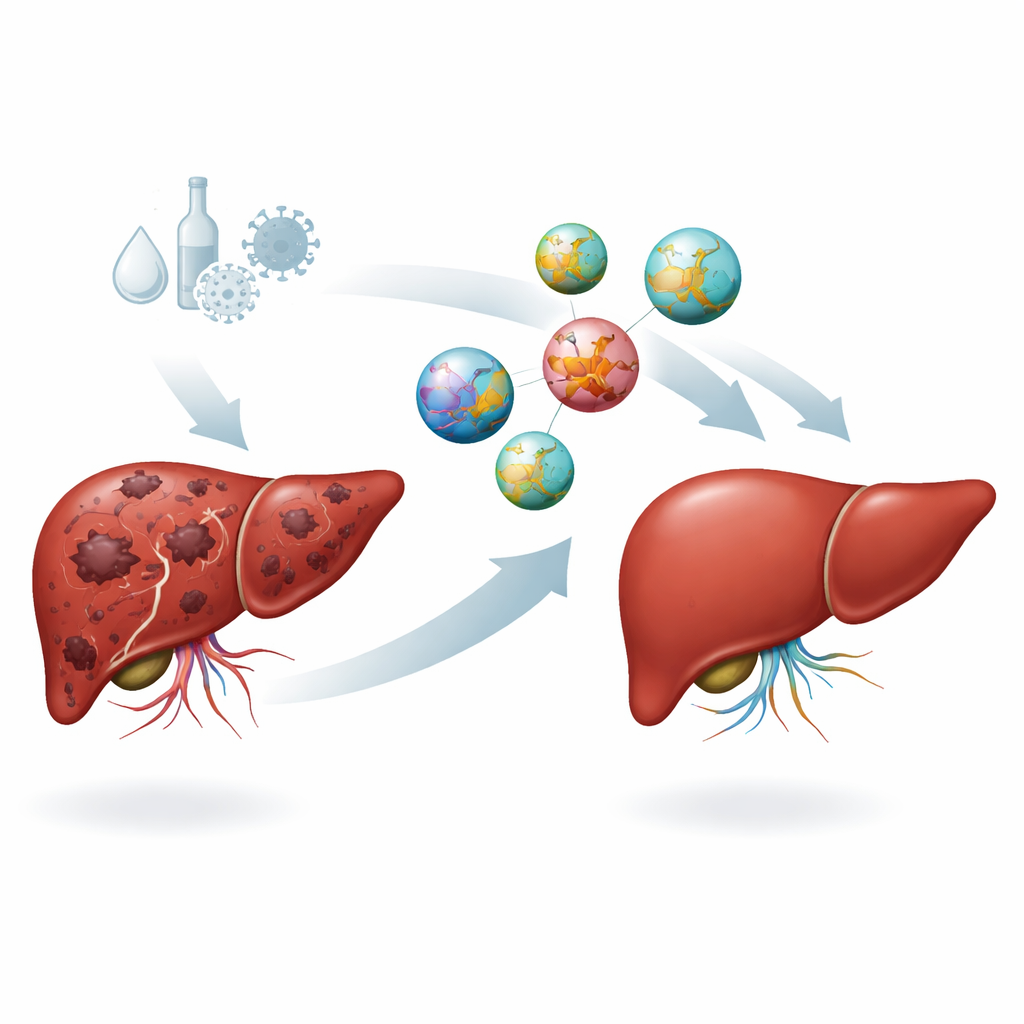
The real test came in a mouse model of liver cancer created by long-term exposure to a chemical carcinogen. One group of mice remained healthy controls, while others developed liver tumors and then received no treatment, empty nanoparticles, free SRHC, or SRHC-loaded nanoparticles injected directly into the liver. Over sixteen weeks, the researchers tracked blood markers associated with tumor growth, including alpha-fetoprotein and several signals that drive new blood vessel formation and inflammation. Mice treated only with the chemical or with empty nanoparticles showed very high levels of all these markers, confirming aggressive disease. In contrast, both SRHC and SRHC–nanoparticle treatment sharply lowered the tumor signals, with the combined nano-SRHC approach producing the greatest drop.
Peering into genes and tissue structure
To understand what was happening inside the liver, the team examined key genes and tissue slices. In untreated tumor-bearing mice, genes that promote growth and spread (SENP1 and β-catenin) were highly active, while a gene that maintains normal liver identity (HNF-4α) was strongly suppressed. Free SRHC partially reversed this pattern, but the SRHC–nanoparticle treatment did so more powerfully, cutting back the cancer-promoting signals and restoring the protective one. Microscopic inspection told the same story: livers from untreated or empty-nanoparticle groups were disorganized, packed with abnormal cells and new vessels, whereas SRHC-treated livers showed fewer malignant changes. The nano-SRHC group came closest to normal, with clearer lobular structure and signs of an active immune clean-up of residual tumor cells. Importantly, no treatment group showed obvious signs of toxicity or distress.
What this could mean for future treatments
Put simply, this study shows that replacing a missing “brake” molecule in liver cells, and protecting it with a smart nano-carrier, can slow or reverse liver cancer in mice without obvious harm. The SRHC–nanoparticle complex not only reduced tumor markers and dangerous growth signals but also helped rebuild normal liver architecture. While much work remains before such an approach reaches patients—including refining delivery routes, ensuring long-term safety, and combining it with existing drugs—these results highlight a promising strategy: using engineered particles to ferry fragile genetic regulators back to where they belong, turning down cancer from the inside.
Citation: Elkramani, N., Elzallat, M., Mohammed, D.M. et al. Development of an innovative nanopolymer-lncRNA-SRHC complex as therapeutic modalities for targeted hepatocellular carcinoma therapy. Sci Rep 16, 14695 (2026). https://doi.org/10.1038/s41598-026-51340-1
Keywords: hepatocellular carcinoma, nanoparticle therapy, long noncoding RNA, liver cancer treatment, targeted drug delivery