Clear Sky Science · en
The potential role of transcranial direct current stimulation in experimental ischemic stroke in adult male albino rats
Why a gentle brain current matters
Stroke is a leading cause of disability worldwide, and many people never regain full movement or independence after the initial brain injury. Current emergency treatments that reopen blocked vessels help only a fraction of patients, especially in countries where rapid hospital care is hard to reach. This study explores whether a simple, low cost technique that delivers a weak electrical current through the scalp could help protect the brain in the crucial first hours after a stroke.
A simple tool for a complex problem
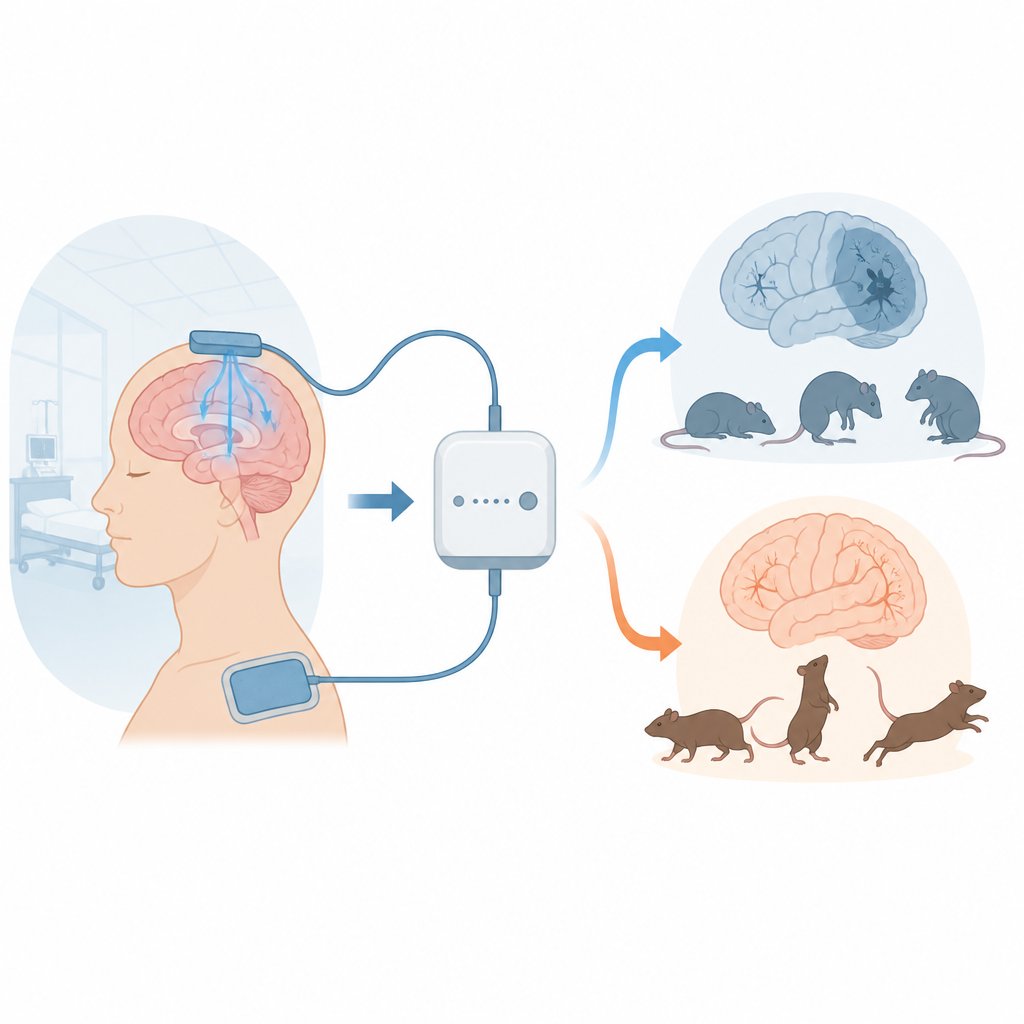
The researchers focused on transcranial direct current stimulation (tDCS), which sends a mild, constant current between two electrodes placed on the head and body. Unlike brain surgery or large magnetic devices, tDCS is portable, inexpensive, and already used to treat conditions such as depression and Parkinson’s disease. Two main versions were tested: anodal stimulation, which usually makes brain cells more active, and cathodal stimulation, which usually calms them down. The central question was which type, if any, could limit early stroke damage and preserve function when applied very soon after a stroke-like event.
Testing stroke and stimulation in rats
To answer this, the team used adult rats and created a controlled blockage in a major neck artery to mimic an ischemic stroke, where part of the brain is starved of blood and oxygen. The animals were divided into five groups: healthy controls, stroke without treatment, stroke with sham stimulation, stroke with anodal tDCS, and stroke with cathodal tDCS. Stimulation started 20 minutes after the blood flow was cut off, with two 20 minute sessions separated by a short rest. After 24 hours, the rats were examined for consciousness, movement and touch responses, as well as for microscopic changes in their brain tissue.
What happened inside the injured brain
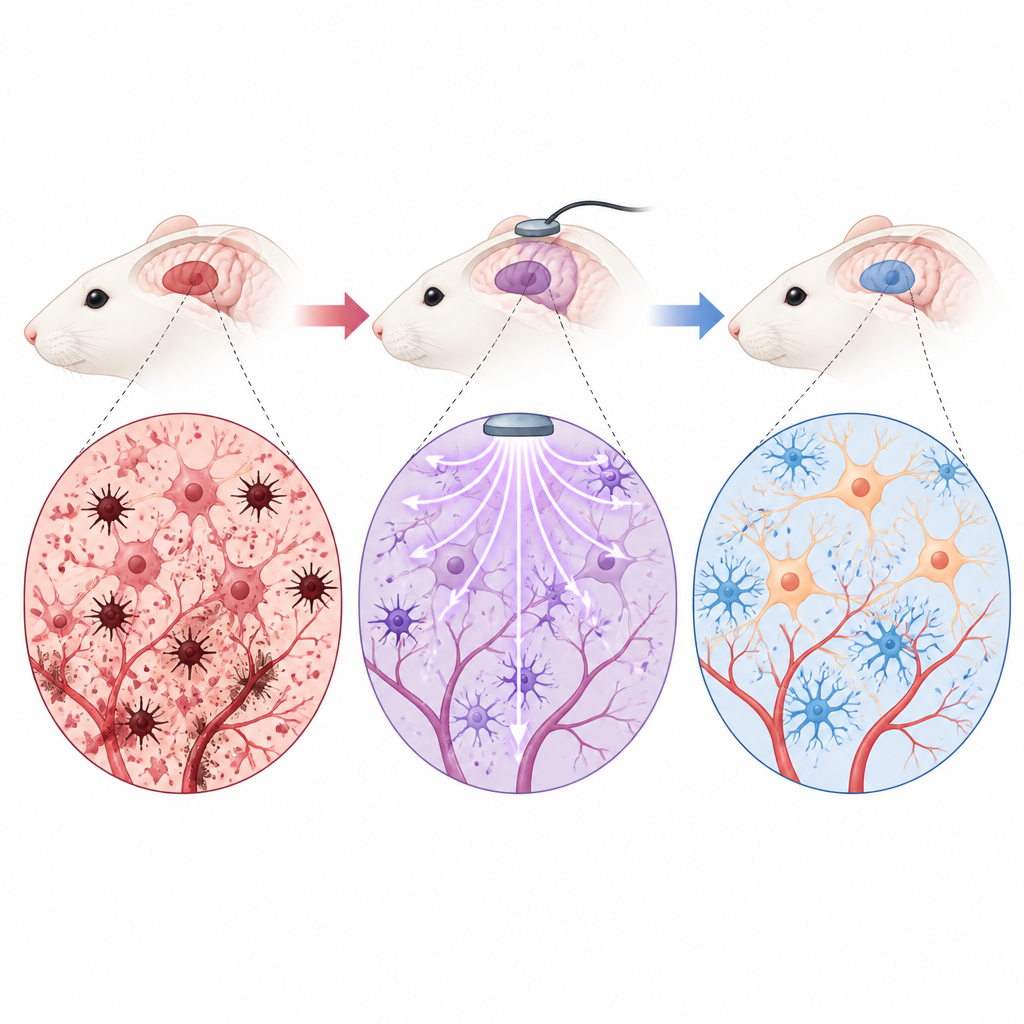
Rats that received cathodal tDCS were more likely to wake up, respond to touch, and remove sticky tape from their paws compared with untreated, sham, or anodal groups. Under the microscope, their brains showed less cell death, less swelling, and fewer signs of severe structural breakdown in the affected areas. Chemical markers revealed that cathodal stimulation dampened levels of a key inflammatory signal (TNF alpha), increased activity in neurons linked to adaptive responses, and boosted support from star shaped brain cells called astrocytes. There were hints that immune cells in the brain were also shifting toward a more healing, rather than damaging, state, although this trend was not strong enough to be certain.
Why boosting activity is not always better
In contrast, anodal tDCS, which typically excites brain cells, did not help and sometimes appeared harmful. Rats in this group showed poorer movement and sensation, more frequent coma like states, and more blood vessel congestion and tissue injury in their brains. Molecular measures suggested that inflammation remained relatively high, and the moderate increases in repair related markers did not translate into better behavior. These findings support the idea that in the fragile tissue around a stroke, further boosting electrical activity may worsen stress on neurons, while gently stabilizing them with cathodal current can reduce excitotoxic damage and support repair.
What this could mean for patients
Overall, the study suggests that cathodal tDCS, applied very early after a stroke, can limit brain damage and preserve function by calming harmful overactivity, reducing inflammation, and engaging the brain’s own support cells. The work was done in male rats over just 24 hours, so it does not yet tell us how long the benefits last or whether the same approach would help people, including women and older patients. Still, the results point to a future in which a small, affordable device could be used alongside standard hospital treatments to protect threatened brain tissue in the first hours after a stroke, especially in settings where advanced interventions are hard to access.
Citation: Abdelbary, O.A., Abdelsalam, N.F., El-Waseef , D.A.ED.A. et al. The potential role of transcranial direct current stimulation in experimental ischemic stroke in adult male albino rats. Sci Rep 16, 15331 (2026). https://doi.org/10.1038/s41598-026-51013-z
Keywords: ischemic stroke, brain stimulation, tDCS, neuroprotection, inflammation