Clear Sky Science · en
Detection of New Delhi metallo-β-lactamase (blaNDM) and oxacillinase (blaOXA-48) genes among carbapenem-resistant Enterobacteriaceae (CRE) in Jazan Region, Saudi Arabia
Why Superbugs in Hospitals Matter to Everyone
Antibiotic-resistant “superbugs” are no longer science fiction—they are already in hospitals, making common infections harder to treat and sometimes deadly. This study focuses on a group of dangerous bacteria in a region of Saudi Arabia and asks a pressing question: how are these germs dodging even our strongest last‑resort antibiotics, and what does that mean for patients and doctors? By tracing where these bacteria appear, how they resist treatment, and which patients are most at risk, the researchers offer clues that can help hospitals slow their spread and protect vulnerable people.
Tracking a Hidden Hospital Threat
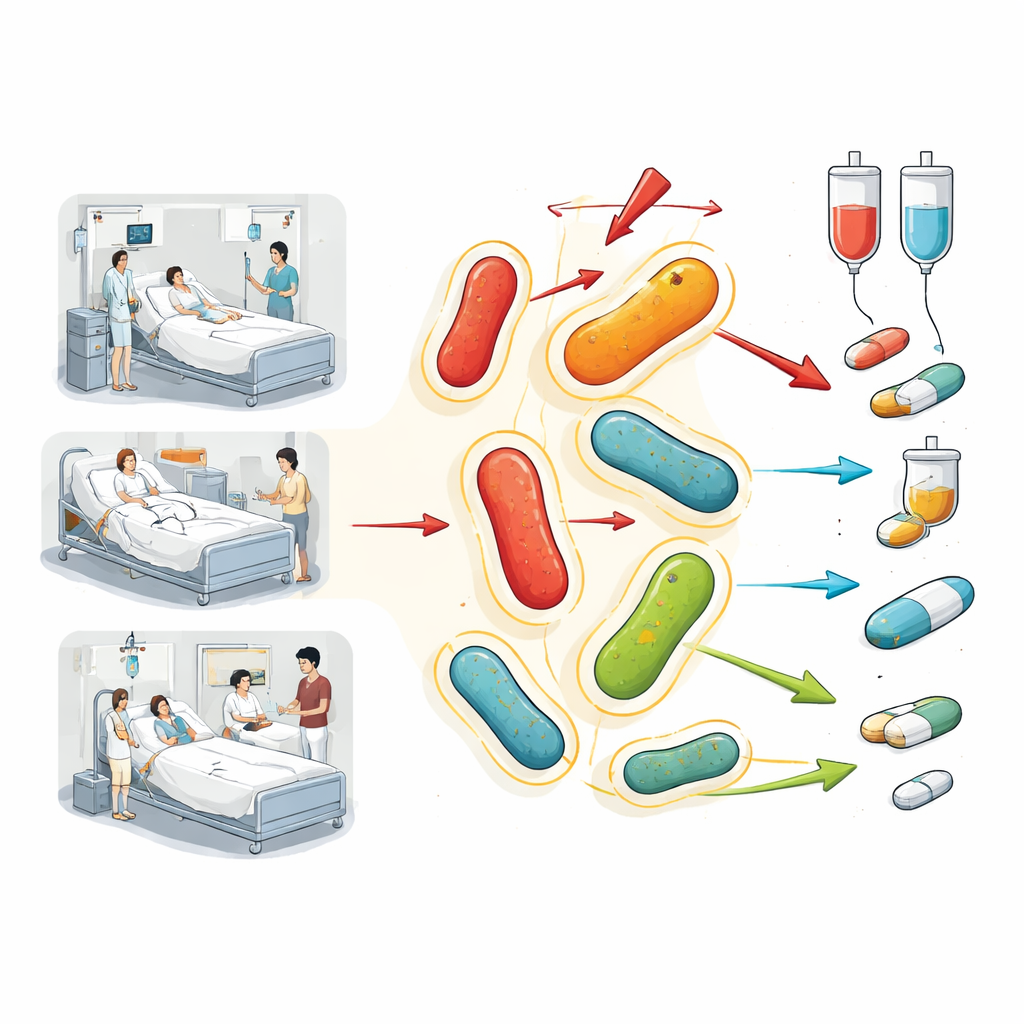
The researchers examined more than a thousand samples—blood, urine, sputum, stool, and wound swabs—from patients who had been in Jazan General Hospital for at least two days between December 2023 and May 2024. From these, they identified 426 samples containing a family of gut bacteria called Enterobacteriaceae, which includes common species such as Klebsiella pneumoniae and Escherichia coli. Using automated systems, they identified the bacterial species and tested how well different antibiotics worked against them. Special focus was placed on carbapenems, a powerful class of drugs usually reserved for severe, life‑threatening infections when other treatments fail.
How the Team Looked Inside the Bacteria
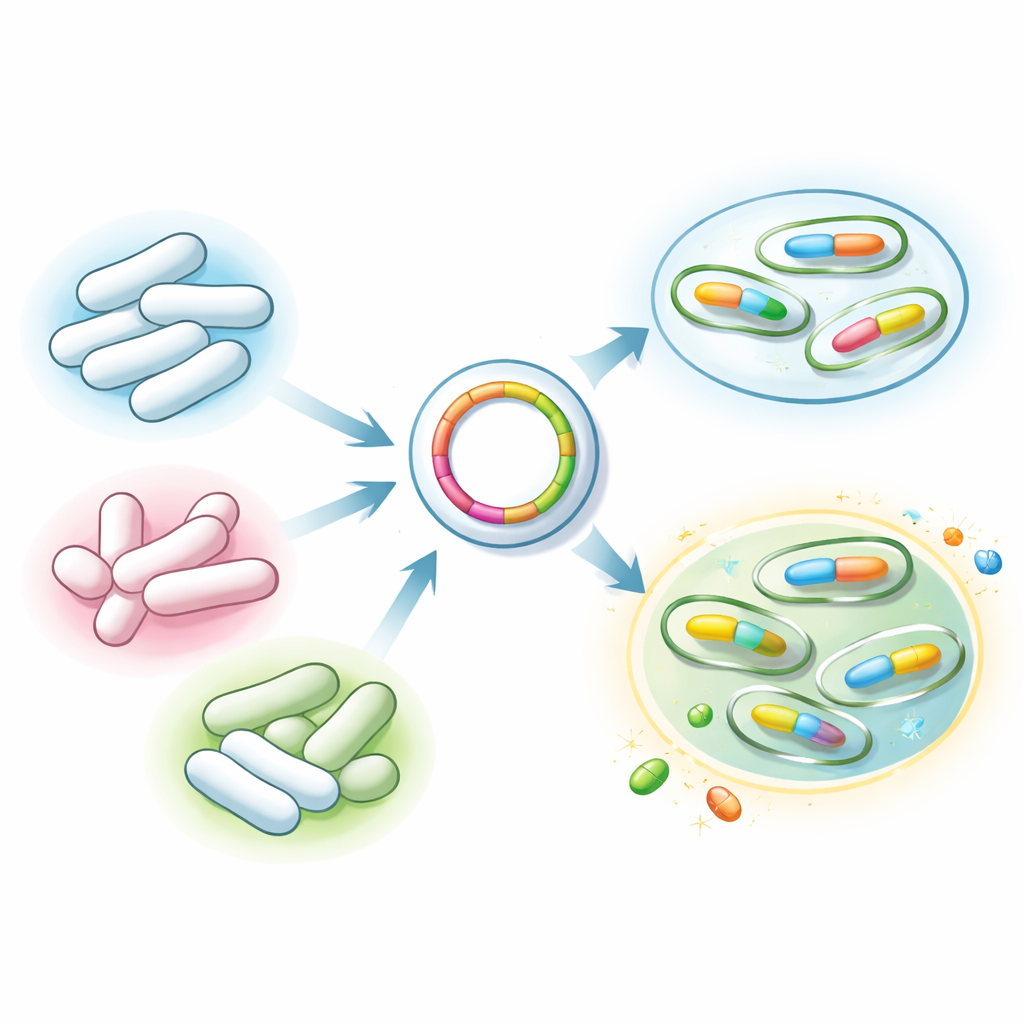
To understand why some bacteria withstood carbapenems, the team divided them into two groups: those that simply resisted the drug in lab tests, and those that also carried known resistance genes. They used a rapid genetic test called Xpert Carba‑R to search for five key genes that allow bacteria to break down carbapenem antibiotics. These genes, often carried on small DNA rings that can jump between bacteria, act like portable toolkits for drug resistance. The test can detect several such genes at once, including New Delhi metallo‑β‑lactamase (NDM) and oxacillinase‑48 (OXA‑48), which have spread worldwide and are of particular concern.
What the Study Found in Jazan
Out of the 426 Enterobacteriaceae samples, 53 (about one in eight) could withstand carbapenem antibiotics—these are called carbapenem‑resistant Enterobacteriaceae, or CRE. Surprisingly, only 14 of these resistant strains actually carried one of the major carbapenem‑destroying genes; the remaining 39 were resistant through other, less obvious routes. Among the gene‑carrying strains, Klebsiella pneumoniae was most common, followed by E. coli, Enterobacter cloacae, and Serratia marcescens. The NDM gene appeared in roughly seven out of ten of these cases, and OXA‑48 in about four out of ten, sometimes together in the same strain. Another well‑known resistance gene was rare, and two major ones were not seen at all. Many of the resistant bacteria were found in intensive care patients with serious illnesses, multiple health conditions, recent surgery, invasive devices like catheters, and prior exposure to broad‑spectrum antibiotics.
Which Medicines Still Work—and Which Don’t
The resistance patterns painted a sobering picture. Almost all of the CRE strains were impervious to penicillins, common cephalosporins, and even carbapenems themselves. Drugs that pair antibiotics with enzyme blockers, designed to overcome some resistance, also worked poorly. Fluoroquinolones, another widely used class, had only modest success. However, two groups of drugs still showed promise. Aminoglycosides, an older class associated with potential kidney and ear side effects, were surprisingly effective against all of the gene‑carrying strains and helped against about half of the others. Tigecycline, a newer tetracycline‑related drug, was the most reliable single option, working against nearly four out of five resistant isolates. The study also showed that bacteria with carbapenem‑breaking genes tended to be resistant to more drug families overall than those that relied on other resistance tricks.
What This Means for Patients and Hospitals
For a lay reader, the key message is that some of the scariest hospital germs in Jazan are resisting our strongest antibiotics in two main ways: a smaller group uses powerful, easily shared resistance genes such as NDM and OXA‑48, while a larger group relies on quieter, less visible mechanisms. Both types are dangerous, but they call for different control strategies and treatment choices. The findings highlight the need for vigilant screening of high‑risk patients, careful use of broad‑spectrum antibiotics, and tailored infection‑control efforts in intensive care and pediatric units. By mapping how these resistant bacteria are spreading and how they survive, the study provides a roadmap for slowing their advance and preserving the few remaining drugs that still work.
Citation: Hagras, S.A.A., El-Sayyad, G.S., Mohamed, M.Y.A. et al. Detection of New Delhi metallo-β-lactamase (blaNDM) and oxacillinase (blaOXA-48) genes among carbapenem-resistant Enterobacteriaceae (CRE) in Jazan Region, Saudi Arabia. Sci Rep 16, 13769 (2026). https://doi.org/10.1038/s41598-026-49160-4
Keywords: antimicrobial resistance, carbapenem-resistant Enterobacteriaceae, hospital infections, Saudi Arabia, NDM and OXA-48 genes