Clear Sky Science · en
Impact of application of chicken manure and inorganic nitrogen fertilizer on soil microbial, yield and quality of tomato in semi-arid areas
Why Tomatoes and Soil Matter to Your Dinner Plate
Tomatoes are a staple in diets worldwide, providing much of our daily vitamin C and beneficial plant pigments like lycopene. Yet growing enough high-quality tomatoes in dry, hot regions often relies on heavy use of chemical fertilizers, which can harm soils and the environment over time. This study from Egypt asks a practical question with global relevance: can farmers use a mix of chicken manure and synthetic nitrogen fertilizer to grow more nutritious tomatoes, keep soils alive and healthy, and cut back on chemical inputs in semi‑arid climates?
Two Summers on a Semi-Dry Tomato Farm
Researchers tested nine fertilization strategies over two summer seasons on open-field tomatoes. They combined three doses of chicken manure (none, moderate, and high) with three levels of mineral nitrogen fertilizer (none, half, and the full standard dose). This created treatments ranging from no fertilizer at all to purely chemical feeding, purely organic feeding, and several mixtures of both. The team carefully measured plant growth, numbers and weight of fruits, overall yield per hectare, and how efficiently plants used added nitrogen. They also analyzed tomato fruits for their content of nitrogen, phosphorus, potassium, and protein, and looked below ground at the living soil community—counting bacteria and fungi and tracking an enzyme that signals microbial activity. 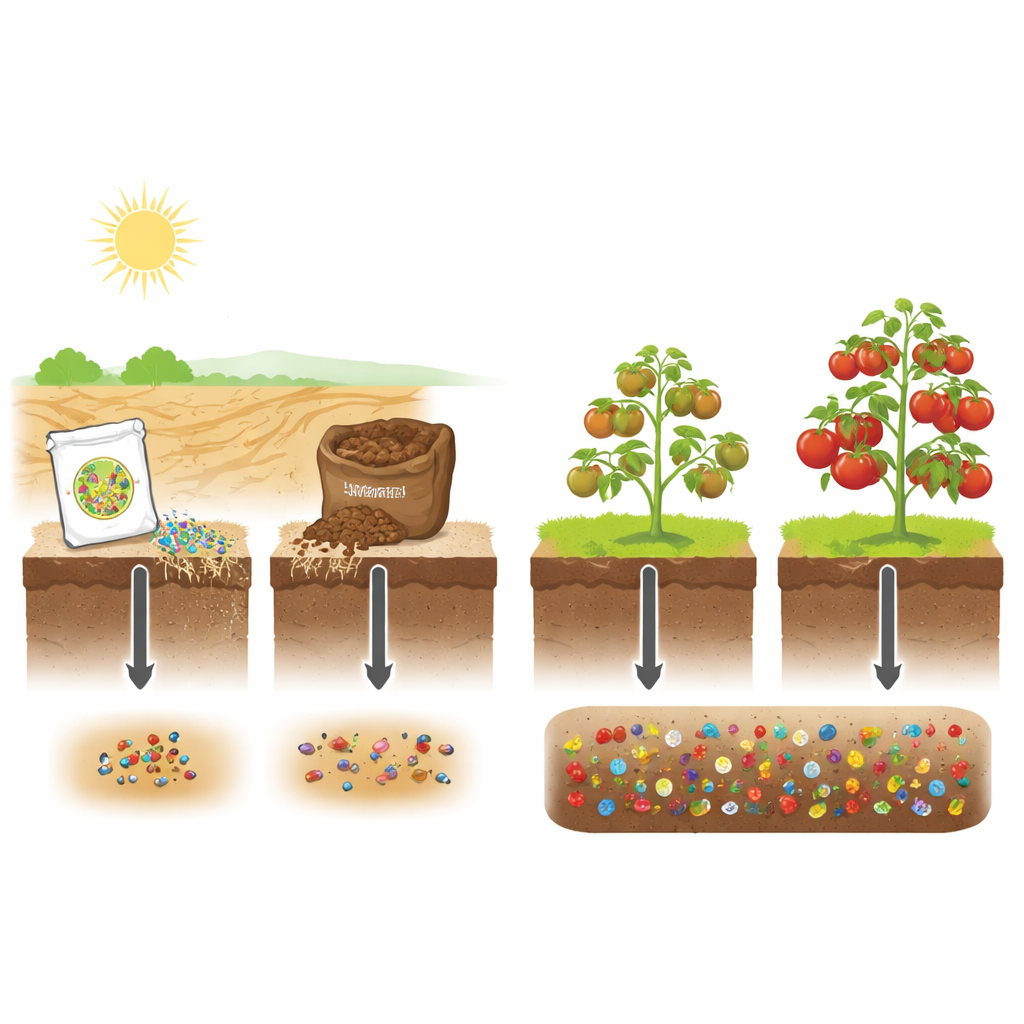
More Manure, Smarter Nitrogen, Bigger Harvest
The standout recipe turned out to be a generous dose of chicken manure combined with only half the usual amount of mineral nitrogen. This treatment produced the highest overall yields, around 35 tons of tomatoes per hectare in each season, with plants carrying more fruits and heavier individual tomatoes than any other option. Purely chemical treatments did boost yield compared with no fertilizer, but they could not match the productivity of the best organic–mineral mix. Equally important, using half as much chemical nitrogen while adding manure allowed plants to turn each kilogram of nitrogen into more kilograms of fruit, showing better fertilizer efficiency and less waste.
Healthier Fruit from Healthier Soil
The benefits showed up in tomato quality as well as quantity. Fruits from manure-plus-nitrogen plots contained more nitrogen, phosphorus, potassium, and total protein than those from unfertilized or purely chemical plots. That means the tomatoes were not just bigger but more nutrient-dense. High manure rates improved the supply and balance of key elements in the soil, so plants could draw on a richer pantry of nutrients throughout their growth. In contrast, relying only on fast-acting mineral nitrogen risked imbalances, with short-term surges of nutrients that plants could not fully capture before they were lost from the soil.
Bringing Soil Life Back to the Field
Below the surface, manure made the soil come alive. Fields receiving chicken manure, especially combined with mineral nitrogen, hosted many more bacteria and fungi and showed higher activity of a key soil enzyme than soils given only chemical fertilizer or none at all. These bustling microbial communities help break down organic matter, release nutrients in plant-ready forms, and build better soil structure that holds water and air. The most productive treatments were also the ones with the most vibrant microbial life, suggesting that feeding the soil’s living community is central to sustaining high yields in harsh, semi‑arid conditions. 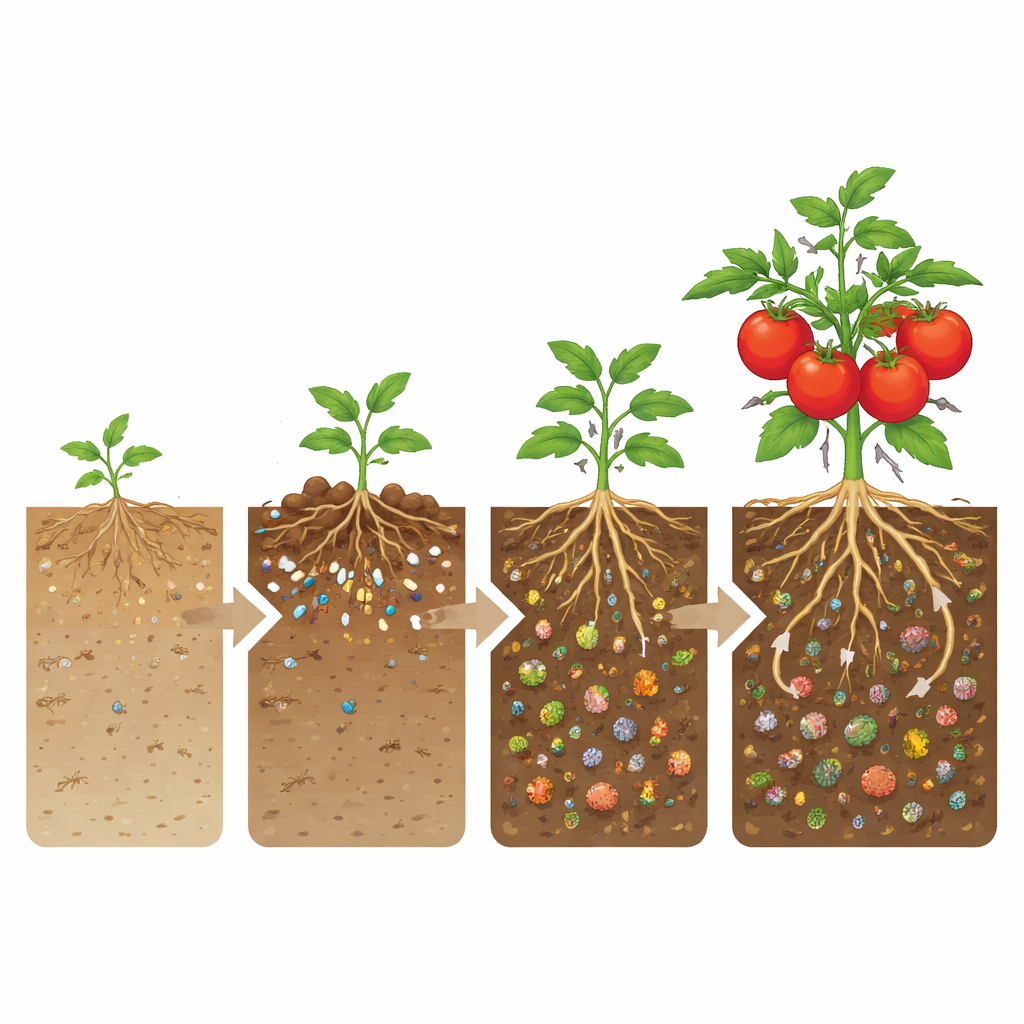
What This Means for Farmers and Consumers
Overall, the study concludes that partially replacing chemical nitrogen fertilizer with chicken manure is a win–win strategy in semi‑arid tomato fields. Farmers can harvest more and better-quality tomatoes while using less synthetic nitrogen, which helps lower environmental risks such as nutrient runoff and soil degradation. For consumers, this integrated approach supports a more reliable supply of nutritious tomatoes, grown in soils that are managed as living ecosystems rather than just inert growing media. The message is clear: blending organic and mineral fertilizers can make tomato production both more productive and more sustainable.
Citation: Alharbi, M.M., Aljuaid, A., Almuziny, M. et al. Impact of application of chicken manure and inorganic nitrogen fertilizer on soil microbial, yield and quality of tomato in semi-arid areas. Sci Rep 16, 13521 (2026). https://doi.org/10.1038/s41598-026-47977-7
Keywords: tomato production, chicken manure, nitrogen fertilizer, soil microbes, sustainable agriculture