Clear Sky Science · en
Status of emergency medical service use for acute ischemic stroke in China
Why minutes matter in stroke emergencies
When a stroke strikes, every passing minute can mean the difference between recovery and lifelong disability. This study looks at how people in China with a common type of stroke choose to get to the hospital, and what that choice means for their chances of receiving time‑critical treatments. By comparing patients who called an ambulance with those who went to the hospital on their own, the researchers reveal patterns that affect survival, independence, and long‑term brain health.
How the study was carried out
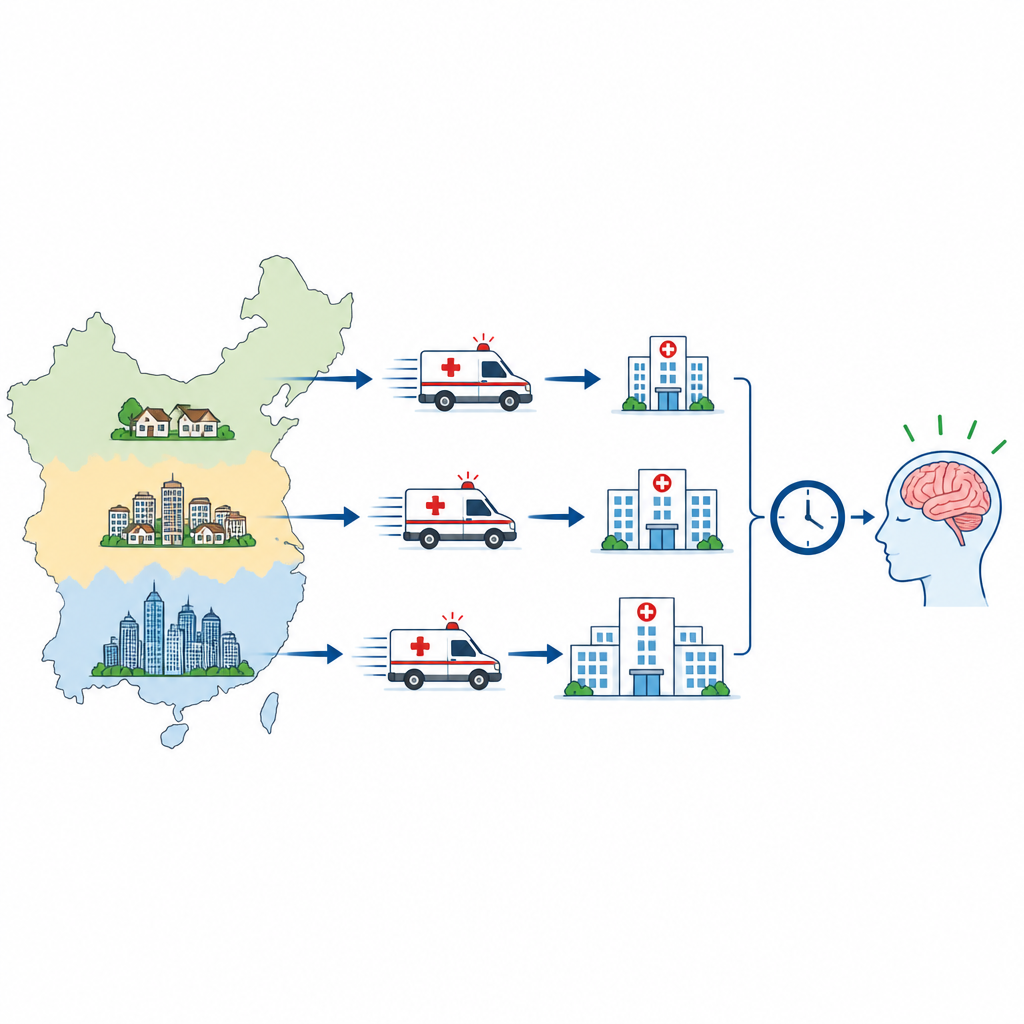
The team analyzed records from 10,856 adults treated for acute ischemic stroke, a type of stroke caused by a blocked blood vessel in the brain. These patients were admitted in 2022 to 21 large hospitals across China, located in cities of different sizes and economic levels. All hospitals were capable of providing modern stroke care, including clot‑busting drugs and procedures to remove clots from brain arteries. Because speed is crucial in stroke, the researchers focused on how patients reached the hospital and how long it took from the start of symptoms to arrival.
Ambulance use is low but brings patients faster care
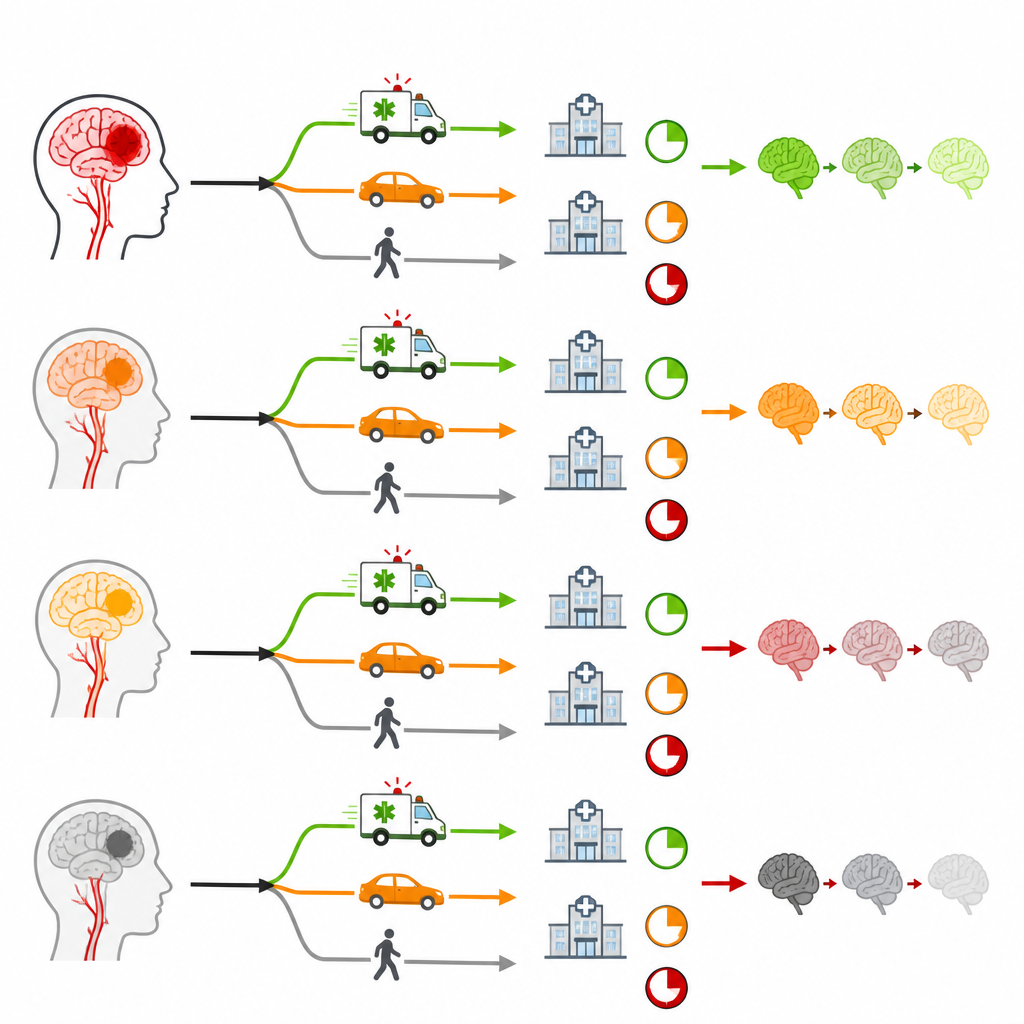
The results showed that only a small share of stroke patients used the emergency medical service. Most traveled to the hospital by themselves or with family. Yet those who arrived by ambulance reached care much sooner. Nearly four out of five people who came on their own arrived more than three hours after symptoms began, compared with less than half of those brought by ambulance. This shorter delay had clear benefits: patients using emergency services were more than twice as likely to receive clot‑dissolving drugs and almost four times as likely to undergo a clot‑removal procedure.
Who is more likely to call an ambulance
Not all patients behaved the same way. Older people were more likely to use emergency services, as were those living in smaller cities. Patients whose stroke began during sleep and was first noticed on waking were also more inclined to call for help, likely because they woke up with obvious problems such as weakness or trouble speaking. People with a type of stroke linked to heart‑origin clots tended to use ambulances more often, and those whose symptoms were more severe were far more likely to be transported by emergency teams.
Who tends to go to the hospital alone
In contrast, patients with strokes caused by blockage of small arteries were more likely to arrive without using emergency services. These strokes often produce milder or less alarming symptoms, such as slight weakness or dizziness, which patients and families may not see as an emergency. The study also found that many patients had limited formal education and that only about one in five had even heard of local stroke emergency networks. These patterns suggest that lack of awareness, cultural habits, and reliance on family transport all contribute to choosing self‑transport instead of calling an ambulance.
What this means for everyday families
Overall, the study shows that using an ambulance for stroke symptoms in China brings patients to the hospital faster and greatly increases their chances of receiving treatments that can restore blood flow to the brain. Yet most people still do not call emergency services, especially those with milder‑seeming strokes or in certain stroke subtypes. To protect brain function and independence, the authors argue that public education must stress a simple message: if someone suddenly develops signs of stroke, such as weakness, trouble speaking, or numbness, calling emergency services right away is one of the most important steps for better outcomes.
Citation: Qi, W., Su, Y., Wu, J. et al. Status of emergency medical service use for acute ischemic stroke in China. Sci Rep 16, 15211 (2026). https://doi.org/10.1038/s41598-026-47263-6
Keywords: stroke, ambulance, emergency care, China, ischemic stroke