Clear Sky Science · en
Prevalence of intestinal parasite and associated factors among fruits and vegetables collected from local markets of woldia town, north east Ethiopia
Why your salad in the market matters
Buying fresh fruits and vegetables from local markets feels like a healthy choice, but those crisp greens and bright tomatoes can sometimes carry hidden passengers. This study from Woldia Town in north east Ethiopia looked closely at common market produce to see how often tiny gut dwelling parasites were clinging to their surfaces and what selling and hygiene habits made that more likely. The findings help explain how everyday shopping and food handling can quietly shape the risk of stomach infections in growing towns.
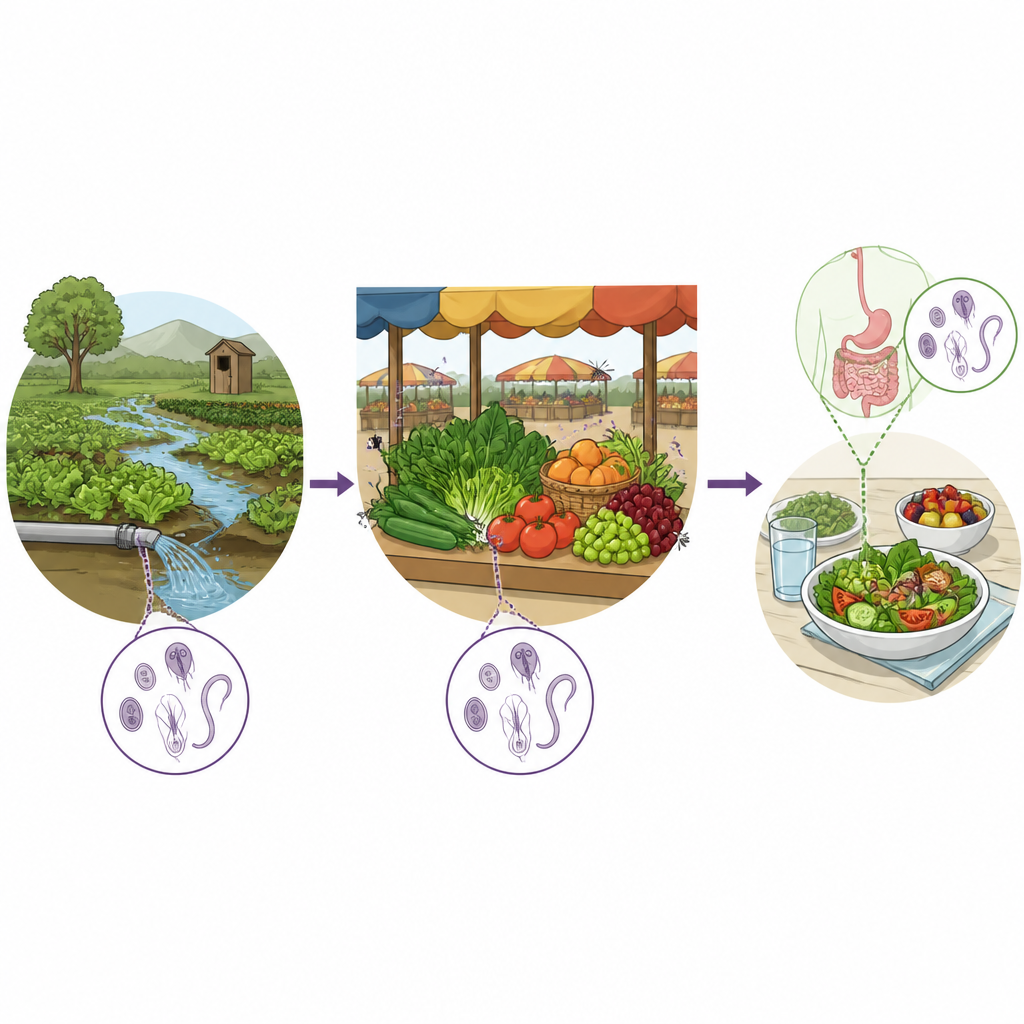
Checking what is on our fruits and vegetables
The researchers carried out a cross sectional survey between September and December 2025 in the open air markets that supply most of Woldia’s residents. They randomly collected 288 samples of fresh produce, including leafy vegetables such as lettuce, spinach, and cabbage, and fruits such as tomatoes, green pepper, mango, banana, orange, and avocado. Only fresh, uncooked items from willing vendors were included. In the laboratory, each sample was washed, the wash water was concentrated, and trained staff examined the material under a microscope to look for the eggs, cysts, or larvae of intestinal parasites. At the same time, vendors answered structured questions about how they stored, covered, and washed their produce and about their own hand washing habits and awareness of parasite risks.
What the microscopes revealed
Almost three in ten samples, 81 out of 288, carried at least one type of intestinal parasite. Leafy vegetables were much more likely to be contaminated than fruits: lettuce alone accounted for about a quarter of all positive samples, while oranges were rarely affected. Overall, vegetables were about eight times more likely to harbor parasites than fruits. The most common organisms were cysts of Entamoeba histolytica/dispar and Giardia lamblia, which can cause diarrhea and other gut problems, followed by the roundworm Ascaris lumbricoides and the tapeworm Hymenolepis nana. Some samples carried more than one parasite type at the same time, showing that market produce can act as a mixed source of infection.
Habits that raise or lower the risk
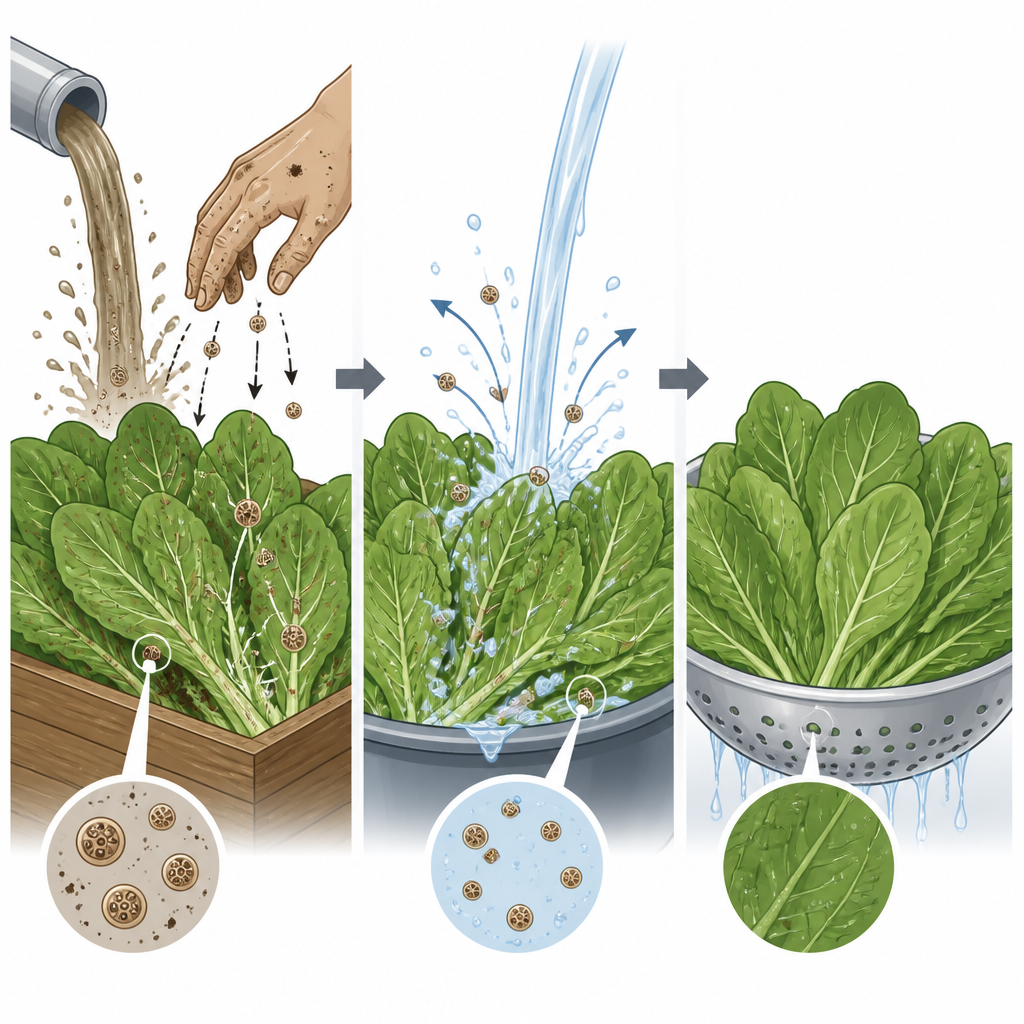
The team used statistical models to link what they found under the microscope with what vendors reported about their practices. Several simple behaviors stood out as strongly tied to contamination. Produce that was not covered during display was about seven times more likely to contain parasites than covered produce, suggesting that exposure to dust, flies, and splashes in crowded markets is important. Items that were not washed before sale were around eight times more likely to be contaminated than those that had been rinsed. Vendors who did not wash their hands before handling produce, or after using the toilet, were also linked to much higher contamination levels, showing how easily parasites can move from people to food.
Local conditions and wider patterns
The study’s findings fit into a larger picture seen across Ethiopia and other tropical countries, where warm, moist climates and limited sanitation favor parasite survival. In Woldia, many farms still rely on natural fertilizers and irrigation water that may be mixed with human or animal waste. Many shoppers prefer raw salads and fruits, which means that any parasites that cling to rough leaf surfaces or survive light rinsing can be swallowed alive. Compared with some other Ethiopian towns, Woldia’s overall contamination level was moderate rather than extreme, but still high enough to pose a clear public health concern, especially where medical care and clean water are not assured for all residents.
What this means for everyday food safety
For non specialists, the study’s message is straightforward: the fresh foods that keep people healthy can also carry invisible gut parasites if basic hygiene is neglected. Covering produce in the market, washing fruits and vegetables thoroughly, and cleaning hands after toilet use and before handling food all sharply reduce the chances that parasites will travel from soil and water into people’s intestines. The authors call for community education, vendor training, routine checks in markets, and better sanitation rules. For families, the take home lesson is that careful washing and simple hygiene steps can make local fruits and vegetables both safe and nutritious.
Citation: Abebe, W., Abebe, G., Kebede, H. et al. Prevalence of intestinal parasite and associated factors among fruits and vegetables collected from local markets of woldia town, north east Ethiopia. Sci Rep 16, 15361 (2026). https://doi.org/10.1038/s41598-026-47206-1
Keywords: intestinal parasites, fruits and vegetables, food contamination, Ethiopia, food hygiene