Clear Sky Science · en
The role of synbiotic in controlling Salmonella infection in broilers
Why this matters for food and health
Chicken is one of the world’s most popular meats, but it can also carry Salmonella, a group of bacteria that cause food poisoning in people and serious disease in birds. At the same time, many Salmonella strains are becoming resistant to antibiotics, making infections harder to treat. This study asks a pressing question for farmers, veterinarians, and consumers alike: can a mix of “good” microbes and the food that feeds them—known together as a synbiotic—protect broiler chickens from Salmonella as well as, or better than, conventional antibiotics?
Germs on the farm
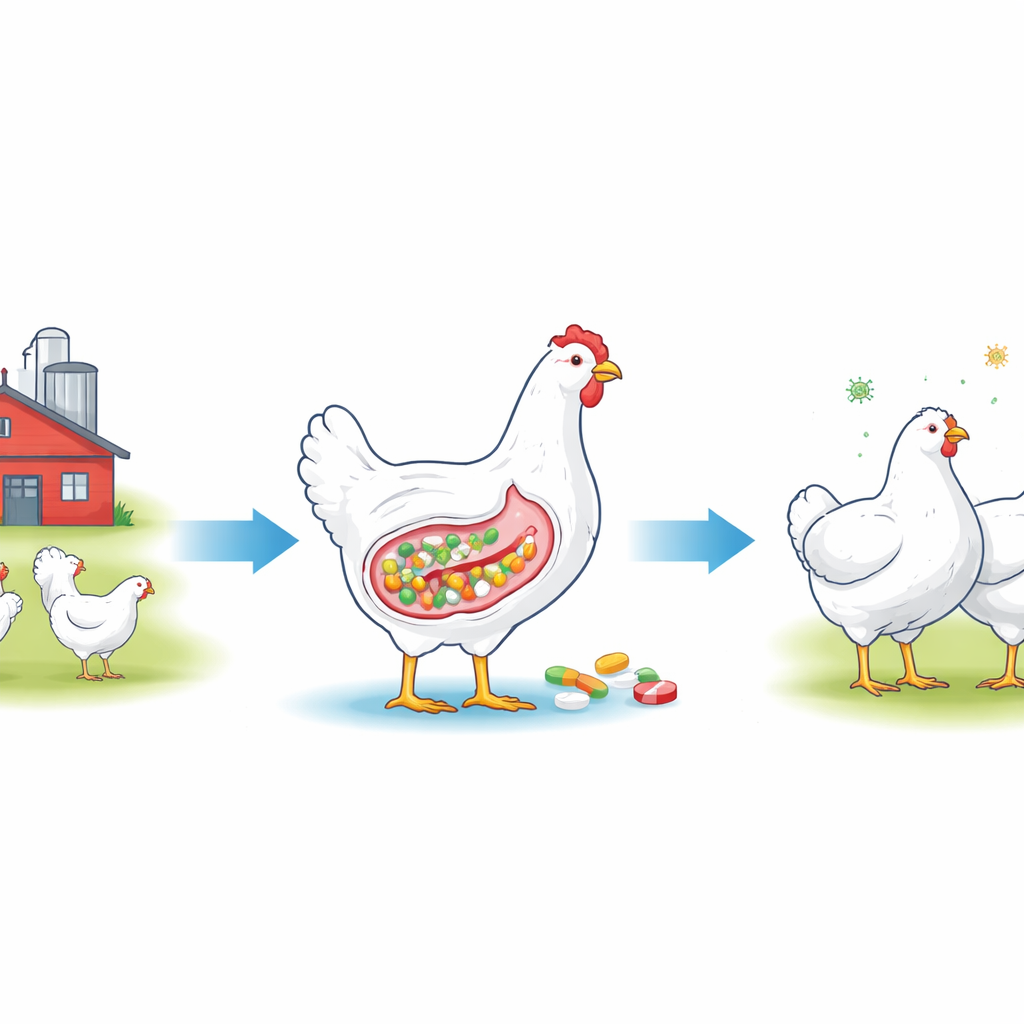
The researchers first visited 25 diseased broiler farms in Egypt’s Northwest Delta region to see how common Salmonella infections were and how tough these bacteria had become. Out of 250 samples taken from organs such as liver and intestine, 16% contained Salmonella. Three types turned up: Salmonella Enteritidis, a leading cause of human food poisoning, plus Salmonella Papuana and Salmonella Kentucky. When the team tested these isolates against a panel of widely used drugs, the picture was worrying. All isolates were fully resistant to several common antibiotics, including amoxicillin, lincomycin, and spiramycin, and three‑quarters resisted ampicillin. By contrast, they remained fully sensitive to some other drugs, such as amikacin, gentamicin, cefotaxime, colistin, and streptomycin. Genetic tests also showed that every strain carried key genes linked to their ability to invade the gut and produce toxins, confirming their potential to cause severe disease.
Testing a new feeding strategy
To find out whether synbiotics could help control these dangerous bacteria inside chickens, the team ran a controlled experiment using 105 broiler chicks. The birds were divided into four groups: an uninfected control group, an infected but untreated group, an infected group given synbiotic in the feed from day one, and an infected group treated with the antibiotic florfenicol after infection. All infected birds received an oral dose of Salmonella Enteritidis early in life, and the researchers followed them for 35 days. They monitored symptoms, growth, and survival, and also took samples from the gut, blood, and organs to measure how heavily the bacteria colonized the intestines, how the birds’ immune systems responded, and how much internal damage the infection caused.
Health, growth, and fewer germs
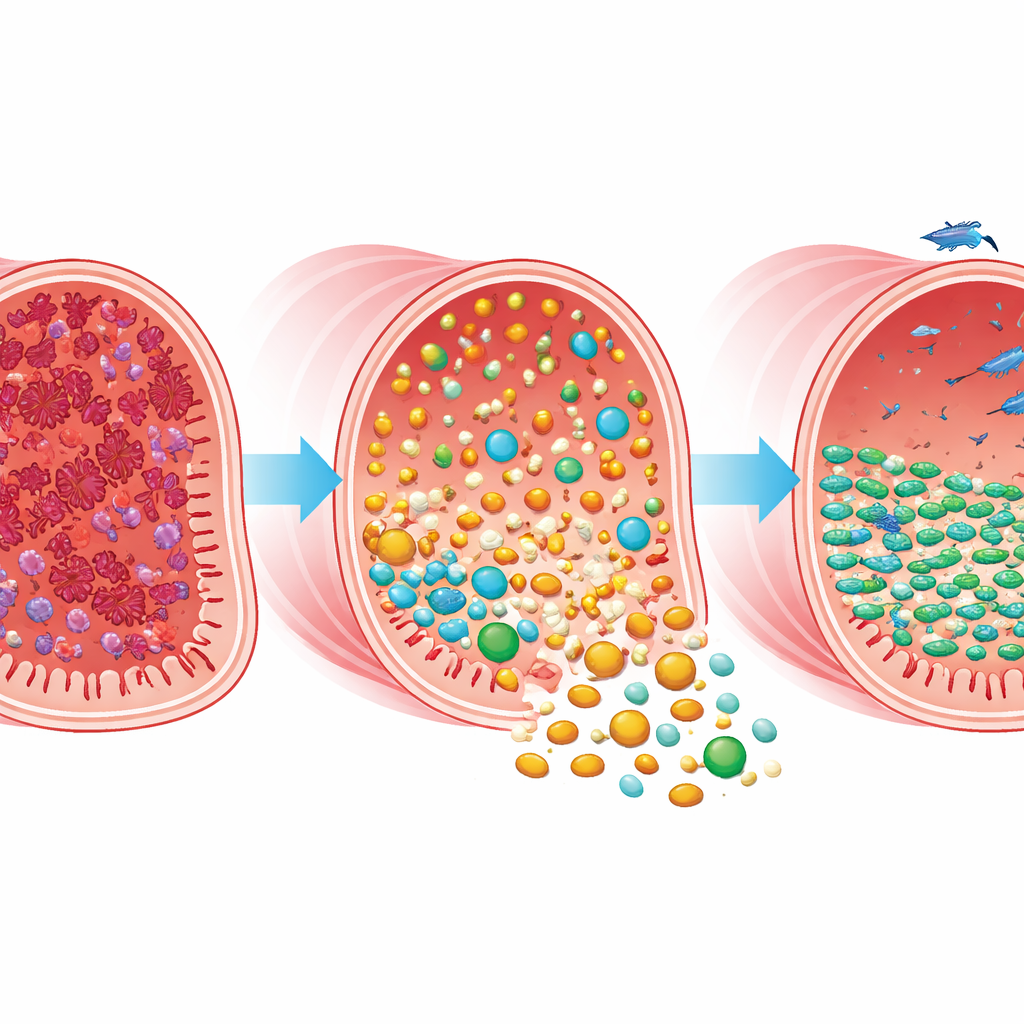
Chicks that were infected but not treated lost weight, ate less, and showed classic signs of illness such as depression, breathing difficulty, and watery diarrhea. They also had a high death rate and showed severe internal lesions in organs like the liver, spleen, kidneys, and gut. In striking contrast, birds that received the synbiotic grew better than all other groups: they ended the trial heavier, converted feed into body weight more efficiently, and had lower mortality. Both the synbiotic and antibiotic groups had fewer Salmonella in their ceca—the pouch at the start of the large intestine—than the untreated infected group, but the synbiotic birds generally showed the greatest reductions over time. Blood tests revealed that synbiotic supplementation improved red blood cell measures, boosted protective white blood cells and their ability to engulf microbes, and enhanced antioxidant defenses, all signs of a stronger, more balanced immune system.
Inside the birds’ bodies
When veterinarians examined tissues under the microscope, they found that infection alone caused widespread damage: cell death, swelling, bleeding, and heavy inflammatory cell buildup in the liver, kidneys, heart, stomach‑like proventriculus, and intestines, along with shrinkage and depletion of immune tissues such as the bursa and spleen. These changes explain the poor health and weak resistance seen in untreated birds. Antibiotic treatment reduced the severity of many lesions, but the synbiotic group generally showed the mildest changes, suggesting better protection of both the gut lining and immune organs. The authors note that while florfenicol can kill Salmonella, it can also harm helpful gut microbes, potentially undermining long‑term resilience. Synbiotics, in contrast, appear to encourage a healthier gut community that naturally crowds out invaders and dampens harmful inflammation.
What this means for chickens and people
Taken together, the work shows that synbiotics can do more than simply replace one drug with another. In these broiler flocks, a synbiotic feed supplement not only reduced Salmonella colonization and tissue damage, but also improved growth, survival, and key blood and immune indicators when compared with both no treatment and antibiotic treatment. For the poultry industry, this points to a practical way to raise healthier birds while cutting back on routine antibiotic use—a major driver of drug‑resistant bacteria. For consumers, approaches like this could lower the risk that Salmonella from chicken meat will carry multidrug resistance into the human food chain.
Citation: Salim, A.A., Mohamed, N.A., El-Gammal, G.A. et al. The role of synbiotic in controlling Salmonella infection in broilers. Sci Rep 16, 12695 (2026). https://doi.org/10.1038/s41598-026-47199-x
Keywords: broiler chickens, Salmonella, synbiotics, antibiotic resistance, poultry gut health