Clear Sky Science · en
Benchmarking Q fever transmission in czech republic and serbia: A one health sub-national population study
Why a farm disease matters to everyday life
Q fever is an infection that quietly circulates among cows, sheep and goats, but it can also make people seriously ill. This study compares what happens when the same germ, Coxiella burnetii, spreads in two European farming regions that look similar on the map but have very different experiences of disease. By asking why one area sees repeated outbreaks in people while the other does not, the researchers highlight how farm structure, weather, and everyday work with animals can shape the health of whole communities.
Two regions, one shared germ
The team focused on Moravia and Silesia in the eastern Czech Republic and on the Srem and South Bačka districts in the northern Serbian province of Vojvodina. All four areas are lowland, fertile, and strongly tied to agriculture. Using official health and veterinary records from 2011 to 2018, the researchers tracked Q fever in both people and livestock. They examined who fell ill, where they lived, which animal species carried antibodies to the germ, and how infection appeared to move between farms and nearby towns.
Plenty of infected cattle, few sick people
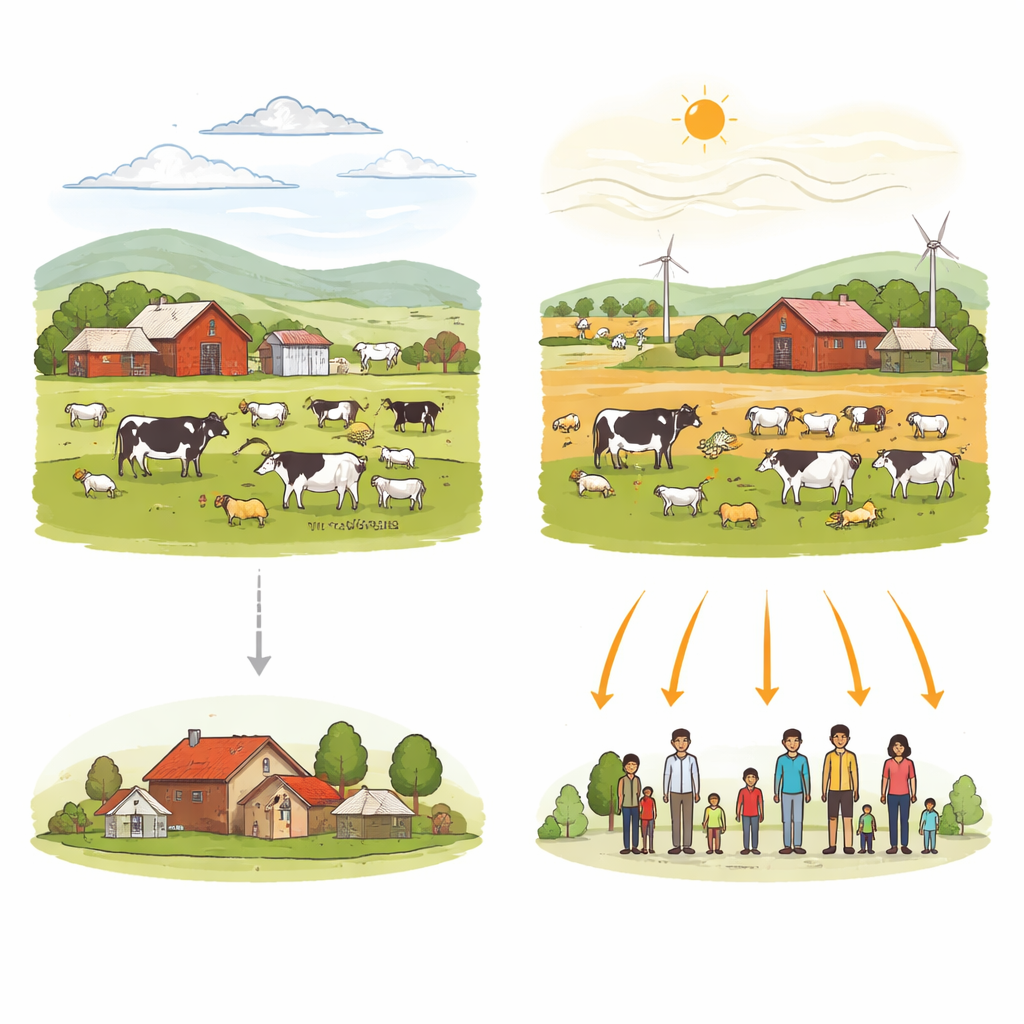
In the Czech regions, blood tests showed that Q fever was widespread in cattle herds. In some districts, nearly one third of tested cows had signs of past infection, and no district was entirely free of it. Yet there were only five confirmed human cases in the entire country over eight years, and just three occurred in Moravia and Silesia, mostly linked to travel rather than local farms. Sheep and goats were few in number and repeatedly tested negative. Most cattle were kept on large, modern farms located away from villages, with limited direct contact between animals and the general public. The authors suggest that this style of industrial farming, combined with wetter, more humid weather during calving, may keep contaminated dust from reaching people.
Enduring trouble where people and animals mix
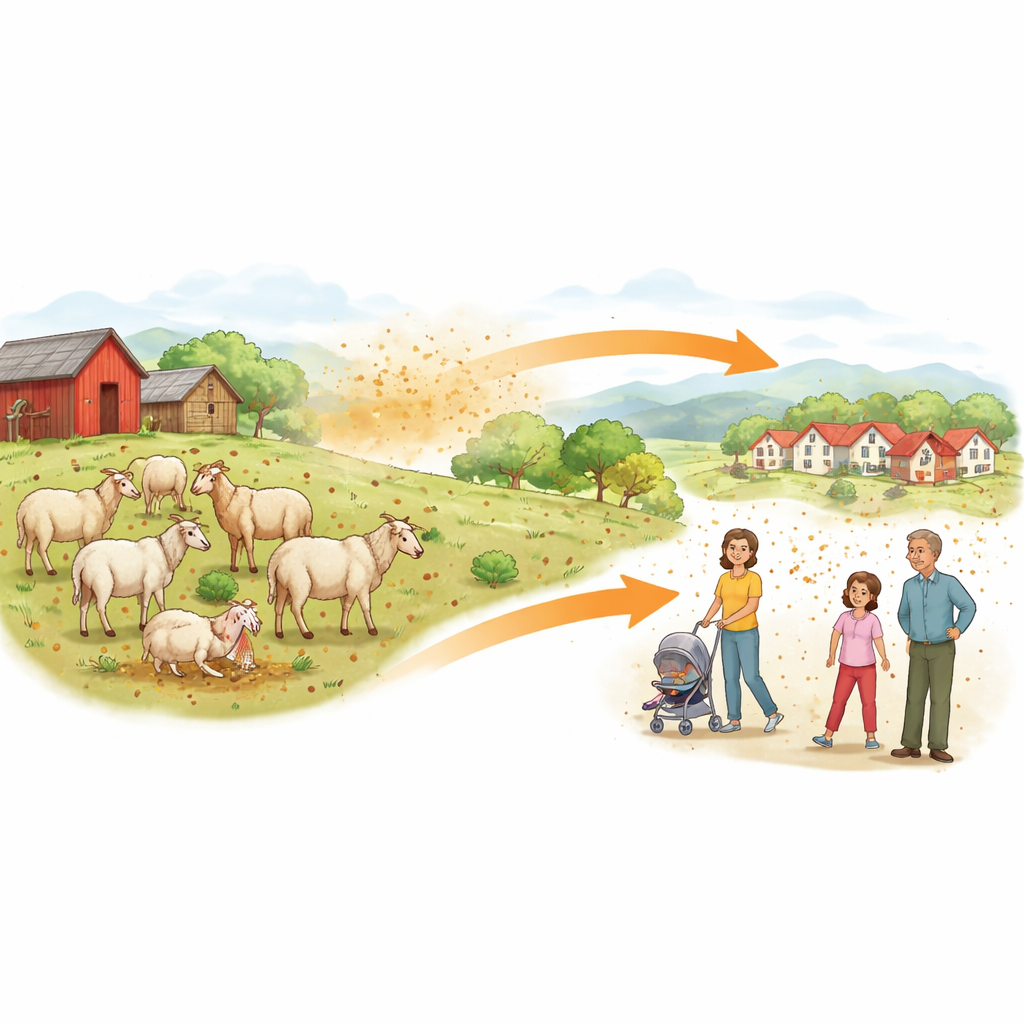
The picture in Vojvodina, especially in Srem district, was very different. Here, Q fever in animals shifted over time and across species, with infection found in cattle, sheep, and goats. Small family farms with mixed herds and extensive grazing brought people, animals, and birthing areas into close daily contact. Between 2011 and 2018, Vojvodina recorded 231 human cases—about two and a half times the national average rate—with one third of these clustered in Srem. Most patients were working-age men, often involved in farm tasks such as lambing, slaughtering, or cleaning pens. Outbreak investigations pointed to air currents carrying contaminated dust from lambing and kidding sites, and to direct handling of newborn animals and placentas without protective gear.
Weather, wind, and warning signs
Across the Serbian districts, human cases peaked from January to May, matching the lambing and kidding seasons for sheep and goats. Animal testing in Srem and South Bačka also showed seasonal peaks, and earlier studies linked higher case numbers to strong local winds that can lift and spread infected dust. In contrast, the Czech regions showed high, steady levels of infection in cattle but little sign of seasonal human illness. Drawing on these contrasts, the authors argue that climate and wind, farm layout, and how closely people live and work with animals all interact to determine whether a livestock infection becomes a human health problem.
Working together to stay ahead of outbreaks
The study concludes that controlling Q fever requires a “One Health” view that treats human, animal, and environmental health as a single system. For hotspots like Srem, this could mean vaccinating sheep and goats, improving hygiene around births, and educating farmers about safe handling of animal waste and raw milk. Because weather and wind appear to play a key role, the authors also propose an early warning and response system that combines routine animal testing with meteorological data to predict when and where outbreaks are likely. Although the work cannot prove cause and effect, it clearly shows that the same germ can be relatively harmless in one setting and a recurring threat in another—depending on how we organize our farms, our communities, and our response to early warning signs.
Citation: Holý, O., Savić, S., Bzdil, J. et al. Benchmarking Q fever transmission in czech republic and serbia: A one health sub-national population study. Sci Rep 16, 11741 (2026). https://doi.org/10.1038/s41598-026-47183-5
Keywords: Q fever, zoonotic disease, livestock farming, One Health, Serbia and Czech Republic