Clear Sky Science · en
PAK5 drives vascular remodeling in hypoxic pulmonary hypertension via Drp1-dependent mitochondrial midzone division
Why low oxygen and lung pressure matter
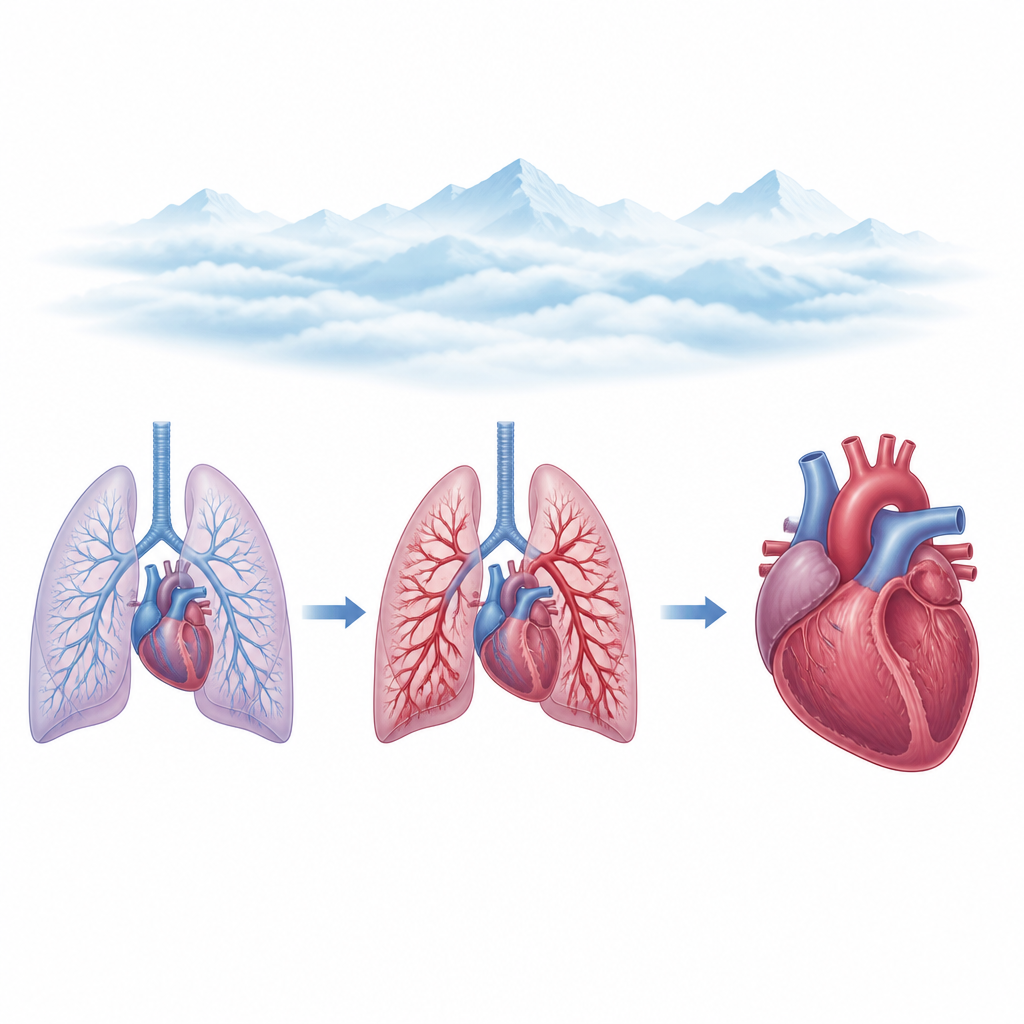
When people live at high altitude, have chronic lung disease, or face long term low oxygen, the blood vessels in their lungs can stiffen and thicken. This condition, called hypoxic pulmonary hypertension, forces the right side of the heart to pump harder and can lead to heart failure. The new study explores how tiny structures inside lung vessel muscle cells help drive this dangerous remodeling, and points to a new protein that could be targeted to slow or stop the process.
Tiny power stations in trouble
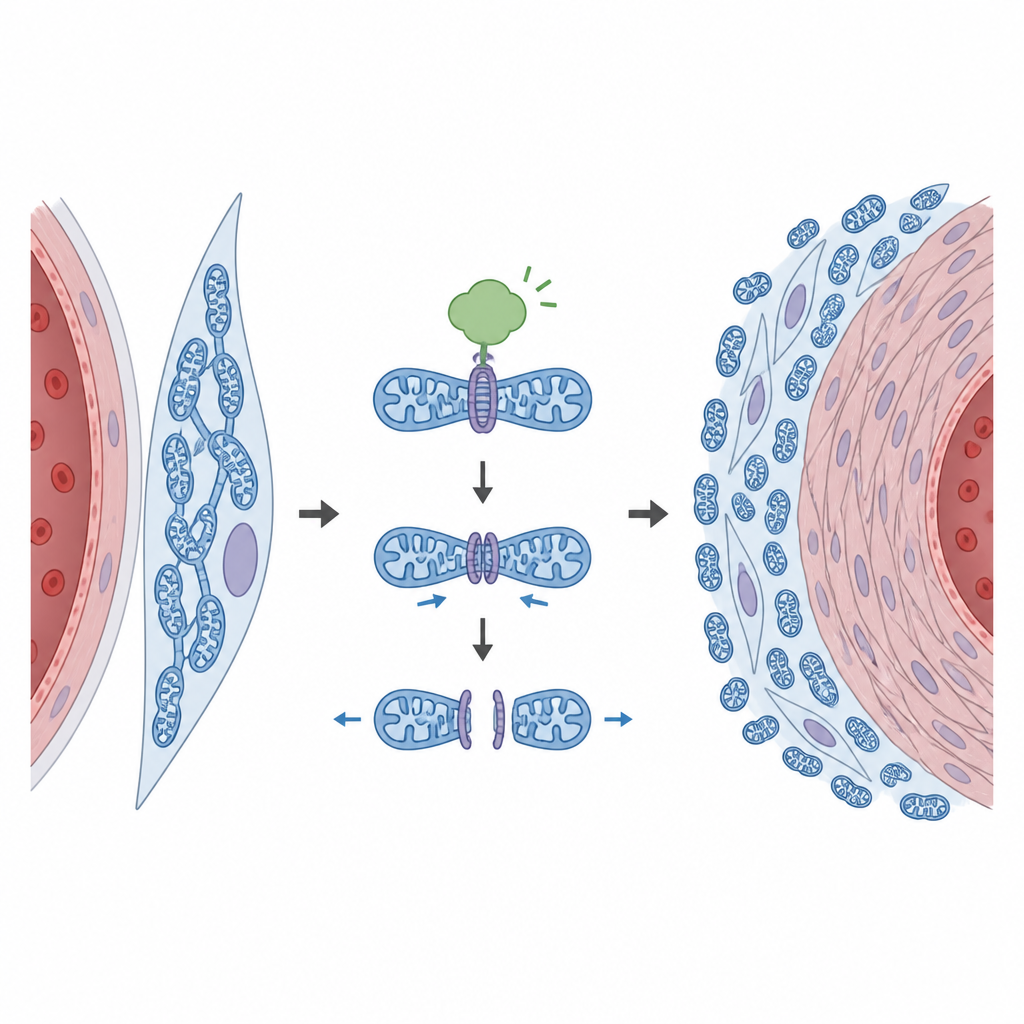
The work centers on mitochondria, the small structures often described as the cell’s power stations. In healthy cells they form long, connected networks that constantly split and fuse, keeping energy production and cell survival in balance. In hypoxic pulmonary hypertension, these networks become overly fragmented. This shift is tied to lung artery muscle cells that multiply too quickly and resist dying when they should, causing the vessel wall to thicken and narrow. The authors asked what starts this harmful change in mitochondrial shape and behavior.
A cancer linked protein enters the lung story
The researchers focused on PAK5, a protein already known for its role in several cancers where it helps cells grow and avoid death. Because hypoxic pulmonary hypertension shares cancer like traits, such as runaway cell growth and altered metabolism, they suspected PAK5 might also be involved in diseased lung vessels. In lung tissue from animal models exposed to low oxygen, as well as from patients with pulmonary hypertension linked to interstitial lung disease or chronic obstructive pulmonary disease, they found much higher levels of PAK5. The increase was especially strong in the smooth muscle layer of small lung arteries, the very cells that thicken in this condition.
How PAK5 reshapes mitochondria
Digging deeper, the team showed that low oxygen pushed PAK5 to the mitochondria in lung artery muscle cells. There it interacted directly with another protein, Drp1, which is a master regulator of mitochondrial splitting. Under hypoxia, more Drp1 moved onto the mitochondria and triggered a specific form of central splitting known as midzone division, turning long mitochondrial strands into shorter fragments. At the same time, levels of a fusion protein that helps mitochondria join, Mfn1, went down. This combination favored fragmentation, and cells with high PAK5 showed more markers of cell cycle activity and faster multiplication.
Blocking the chain reaction
The scientists then tested what happens when PAK5 activity is reduced. In cell culture, silencing PAK5 with genetic tools or inhibiting it with a drug cut back Drp1’s presence on mitochondria, reduced midzone division, and restored fusion friendly proteins like Mfn1. As a result, lung artery muscle cells grew less and showed more signs of programmed cell death. In mice exposed to chronic low oxygen, using a virus to lower PAK5 specifically in vascular smooth muscle cells lessened thickening of small pulmonary arteries, improved pressures in the lung circulation, and eased strain on the right ventricle of the heart.
From cell mechanism to possible treatment
Together, these findings support a clear chain of events: low oxygen boosts PAK5 in lung vessel muscle cells, PAK5 activates Drp1 and midzone mitochondrial division, mitochondria become fragmented, and the cells multiply excessively, driving vessel wall remodeling. By interrupting this PAK5 Drp1 Mff pathway, the study shows it is possible to protect mitochondrial balance, curb abnormal cell growth, and improve heart and lung function in animal models. For a lay reader, the takeaway is that a cancer related protein inside the cell’s power stations may be a key switch that turns healthy lung vessels into narrowed, high pressure pipes, and that turning this switch back down could offer a new route to future therapies.
Citation: Zhang, J., Yan, H., Wang, Y. et al. PAK5 drives vascular remodeling in hypoxic pulmonary hypertension via Drp1-dependent mitochondrial midzone division. Sci Rep 16, 15674 (2026). https://doi.org/10.1038/s41598-026-46809-y
Keywords: hypoxic pulmonary hypertension, mitochondrial fission, PAK5, Drp1, pulmonary vascular remodeling