Clear Sky Science · en
Assessing regulatory institutions and building collapse in Lagos state, Nigeria
Why Crumbling Buildings Matter
In Lagos, Nigeria’s bustling economic hub, buildings do far more than provide shelter—they hold shops, schools, homes, and workplaces for millions. Yet the city has suffered a troubling series of building collapses, often with tragic loss of life. This article asks a simple but powerful question: if Lagos already has several government bodies meant to keep buildings safe, why do collapses keep happening? By looking closely at how these institutions work, where they are located, and what their own staff think is going wrong, the study shines a light on the hidden machinery of urban safety.
Who Is Supposed to Keep Buildings Safe?
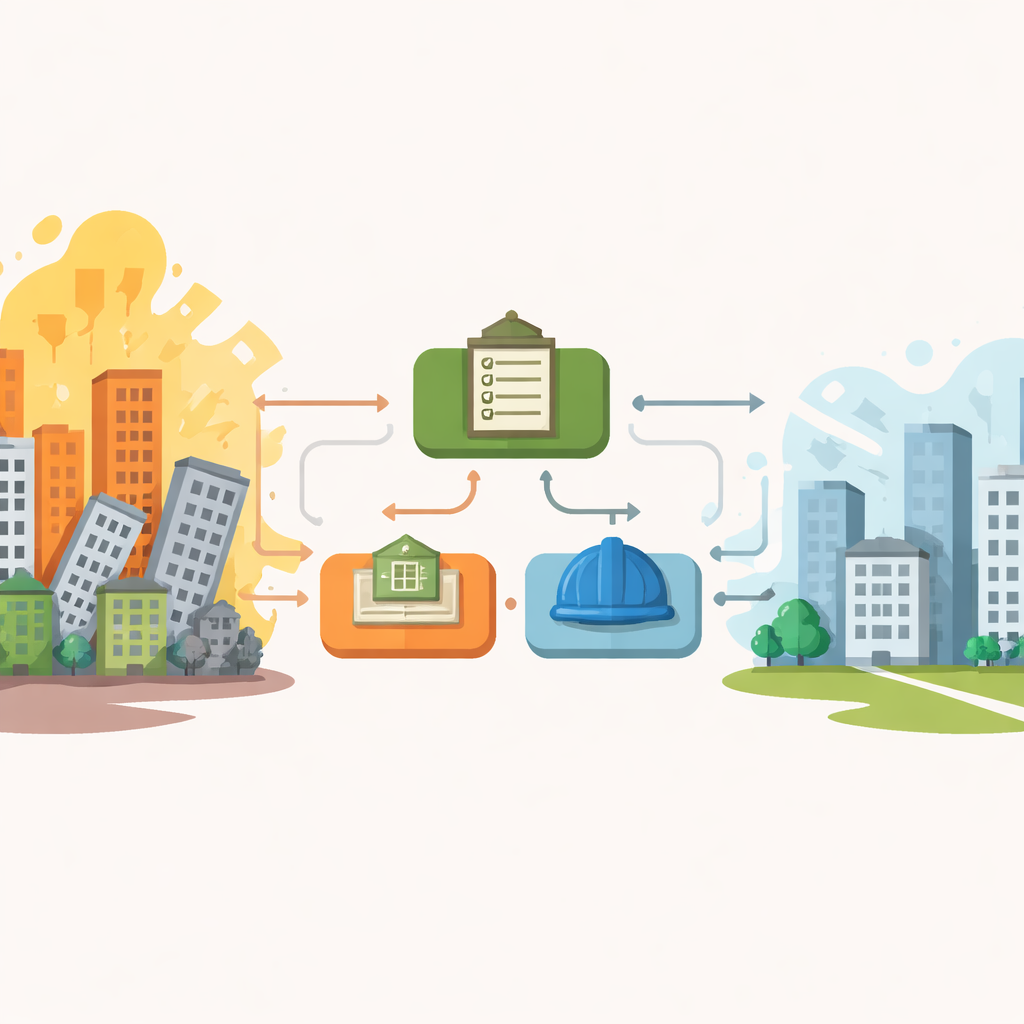
Lagos has created a web of public agencies to guide and police construction. One office is meant to grant planning permission before any structure goes up, another is tasked with inspecting building work on site, and a third checks that concrete, steel, and other materials are up to standard. Together, they form a kind of safety chain from drawing board to finished building. On paper, their responsibilities are clear: approve designs, inspect construction regularly, enforce building rules, and stop unsafe or illegal projects. Staff who answered the survey strongly agreed that shutting down dangerous sites and educating the public about building safety are central parts of their mandate. However, they were much less confident that sites are actually inspected often, or that builders always stick to approved plans.
How the Study Took the City’s Pulse
To move beyond official job descriptions, the researchers combined three types of evidence. They surveyed 165 employees across 11 planning and regulatory agencies, asking about their experience, how well they felt their institutions were performing, and what obstacles they faced. They interviewed ten seasoned professionals—planners, architects, engineers, builders, and quantity surveyors—to gather richer personal accounts. Finally, they mapped the exact locations of planning and control offices across Lagos and used geographic analysis to see whether these offices are evenly spread out or bunched together. This mixed approach allowed them to link everyday perceptions inside agencies with the physical footprint of regulation on the city’s map.
What People Inside the System See
The picture that emerges is one of institutions that know their duties but struggle to carry them out. Many respondents said their agencies do supervise building work and sometimes help prevent collapse, and that they collaborate with professional associations. But they also highlighted serious weaknesses. Technology such as drones and digital maps is rarely used, and checks on active building sites are not as thorough or frequent as they should be. Staff pointed to political interference, corruption, and delays in punishing rule-breakers as especially damaging. They also reported shortages of skilled personnel, patchy data on buildings, and low public trust. Interviewees echoed these concerns, describing cases where stop-work orders were ignored, where different agencies acted in isolation, and where powerful interests pushed back against enforcement.
Where the Watchdogs Actually Are
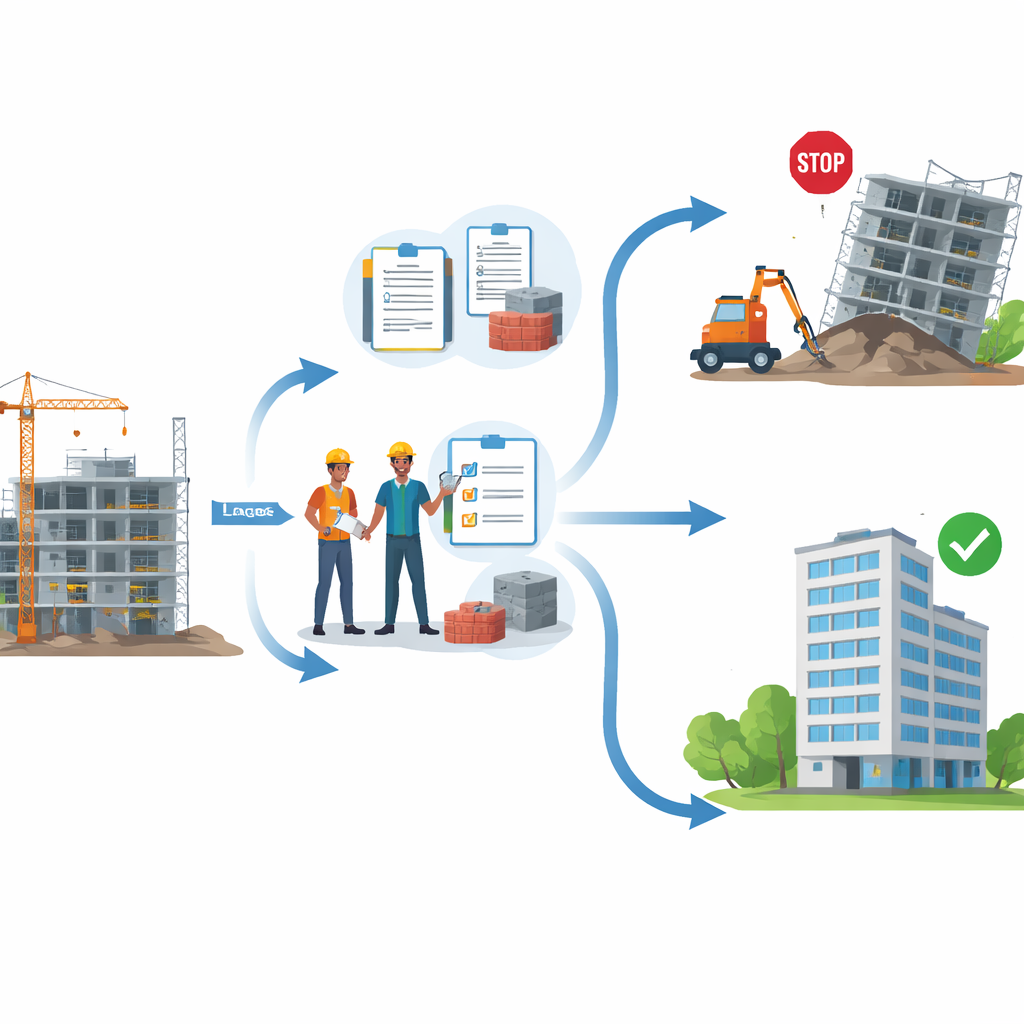
The map-based part of the study revealed another layer of risk. Regulatory offices are strongly clustered in central, well-established districts such as Ikeja, Ikoyi, Victoria Island, and Surulere. Outlying areas—where the city is expanding fastest and informal construction is common—have far fewer offices nearby. Buffer zones drawn around each office showed large areas of overlapping coverage in the core city, but thinner coverage toward the edges. The authors do not claim that this pattern directly causes building collapses, but they argue it likely makes it easier for unsafe projects to slip through in the fast-growing fringes of Lagos.
How Lagos Could Build Safer Streets
To everyday residents, the study’s central message is that preventing building collapse is less about discovering new engineering tricks and more about fixing how institutions work. The authors recommend regular, hands-on training for inspectors, stronger protection of agencies from political pressure, and better coordination through shared digital systems for permits and site checks. They call for tougher, more reliable penalties for builders who break the rules, wider use of modern monitoring tools, and channels for citizens to report suspicious construction. In simple terms, the conclusion is that Lagos does not lack rules or experts—it lacks the empowered, well-resourced, and well-connected institutions needed to make those rules real on the ground.
Citation: Salau, W.O., Anifowose, R.K. Assessing regulatory institutions and building collapse in Lagos state, Nigeria. Sci Rep 16, 10549 (2026). https://doi.org/10.1038/s41598-026-46568-w
Keywords: building safety, urban governance, Lagos Nigeria, regulatory agencies, building collapse