Clear Sky Science · en
Morinda officinalis polysaccharides activate the SIRT1/PGC-1α pathway to reduce oxidative damage in Leydig TM3 cells
Why this study matters
Many couples struggle to conceive, and in a large share of cases the problem lies on the male side. One common culprit is damage to the cells in the testes that make testosterone and help produce healthy sperm. This study explores whether natural sugar molecules from a traditional Chinese medicinal plant, Morinda officinalis, can shield those cells from harm and improve sperm quality in animals.
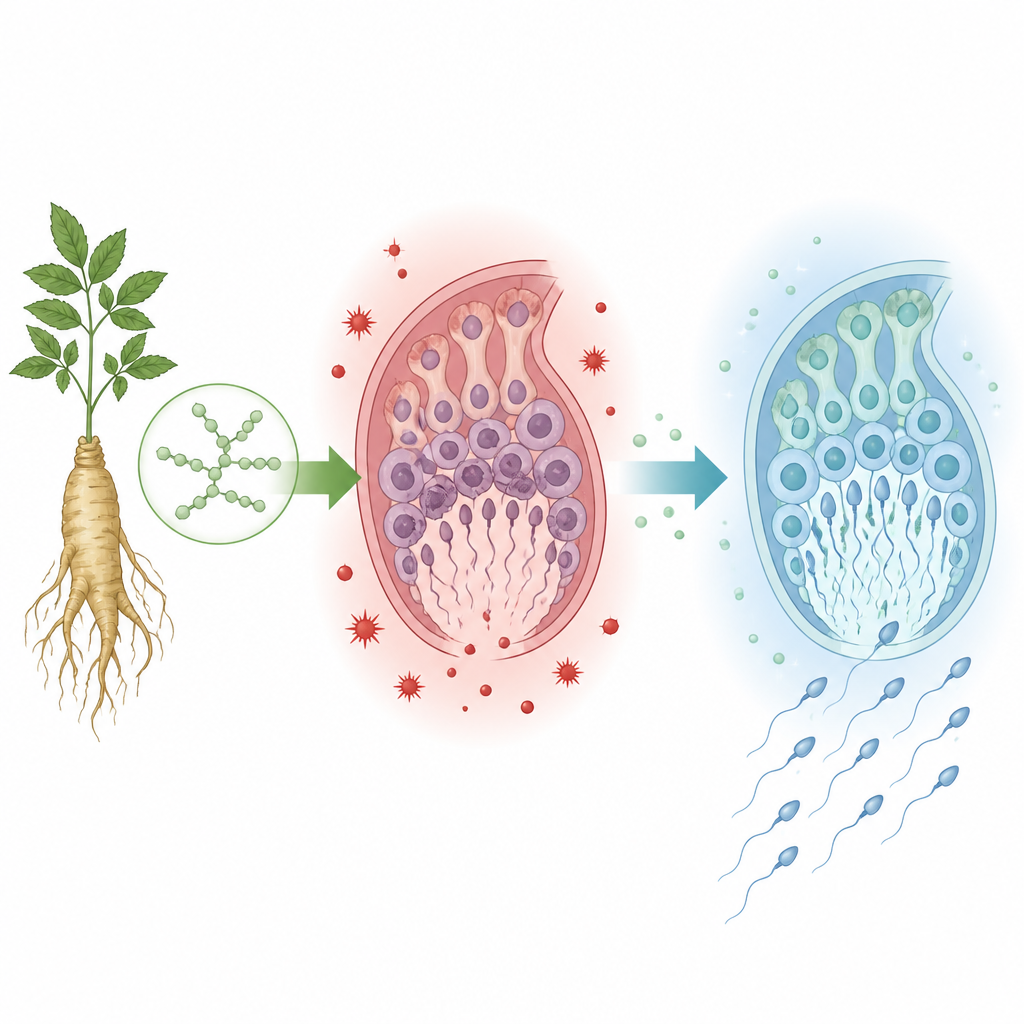
The problem of stressed testicular cells
Modern life exposes our bodies to many sources of oxidative stress, from pollution to illness. Inside cells, this stress shows up as an overload of reactive oxygen species, chemically aggressive forms of oxygen that can damage fats, proteins, and DNA. In the testes, such damage can injure Leydig cells, the sole producers of testosterone in males. When these cells falter, sperm counts fall, sperm move poorly, and the risk of infertility rises.
A traditional plant with a modern question
Morinda officinalis is a vine whose root has long been used in Chinese medicine to support sexual health and treat conditions linked to low vitality. It is rich in polysaccharides, chains of sugar molecules that tend to be safe and show antioxidant and anti-inflammatory activity in other organs. The researchers asked whether Morinda officinalis polysaccharides, abbreviated MOP, could protect Leydig cells from oxidative damage and, in turn, help preserve male reproductive function.
Testing protection in cells and in rats
To probe this question, the team first worked with a mouse Leydig cell line in dishes. They used hydrogen peroxide to mimic oxidative stress, which drove up reactive oxygen species, aged the cells, weakened their energy factories, the mitochondria, and reduced testosterone production. When MOP was added, cell growth recovered, aging markers fell, and antioxidant defenses such as key protective enzymes rose. Mitochondria regained their membrane potential, made more energy, and appeared more numerous and active under fluorescent dyes. In parallel, the scientists created a rat model in which a chemical selectively wiped out Leydig cells in the testes. As expected, these rats showed shrunken testes, low testosterone, poor sperm counts, and sluggish sperm. Daily dosing with MOP for several weeks largely reversed these changes, restoring testis structure, boosting sperm number and movement, and improving scores that capture the overall quality of sperm formation.
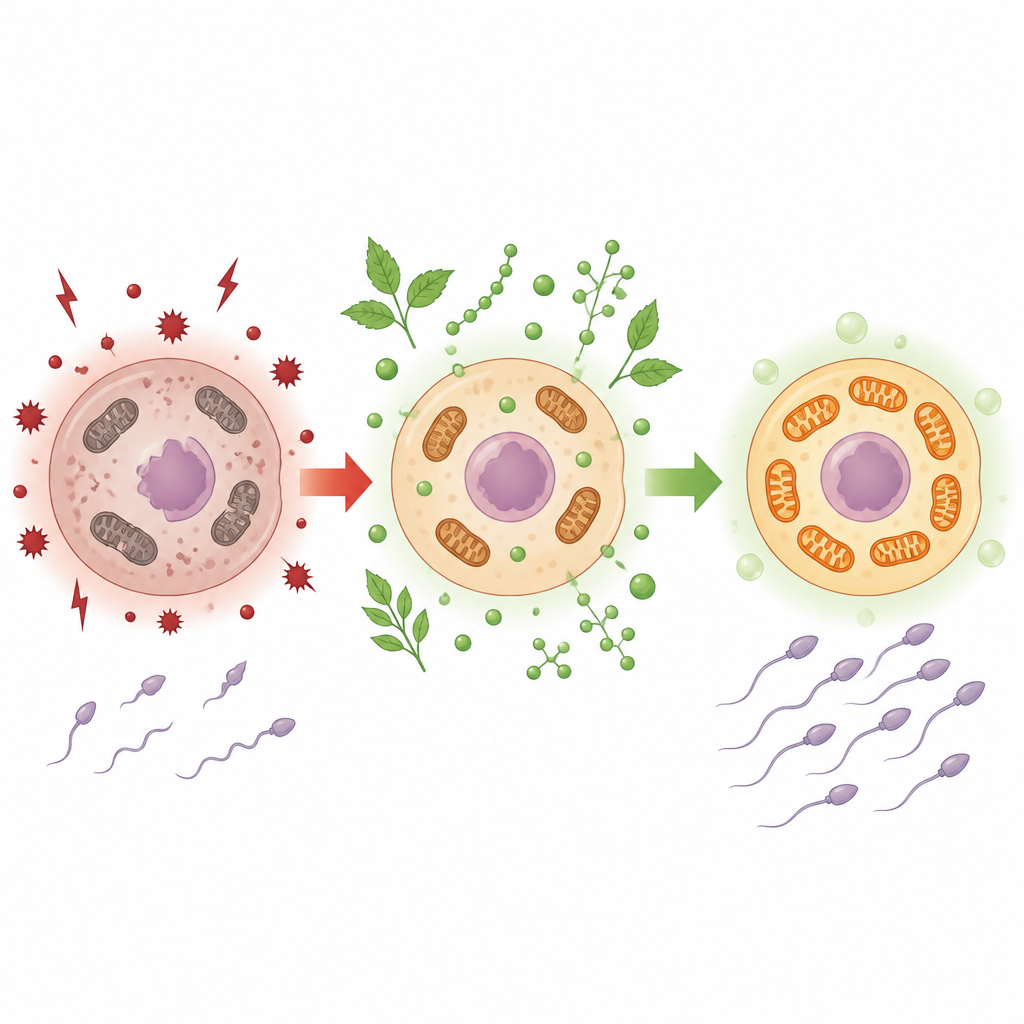
Uncovering the inner control switches
The researchers then looked inside the cells to see how MOP might be working. They focused on a cellular control route called the SIRT1/PGC-1α pathway, known to regulate mitochondrial health. In both untreated and stressed Leydig cells, MOP raised the levels of SIRT1 and PGC-1α, as well as proteins that help maintain mitochondrial shape and DNA. A protein that supports cell survival also increased. When the team added a drug that blocks SIRT1, many of MOP’s benefits disappeared: oxidative stress rose again, mitochondria lost function, and protective enzymes dropped. This pointed to SIRT1 as a key switch through which MOP helps cells resist oxidative damage.
What this could mean for future treatments
Taken together, the findings suggest that Morinda officinalis polysaccharides can shield testosterone-producing cells in the testes from oxidative harm, mainly by strengthening their mitochondria through the SIRT1/PGC-1α pathway. In rats, this protection translated into healthier testes and better sperm quality, hinting that MOP or related compounds might one day support treatments for certain forms of male infertility. Further studies in humans will be needed, but the work offers a detailed view of how a traditional remedy may help preserve male reproductive health at the cellular level.
Citation: Fu, M., Wu, S., Yin, X. et al. Morinda officinalis polysaccharides activate the SIRT1/PGC-1α pathway to reduce oxidative damage in Leydig TM3 cells. Sci Rep 16, 16198 (2026). https://doi.org/10.1038/s41598-026-46267-6
Keywords: male infertility, Leydig cells, oxidative stress, mitochondria, Morinda officinalis