Clear Sky Science · en
Genetic diversity and phylogeography of Chimaera monstrosa (Linnaeus, 1758) in the Mediterranean Sea: insights from COI mitochondrial DNA analysis
Ancient deep sea fish with a modern conservation story
Hidden hundreds of meters below the waves, a little known fish called the rabbitfish or ghost shark glides along the seafloor of the Mediterranean and Atlantic. Although it looks a bit like a mix between a shark and a mythical creature, this animal is very real and is listed as threatened. The study explored how its populations are related across distant parts of the sea, using tiny differences in their DNA to understand where separate groups live and how they might need to be protected.
A shy resident of the deep
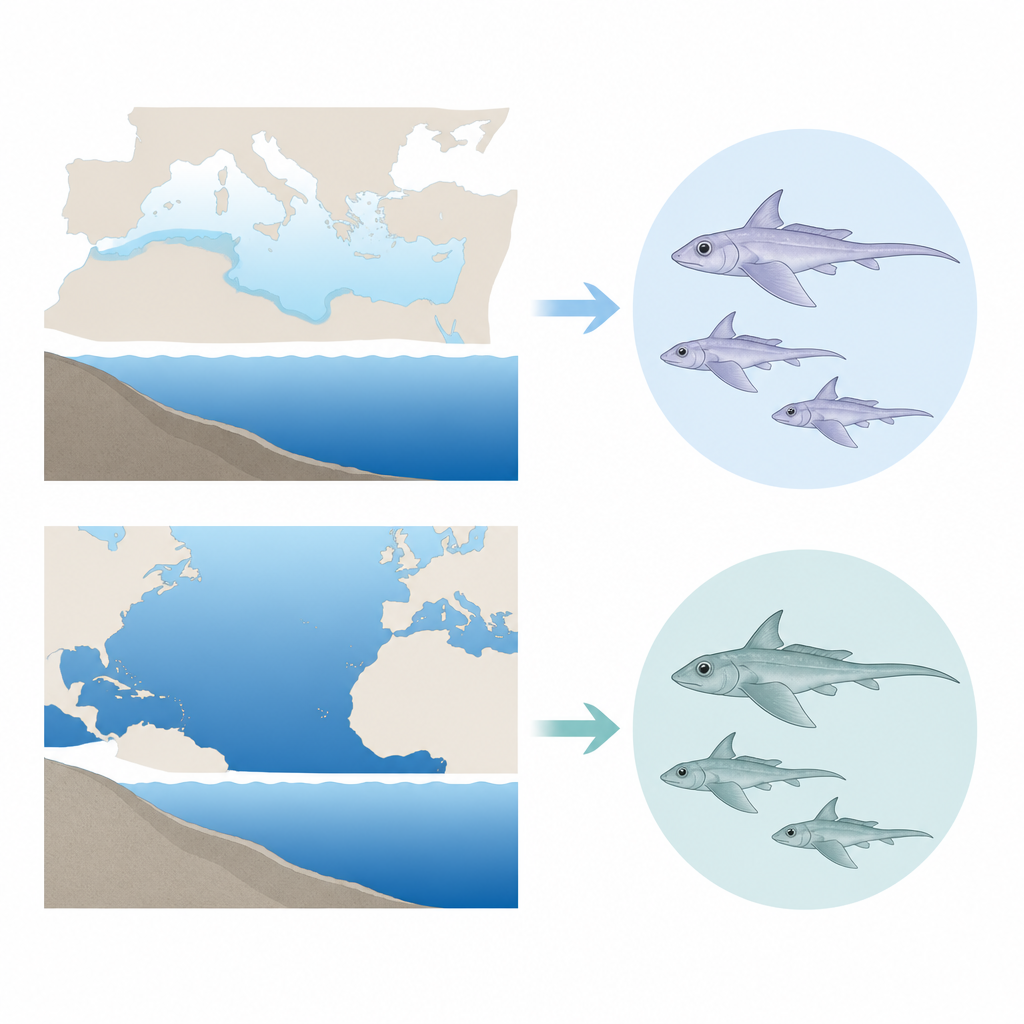
Chimaera monstrosa, the species at the heart of this work, belongs to one of the oldest lineages of jawed vertebrates. These deep sea fish have soft, cartilaginous skeletons and unusual features such as a grasping organ on the male’s head and long, leathery egg cases. They range from about 200 to more than 1,600 meters deep and occur throughout the Northeast Atlantic and the Mediterranean Sea. Because they live far below the surface and only rarely appear in fishing nets, scientists know surprisingly little about how different populations are connected or how human activities may be affecting them.
Filling a gap on the underwater map
Previous genetic studies had suggested that ghost sharks in the Atlantic and the Mediterranean form distinct groups, but samples from the eastern Mediterranean, including the coasts of Türkiye, were missing. In this study, researchers took advantage of rare bycatch events in bottom trawl fisheries off İskenderun Bay, in the far eastern part of the basin. They collected small muscle samples from five rabbitfish that unfortunately did not survive the rapid rise from deep water, then extracted their DNA in the laboratory. The team focused on a commonly used genetic marker in the cell’s energy factories, a region which acts like a barcode for comparing individuals from different locations.
Reading the genetic travel history
The new DNA sequences from Turkish waters were analysed together with 60 matching sequences from earlier work across the Mediterranean and Atlantic. Using family tree methods and a diagram that shows how different genetic variants branch and spread, the researchers asked where the Turkish ghost sharks fit. All five fell squarely within the existing Mediterranean group and even shared exact genetic types with fish from Italy, Israel and other parts of the basin. By contrast, none of the Mediterranean fish shared these types with animals from the Atlantic. Statistical tests showed that most of the genetic differences are split between the two basins rather than within them, even though overall differences at this DNA region are quite small.
What the patterns say about the sea
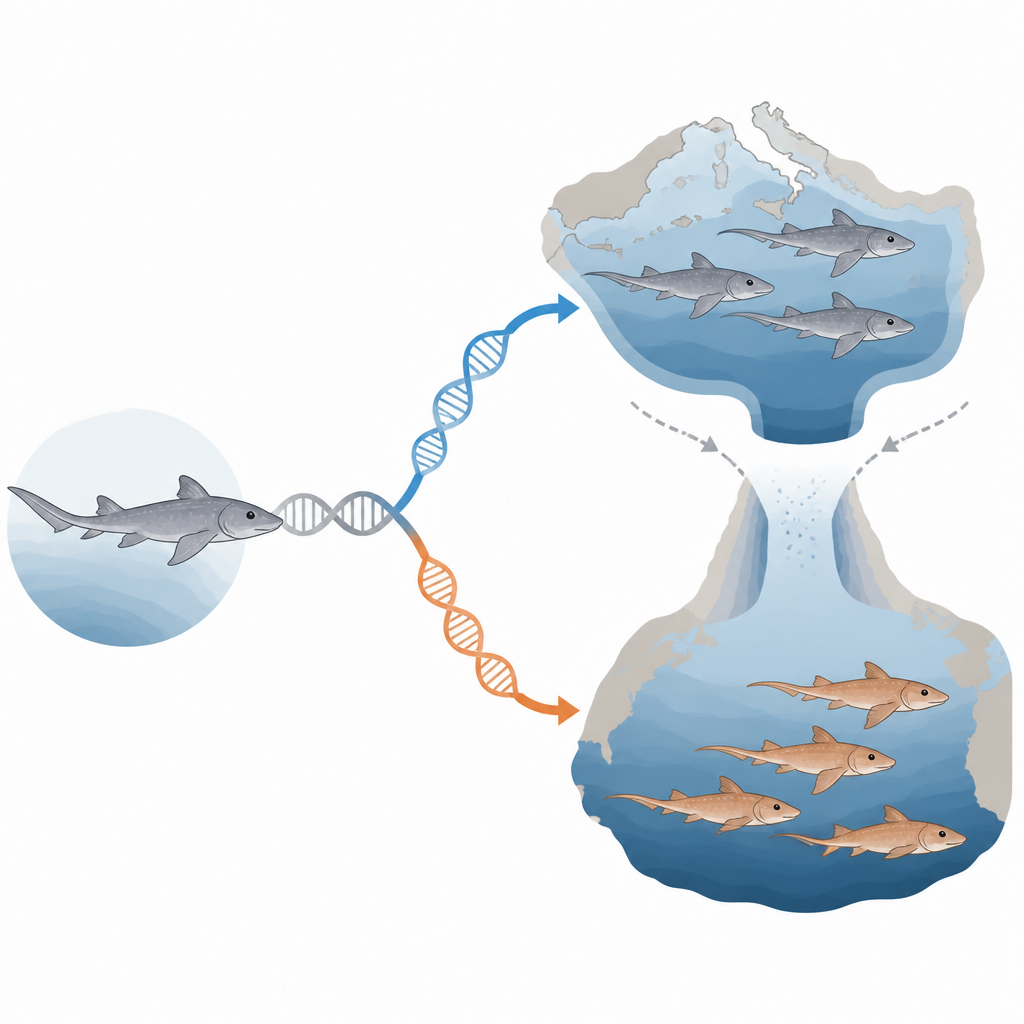
The genetic network revealed about 30 distinct variants across all sampled ghost sharks, indicating rich diversity but only modest differences from one variant to another. This pattern, along with the way variants are clustered, hints at a history where populations in different regions have been partly separated for long periods while still retaining many closely related genetic lines. The boundary between the Atlantic and Mediterranean, especially around the Strait of Gibraltar, appears to act as a partial gate that limits mixing. Over ice age cycles and changing sea conditions, this gate, together with differences in temperature and depth, likely helped shape today’s separate Atlantic and Mediterranean lineages. At the same time, the authors stress that their statistical tests should be viewed as descriptive summaries rather than proof of a simple story of past population booms or crashes.
Why these findings matter for protection
Although only five new fish were added, they come from a previously unsampled stretch of coast and help fill an important blind spot in the species’ genetic map. The results show that rabbitfish from the Turkish Mediterranean belong to the broader Mediterranean lineage rather than forming a unique local branch. More importantly for conservation, every line of evidence points to a clear split between Mediterranean and Atlantic ghost sharks. That means each basin likely represents a separate biological unit that could respond differently to fishing pressure, habitat damage and climate change. The authors argue that these units should be considered independently in future risk assessments and that wider sampling, especially using more detailed genetic tools, will be needed to refine this picture and guide effective protection of these ancient deep sea residents.
Citation: Başusta, N., Saglam, N. Genetic diversity and phylogeography of Chimaera monstrosa (Linnaeus, 1758) in the Mediterranean Sea: insights from COI mitochondrial DNA analysis. Sci Rep 16, 15797 (2026). https://doi.org/10.1038/s41598-026-45984-2
Keywords: ghost shark, deep sea fish, Mediterranean Sea, population genetics, marine conservation