Clear Sky Science · en
The role of probiotics in nutritional intake and clinical outcomes of critically Ill children with severe sepsis: a double-blind, placebo-controlled trial
Why tiny helpers in the gut matter for sick children
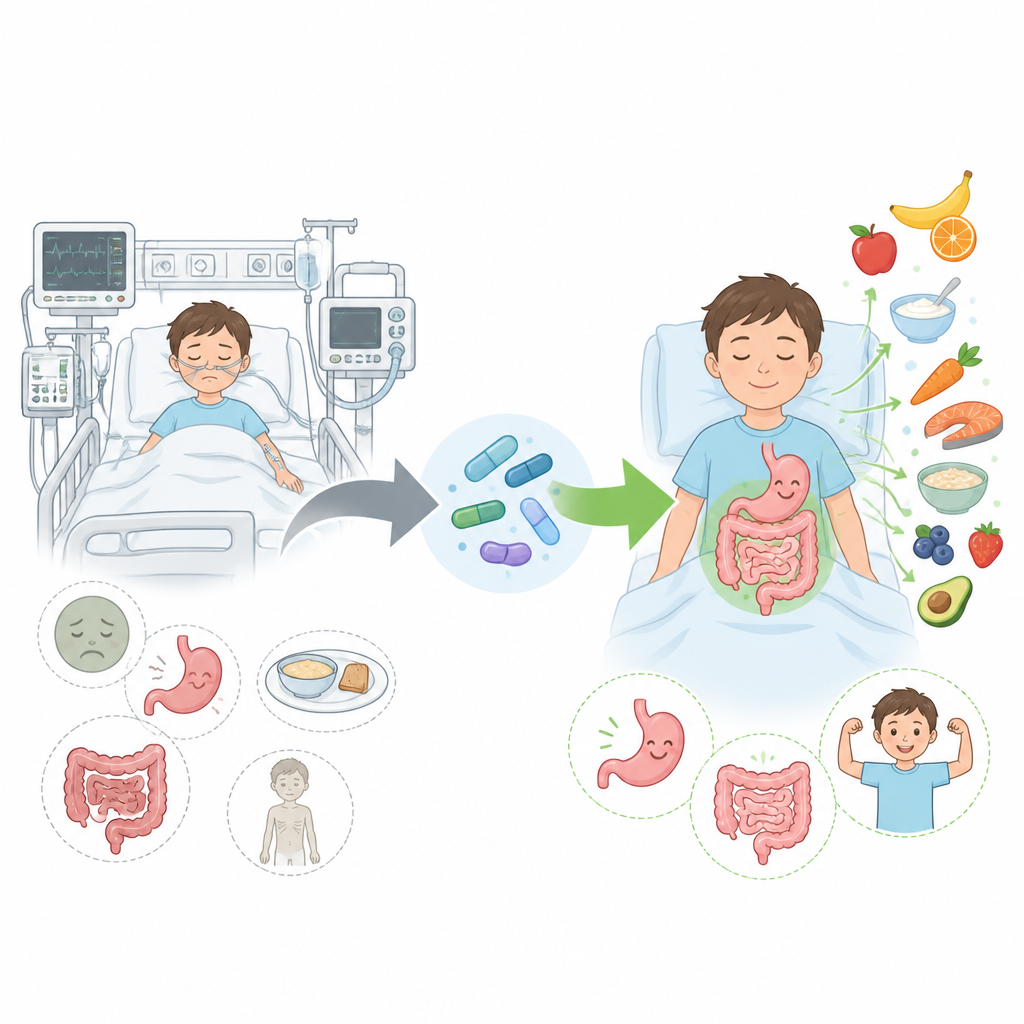
When children are critically ill with severe infections, doctors focus on powerful medicines and life-support machines. Yet something as simple as eating enough can become a major challenge. This study asked a practical question that matters to families and care teams alike: can adding friendly bacteria, known as probiotics, help very sick children tolerate food better and get the nutrition they need while they fight life-threatening sepsis?
Serious infection and the struggle to eat
Sepsis is a severe reaction to infection that can shut down organs and often lands children in intensive care. During sepsis, the gut may become leaky and sluggish, and the balance of microbes in the intestines can be disturbed. These changes can lead to vomiting, diarrhea, constipation, and bloating. At the same time, the body burns through its energy stores quickly. Together, these problems make it hard for children to receive enough calories and vital vitamins and minerals, which can worsen recovery and increase the risk of complications.
A careful test of probiotics in the ICU
The researchers carried out a double-blind, placebo-controlled trial in three pediatric intensive care units in Iran. They enrolled 47 children aged 1 to 12 years who had sepsis or severe sepsis and met strict inclusion rules. Half received a mixture of several probiotic strains twice a day for one week; the others received a look-alike powder made only of corn starch. Neither the families, bedside staff, nor the analysts knew who received which treatment until the study ended. The team tracked how quickly feeding could start, how soon each child reached their calorie target, how much macro- and micronutrients they actually consumed, and how often gut problems such as constipation, diarrhea, and abdominal swelling occurred.
Food tolerance, energy intake, and gut comfort
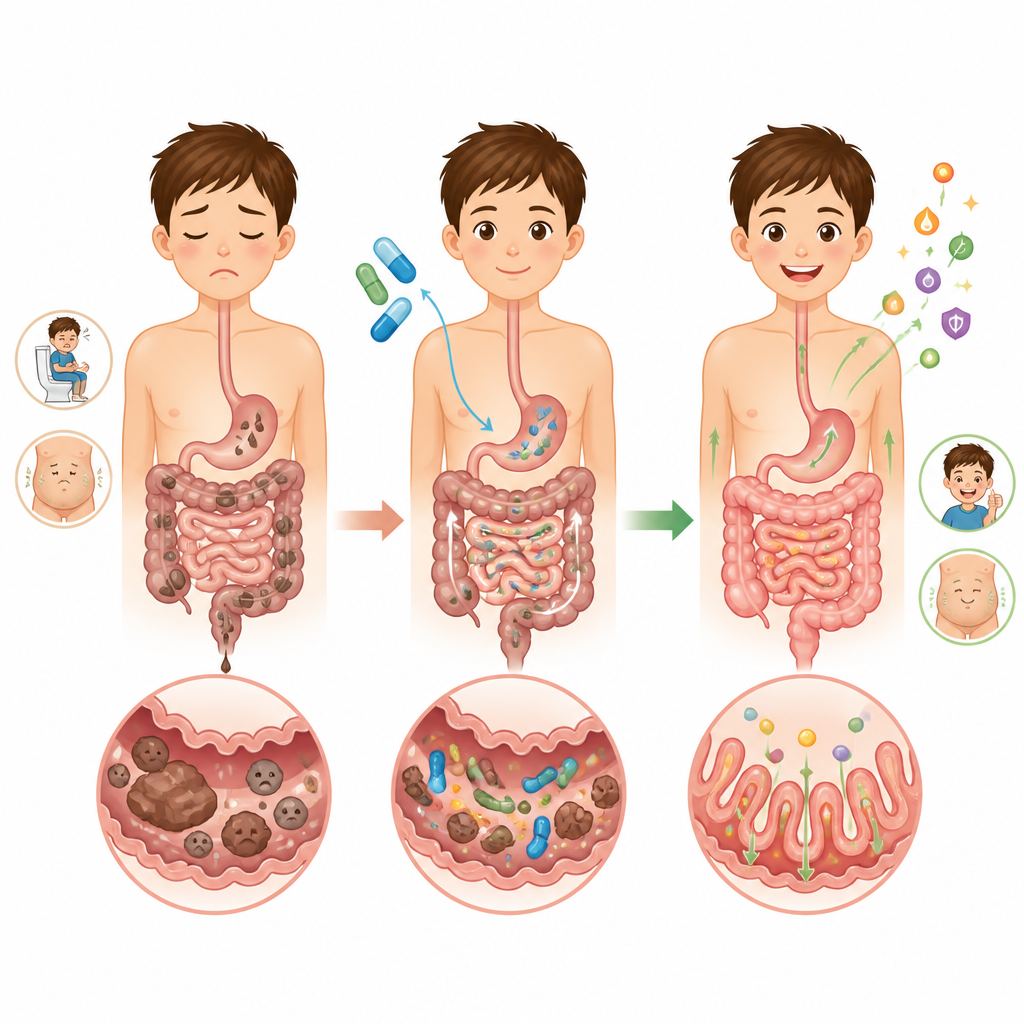
Children who received probiotics generally handled feeding better. Fewer of them had a delayed start to nutrition, defined as beginning feeds more than two days after admission. They also met their calorie goals about a full day earlier than children who received the placebo. On average, the probiotic group took in more calories per kilogram of body weight each day over the week. Although total amounts of protein, fat, and carbohydrate were similar after careful statistical adjustment, the probiotic group consumed higher amounts of several important vitamins and minerals, including vitamins E, K, B6, B12, C, folate, calcium, magnesium, selenium, fiber, and omega-3 fats. These children also had fewer sepsis-related gut troubles overall, with noticeably less constipation and abdominal distension reported.
What changed in growth and lab tests
Because the study lasted only one week, major changes in growth were not expected. Even so, children older than two years who received probiotics showed a small but measurable improvement in their body mass index score, reflecting better weight relative to height. Younger children did not show clear changes in their weight-based scores over this short period. Blood tests that signal illness severity, such as lactate, creatinine, and a basic inflammation marker, did not differ meaningfully between the probiotic and placebo groups. Likewise, the number of days spent in intensive care, total hospital stay, and deaths in the first month were similar, although the study was not large enough or long enough to fully judge these harder outcomes.
What this means for families and doctors
This trial suggests that adding a multi-strain probiotic to standard sepsis care may help critically ill children start feeding sooner, tolerate food better, and take in more energy and selected nutrients, while easing some uncomfortable gut symptoms. However, the probiotics did not clearly shorten hospital stays or reduce deaths during the short follow-up. For parents and clinicians, these results point to probiotics as a possible low-cost support for nutrition in the sickest children, but not as a cure for sepsis itself. Larger, longer studies in different hospitals are needed to pin down which probiotic mixtures, doses, and treatment durations offer the most benefit and to confirm that they safely improve long-term recovery.
Citation: Safabakhsh, M., Mohammadpour, M., Rohani, P. et al. The role of probiotics in nutritional intake and clinical outcomes of critically Ill children with severe sepsis: a double-blind, placebo-controlled trial. Sci Rep 16, 15162 (2026). https://doi.org/10.1038/s41598-026-45936-w
Keywords: probiotics, pediatric sepsis, critical care nutrition, gut health, clinical trial