Clear Sky Science · en
The impact of preimplantation genetic testing on the quality of life of people undergoing assisted reproduction treatment
Why this topic matters
For many people, having a child is a central life goal, and infertility can be deeply painful. Some couples are advised to add preimplantation genetic testing (PGT) to their in vitro fertilization (IVF) treatment, a step that screens embryos for genetic problems before pregnancy. This extra layer of testing can help avoid serious genetic diseases, but it may also add emotional strain. This study explores how people who need PGT feel compared with those who go through IVF without it, focusing on mood, the desire to become parents, and overall quality of life.

Infertility and emotional strain
Infertility affects an estimated 15 to 20 percent of couples worldwide and often brings feelings of loss of control, guilt, and damage to one’s sense of identity. Assisted reproduction, such as IVF, offers a chance at pregnancy, but each treatment attempt has limited success, and repeated failures can intensify emotional distress. When infertility has a genetic cause, new worries arise about passing on a condition to future children, and talking about family history can become even more difficult. In such cases, doctors may recommend PGT to select embryos that do not carry certain genetic changes before they are transferred to the uterus.
What preimplantation genetic testing adds
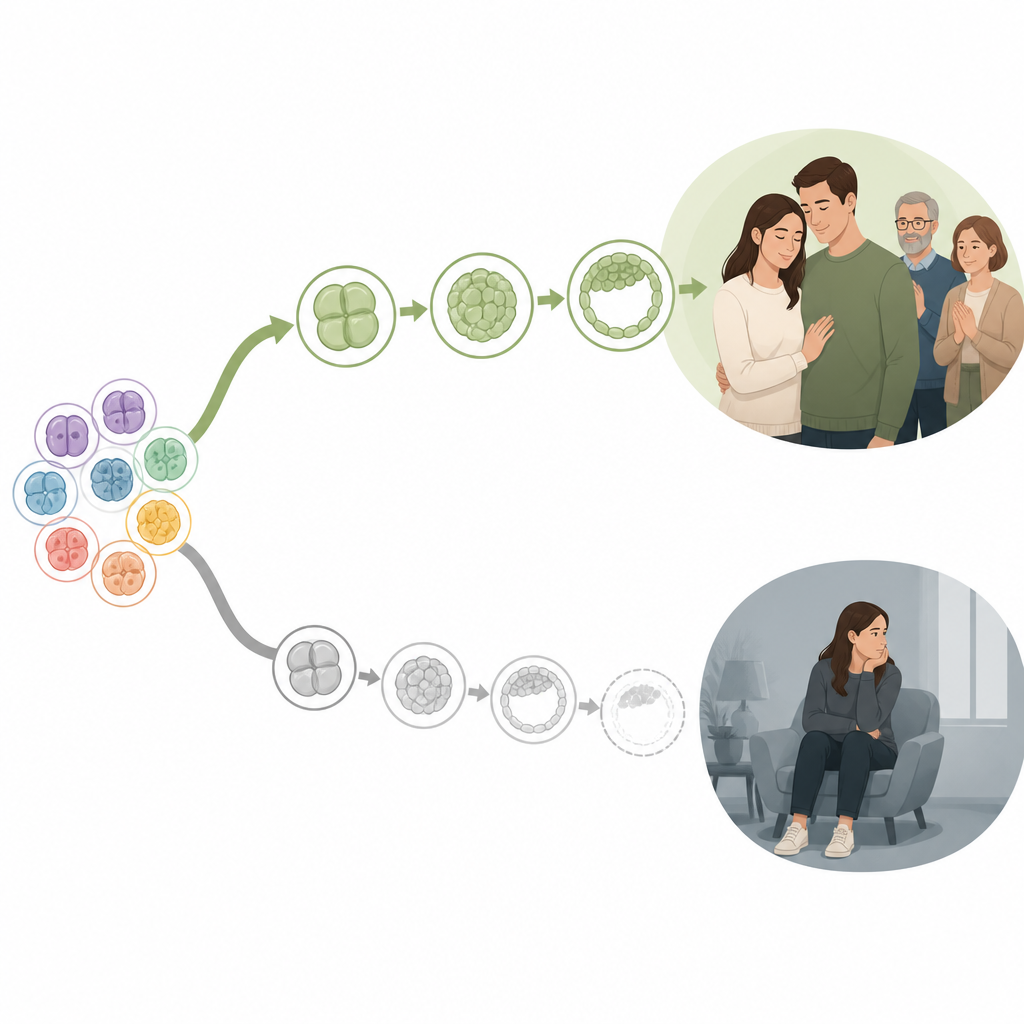
PGT is not a single test but a family of techniques used to check embryos for different kinds of genetic changes. It can be recommended for reasons such as advanced maternal age, repeated miscarriages, or known genetic disorders in the couple. While it may increase the chance of choosing a healthy embryo, it also adds extra steps, decisions, and waiting periods. Some embryos are frozen, some deemed unsuitable, and in some cycles no embryo qualifies for transfer, abruptly halting the attempt to conceive. The technical language around genetics can also be hard to understand, leaving many patients with only a vague idea of what the test does and what its results really mean.
How the study was done
The researchers surveyed 375 adults at the start of their first IVF treatment at a reproductive health center in Brazil. They divided participants into two groups: 73 people who had a medical indication for PGT and 302 who did not. Everyone completed three questionnaires. One measured positive feelings such as enthusiasm and interest and negative feelings such as distress and upset. Another assessed fertility-related quality of life in emotional, physical, relational, and social areas. The third captured how strongly each person felt the need to become a parent. The teams then compared the two groups while taking into account age and history of miscarriage, factors that were more common in those advised to undergo PGT.
What the researchers found
People in the PGT group reported more frequent negative emotions and lower quality of life than those in the non-PGT group across nearly all areas: emotional well-being, physical and mind–body comfort, social life, and relationships. These differences remained even after adjusting for age and previous miscarriages. In contrast, the strength of the desire to become a parent was high in both groups, and once age was taken into account, there was no meaningful difference between them. Many participants in both groups believed their chance of success was higher than typical IVF statistics, which may set the stage for disappointment when treatments do not lead quickly to a baby.
What this means for patients and care teams
The study suggests that people who need PGT start their fertility journey in a more emotionally vulnerable state than those who do not, with more negative feelings and a poorer quality of life even before treatment advances. At the same time, their longing for parenthood is just as strong. For patients and clinics, the message is clear: adding genetic testing is not only a medical decision but also a psychological turning point. The authors argue that these patients may benefit especially from clear genetic counseling and ongoing emotional support, helping them understand their options, cope with uncertainty, and protect their mental well-being while pursuing their goal of becoming parents.
Citation: de Souza, M.A.S., Montagna, E., Barbosa, C.P. et al. The impact of preimplantation genetic testing on the quality of life of people undergoing assisted reproduction treatment. Sci Rep 16, 14776 (2026). https://doi.org/10.1038/s41598-026-45746-0
Keywords: infertility, in vitro fertilization, preimplantation genetic testing, quality of life, mental health