Clear Sky Science · en
Evaluating the correlation between fecal and serum calprotectin in inflammatory bowel disease
Why this gut health study matters
People living with Crohn’s disease or ulcerative colitis often need repeated tests to see how active their gut inflammation is. The most trusted lab check uses a stool sample, which many patients find unpleasant or hard to do regularly. This study asked a simple question with big everyday impact: could a quick blood test give doctors the same information as the stool test?
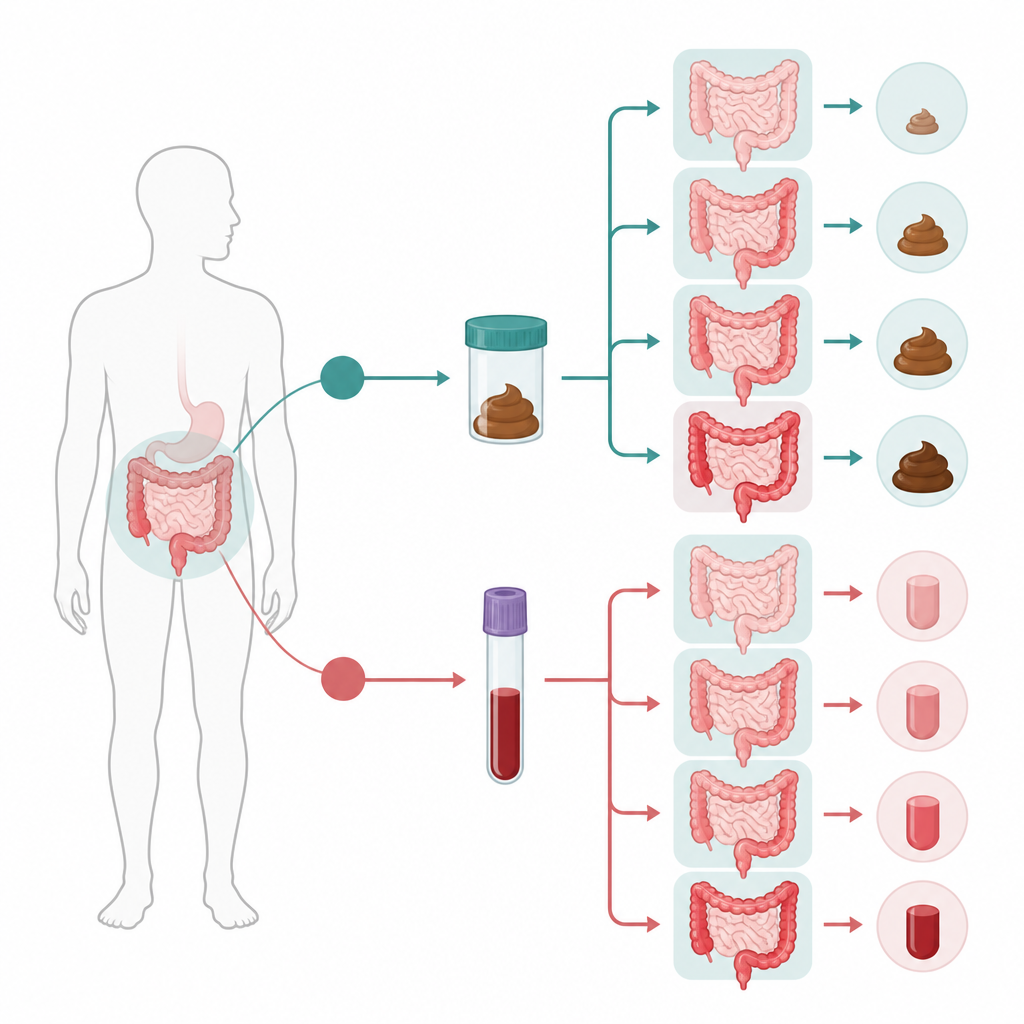
Two kinds of samples, one shared goal
The research focused on calprotectin, a protein released by immune cells during inflammation. When it leaks into the gut, it shows up in stool; when it circulates through the body, it can be measured in blood. Fecal calprotectin is already widely used to track inflammation directly in the gut lining. Serum calprotectin, measured from blood, has been suggested as a more convenient option, but it was not clear whether it truly mirrors what is happening inside the intestine.
Who took part in the research
The team followed 426 adults with inflammatory bowel disease treated at a hospital clinic in Italy, including people with both Crohn’s disease and ulcerative colitis. Everyone provided a stool sample and a blood sample around the same time, and all calprotectin levels were measured with the same automated laboratory method. The researchers also collected basic health details, symptoms scores, and another common inflammation marker from blood called C reactive protein.
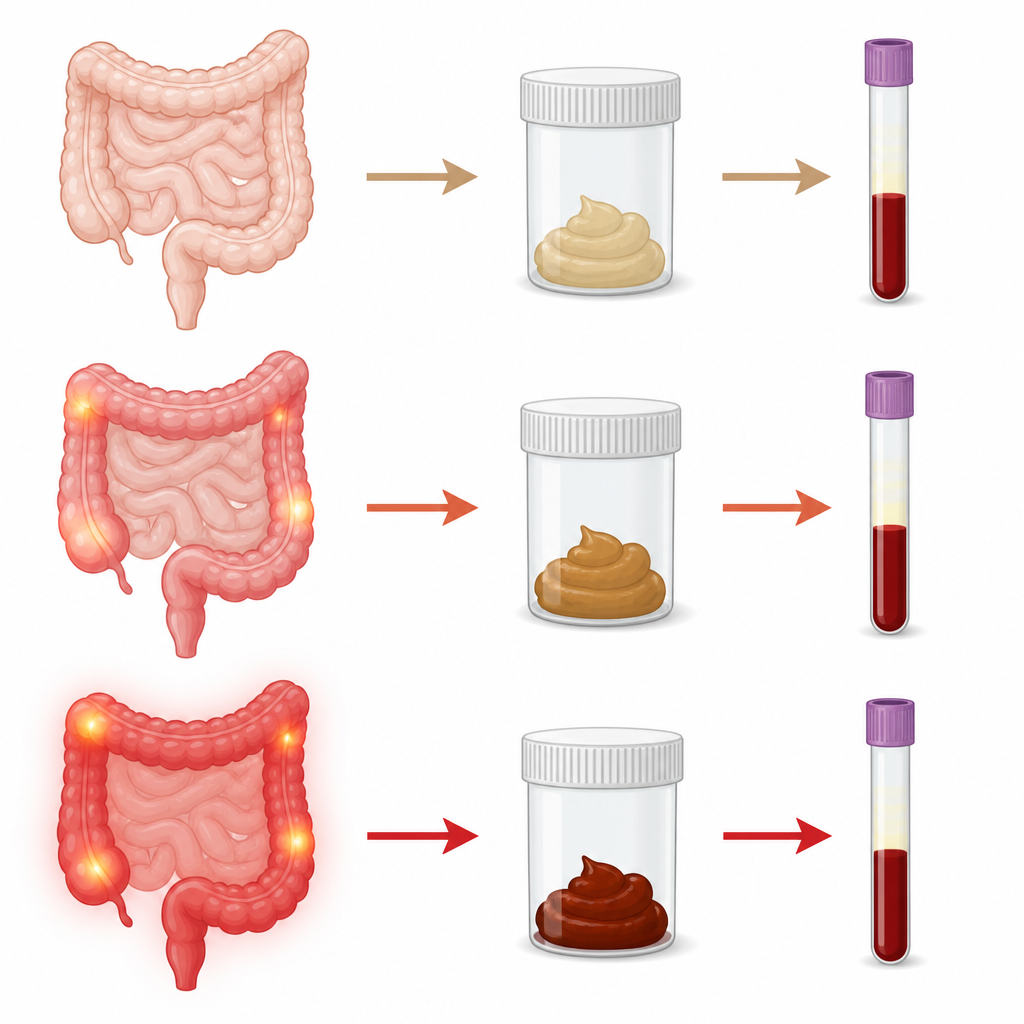
What the comparisons revealed
When the scientists compared stool and blood results across all patients, the link between the two was surprisingly weak. At low and moderate stool calprotectin levels, the blood values varied widely and often did not move in the same direction. Only when stool levels were clearly high did a moderate relationship appear, and even then, stool values were usually much higher and more scattered than blood values. This pattern shows that the blood test does not reliably track the finer ups and downs of gut inflammation.
How the tests relate to symptoms and other markers
The researchers also looked at how each test lined up with how sick people felt and with C reactive protein. In ulcerative colitis, stool calprotectin showed a modest link with symptom scores, while the blood form of the protein related only weakly. In Crohn’s disease, the picture was even less clear, with only a small connection between blood calprotectin and symptom scores. Both stool and blood calprotectin rose somewhat in people who had higher C reactive protein, suggesting they reflect overlapping but not identical types of inflammation in the body.
What this means for patients and clinicians
Taken together, the results indicate that a blood test for calprotectin cannot simply replace the stool test for judging how inflamed the gut lining is. The stool test remains the best noninvasive way to track local gut damage in inflammatory bowel disease. However, blood calprotectin may still offer useful extra clues about overall or body wide inflammation when disease is more active. For now, patients should expect that stool testing will stay central to care, while future research explores whether adding blood calprotectin and other markers can help tailor treatment and long term monitoring.
Citation: Agnello, L., Gambino, C.M., Del Ben, F. et al. Evaluating the correlation between fecal and serum calprotectin in inflammatory bowel disease. Sci Rep 16, 15231 (2026). https://doi.org/10.1038/s41598-026-45724-6
Keywords: inflammatory bowel disease, Crohn’s disease, ulcerative colitis, fecal calprotectin, serum calprotectin