Clear Sky Science · en
Validation of the Persian version of the computer ergonomics knowledge assessment questionnaire among frequent computer users
Why your body cares how you sit at a screen
Many of us spend hours each day hunched over computers, often without thinking about how our chairs, desks, and screens are set up. Over time, these everyday habits can quietly strain muscles and joints, leading to painful neck, back, and shoulder problems. This study looks at a simple question: how well do frequent computer users in Iran actually know the basics of healthy computer use, and can that knowledge be measured reliably with a short, easy questionnaire?
Hidden aches behind everyday computer work
Musculoskeletal disorders—long-term problems of muscles, tendons, and joints—are among the most common work-related health issues worldwide, affecting more than a billion people and costing societies hundreds of billions of dollars each year. Prolonged sitting, reaching for a mouse, or staring at a poorly placed monitor all increase the strain on the body. In countries like Iran, limited access to ergonomics training and properly designed workstations can make these problems worse. Health experts agree that teaching people how to arrange their workstations and sit correctly is an important way to prevent injuries, but to teach effectively, they first need a clear picture of what people actually know.

Turning a foreign checklist into a local tool
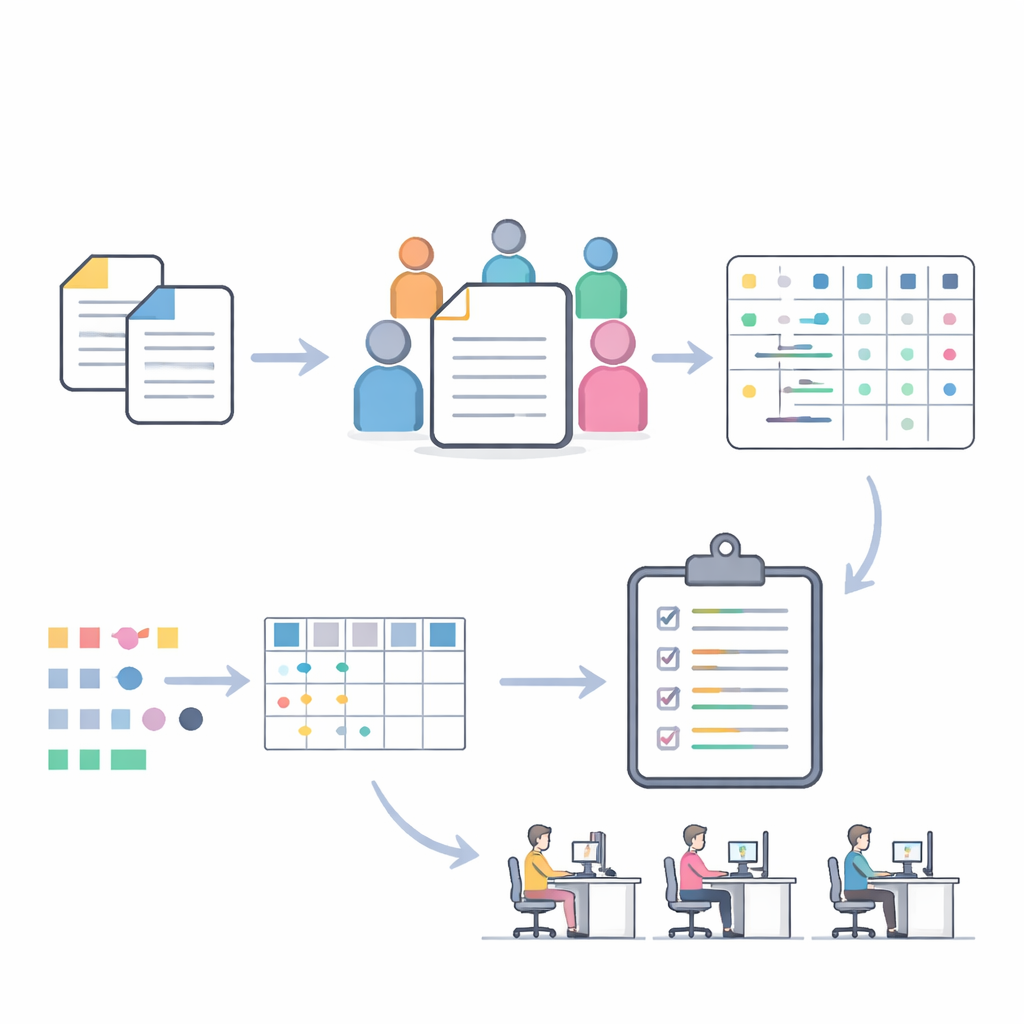
The researchers focused on a questionnaire originally developed in English called the Computer Ergonomics Knowledge Assessment Questionnaire (CEKAQ). Rather than watching how people sit or move, this tool quizzes them about what they know: how to position a monitor, how to adjust a chair, what posture keeps the spine neutral, and when to take breaks. Because many Iranian students are more comfortable in Persian than in English, the team carefully translated and adapted the questionnaire. Two bilingual experts produced initial translations, which were then reconciled, back-translated into English by a third expert, and checked by the original questionnaire’s author to ensure that the meaning—not just the words—was preserved. A small group of computer users then tried the Persian draft to make sure questions were clear and made sense in local work settings.
Sharpening the questions for real-life use
Next, a panel of specialists in occupational health, rehabilitation, and health information technology closely reviewed each item. They rated how essential and understandable every question was, and the team used standard formulas to weed out weaker items. Twelve questions, mainly those asking for textbook-style definitions of terms like “ergonomics” or “musculoskeletal disorders,” were removed because experts felt they did little to help prevent real injuries. Additional statistical checks with responses from 328 university students led to the removal of four more questions that did not fit well with the overall pattern of answers. What remained was a lean 19-item questionnaire focused squarely on practical know-how: setting up hardware, adjusting seating, keeping a neutral posture, and planning short rest breaks.
Testing if the tool gives steady, sensible scores
The authors then asked whether this slimmed-down Persian CEKAQ was both stable over time and logically structured. Twenty frequent computer users completed the questionnaire twice, two weeks apart. Their scores were strongly consistent, indicating that the tool was not simply capturing momentary guesswork or mood. Using factor analysis—a way of seeing whether questions behave as a coherent group—the team found that the 19 items largely tapped into a single underlying concept, which they interpreted as “applied ergonomic knowledge.” This means that even though the questions cover different aspects of workstation setup and posture, they tend to rise and fall together as a summary measure of how well someone understands healthy computer use.
What this means for everyday screen users
In the end, the study produced a short, Persian-language questionnaire that can reliably gauge how much people know about setting up and using their computers in body-friendly ways. While it does not directly measure behavior or pain, it fills an important gap by isolating the knowledge component: it helps educators and employers see whether computer users actually understand what good posture and workstation design look like. Used alongside observation tools that track real sitting habits, this questionnaire can guide targeted training programs aimed at reducing the silent, creeping burden of neck and back pain among the growing number of people who work at screens all day.
Citation: Rafiyan, M., Azadchehr, M.J., Masoudi-Alavi, N. et al. Validation of the Persian version of the computer ergonomics knowledge assessment questionnaire among frequent computer users. Sci Rep 16, 14562 (2026). https://doi.org/10.1038/s41598-026-45142-8
Keywords: computer ergonomics, musculoskeletal disorders, questionnaire validation, workstation posture, office health