Clear Sky Science · en
Long-term dynamic effect of body mass index on adverse cardiovascular outcomes with targeted maximum likelihood estimation method: result from the KNOW-CKD study
Why this study matters
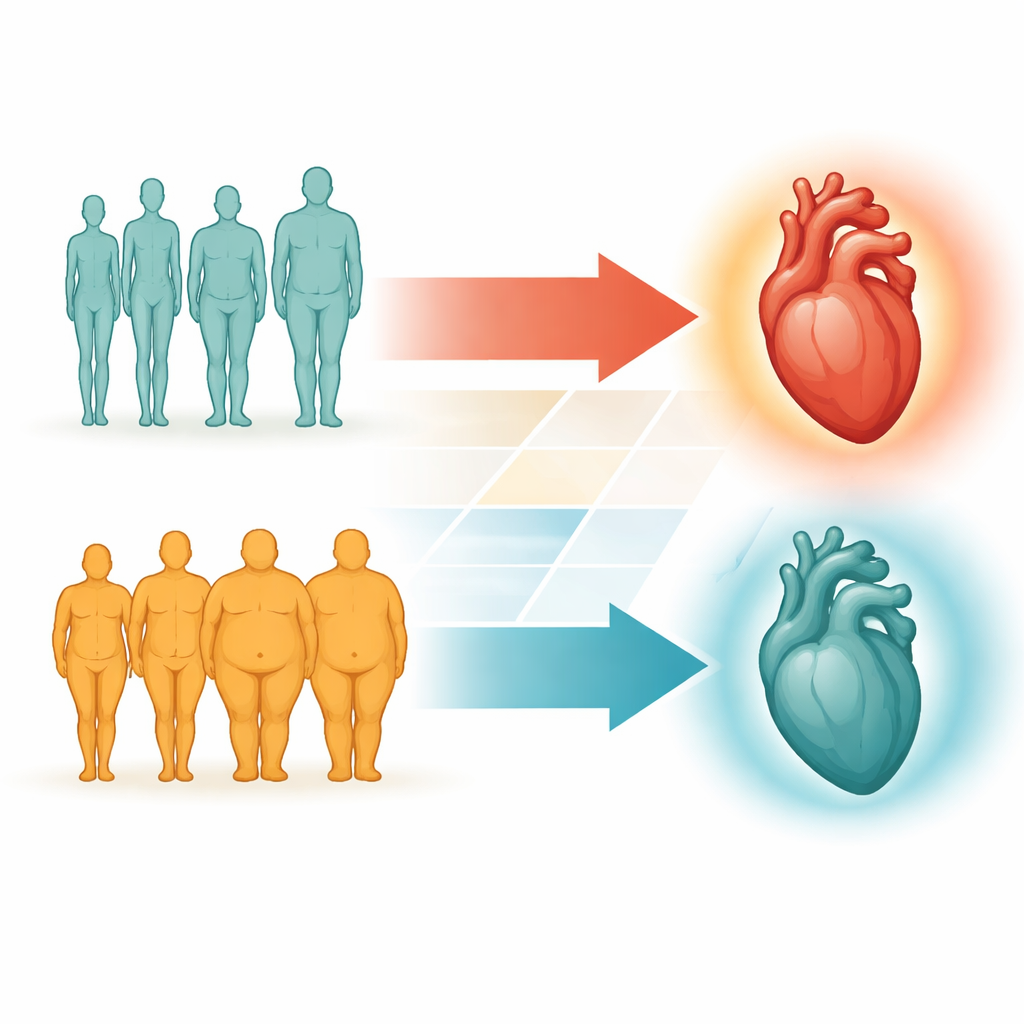
People living with chronic kidney disease already face a higher chance of heart attacks, strokes, and heart failure. Many are told to lose weight to protect their hearts, yet past research has hinted at an “obesity paradox,” where heavier patients with long‑term illnesses sometimes fare better than thinner ones. This study followed Korean adults with chronic kidney disease for several years to ask a simple but important question: does staying heavier or thinner over the long haul change the risk of serious heart and blood‑vessel problems?
Following weight and heart health over time
The researchers used data from the KNOW‑CKD project, a large nationwide study that tracks adults with chronic kidney disease who are not yet on dialysis. From more than two thousand volunteers, they focused on 1,061 people who had complete starting information, and then on 456 who also had repeated weight measurements over seven years. Instead of relying on a single weigh‑in, they recorded body mass index (BMI) at the beginning, at three years, and at seven years. For this Asian population, a BMI of 23 or higher was considered “high,” and below 23 “low.” Alongside weight, the team kept close tabs on blood pressure, kidney function, blood counts, protein and cholesterol levels, and markers of inflammation, and they recorded a broad set of serious heart‑related events, including heart attacks, heart failure hospitalizations, strokes, and major procedures on the heart and blood vessels.
Looking beyond a single weigh‑in
At first, the scientists used standard statistical tools that compare people only at fixed moments in time. With this conventional approach, they found little clear link between BMI measured once and later heart problems, except that those with higher BMI at the three‑year mark had somewhat fewer serious heart events. This hinted that weight might matter, but the picture was muddy. A single snapshot of weight cannot show whether a person has been steadily heavy, steadily thin, or bouncing between the two, nor can it fully account for changes in health that might both affect weight and risk the heart.
Tracking long‑term patterns in weight
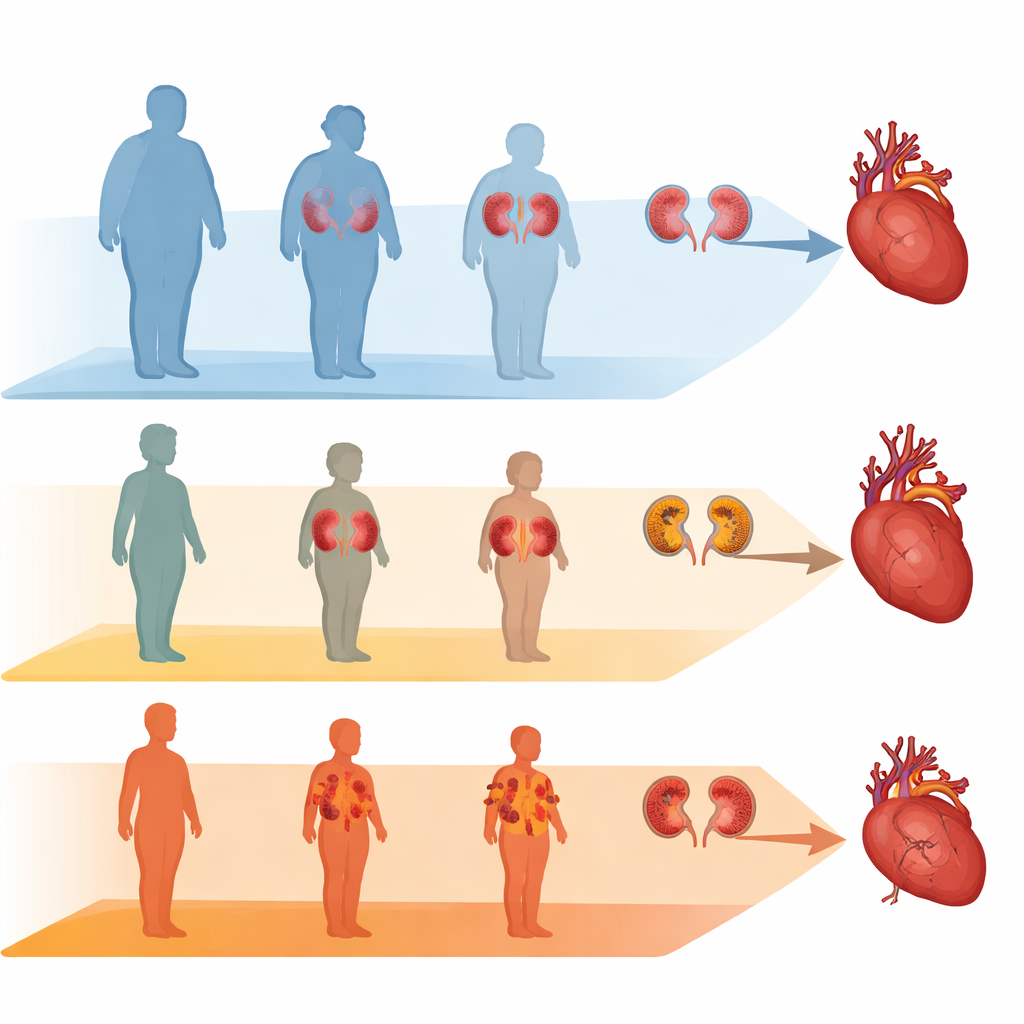
To dig deeper, the team turned to modern methods designed for following changing health over time. They grouped people into patterns: those who stayed low BMI at all three checks, those who stayed high, and several groups who moved from low to high or high to low. Using advanced “causal” modeling techniques, which attempt to mimic the logic of a long‑term experiment, they compared what would likely happen to similar patients under different long‑run weight patterns while adjusting for age, sex, smoking, diabetes, past heart disease, kidney function, blood pressure, nutrition, and inflammation. In these models, people who remained in the high‑BMI group at all three time points had roughly a quarter to a third the risk of serious heart events compared with those who stayed in the low‑BMI group. By contrast, people who started thin and later became heavier did not clearly gain this protection.
Stability seems safer than swings
The investigators also tested their findings in several different ways, including dividing BMI into finer groups and modeling detailed weight paths over many measurements. Across these checks, a consistent theme emerged: people whose BMI stayed higher or even at an intermediate level over seven years tended to have fewer major heart problems than those who stayed on the leanest track, while simple short‑term weight changes did not show the same benefit. Other research in kidney disease and diabetes has similarly suggested that large ups and downs in weight, whether gain or loss, can be harmful. A stable body size over years may signal better nutrition, more muscle, and greater reserves to withstand the stresses of chronic illness and inflammation, whereas a low or shrinking body size can reflect wasting and frailty.
What this means for patients and doctors
This work does not claim that obesity is harmless. Rather, in people with chronic kidney disease, being and remaining somewhat heavier over the long term appeared to be linked with fewer serious heart and blood‑vessel events than staying quite thin, while later weight gain did not erase the extra risk carried by those who started out underweight. For patients and clinicians, the message is that long‑term weight patterns and overall nutritional health may matter more than hitting a one‑time “ideal” BMI. Instead of pushing all patients with kidney disease toward weight loss, care teams may need to focus on preventing unintentional weight loss, maintaining muscle and strength, and tailoring weight goals to each person’s long‑term risk profile.
Citation: Oh, Y.J., Kim, J., Sung, S. et al. Long-term dynamic effect of body mass index on adverse cardiovascular outcomes with targeted maximum likelihood estimation method: result from the KNOW-CKD study. Sci Rep 16, 14311 (2026). https://doi.org/10.1038/s41598-026-45135-7
Keywords: chronic kidney disease, body mass index, cardiovascular risk, obesity paradox, longitudinal weight change