Clear Sky Science · en
A cost-sensitive multiclass machine learning framework for postoperative neurosurgical triage (Neuro-TACTIC)
Why this matters for patients and hospitals
After brain tumor surgery, doctors must quickly decide where a patient should recover: a regular ward, an intermediate-care unit, or the intensive care unit. Sending everyone to intensive care feels safest but is extremely costly and stretches limited staff. Sending too few patients there can miss early warning signs of serious problems. This study introduces a new computer-based tool, called Neuro-TACTIC, designed to help hospitals balance patient safety with scarce resources in a transparent, adjustable way.
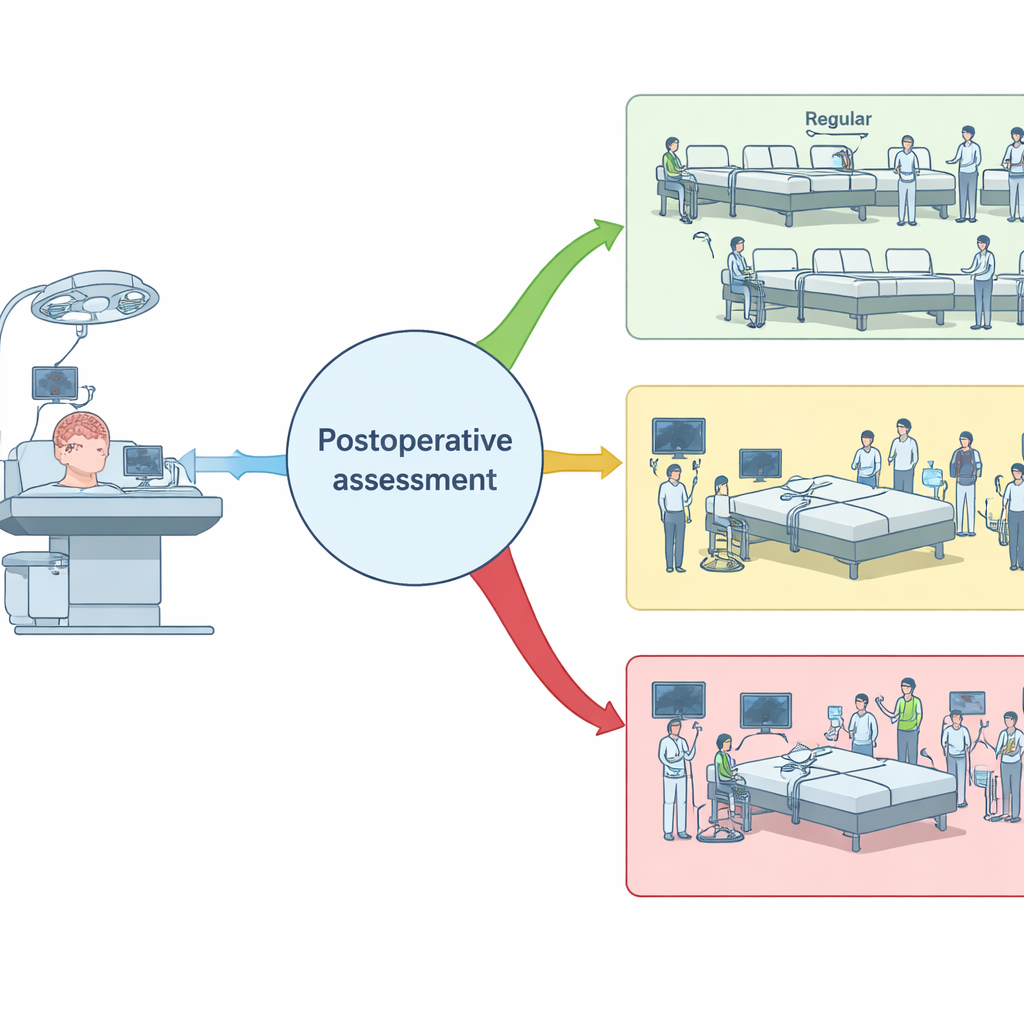
The challenge of finding the right bed
Neurosurgical patients are vulnerable to sudden complications such as bleeding, brain swelling, or breathing problems. Many hospitals therefore default to routinely placing them in intensive care after surgery, even though only a minority actually need that level of support. Earlier prediction tools mostly treated the decision as a simple yes-or-no choice: intensive care versus everything else. They also optimized for abstract statistical accuracy, without clearly reflecting the real-world consequences of overusing or underusing intensive care beds.
A three-step ladder of care
Neuro-TACTIC reframes the problem as a three-level ladder: regular ward, intermediate-care unit, and intensive care unit. The researchers analyzed records from 1,072 adults who had planned brain tumor surgery and an additional 81 patients from a later period. For each person, they collected 27 pieces of information, including age, body mass index, pre-existing illnesses, tumor size and location, and details from the operation itself, such as how long it lasted and how the patient was positioned. They then trained a machine-learning model (a boosted decision-tree system) to predict which level of monitoring each patient would truly have needed based on the events and complications that occurred afterwards.
Putting a price on beds and missed problems
A central idea in Neuro-TACTIC is an adjustable setting, called ζ, that lets hospitals express how they value safety versus resources. The model uses two invisible scorecards: one describes how staff-intensive each care level is, using nurse-to-patient ratios as a stand-in for cost; the other describes how harmful it is if a patient who needs higher-level care is placed too low. By blending these two scorecards with the slider ζ, the tool can be tuned to favor saving staff time or avoiding missed complications. When ζ is set very low, the model sends nearly everyone to the regular ward. As ζ is increased, more patients are routed first to intermediate care and, at higher settings, to intensive care. Importantly, this smooth behavior looked similar in both the main and independent patient groups, suggesting the rule set is stable rather than brittle.
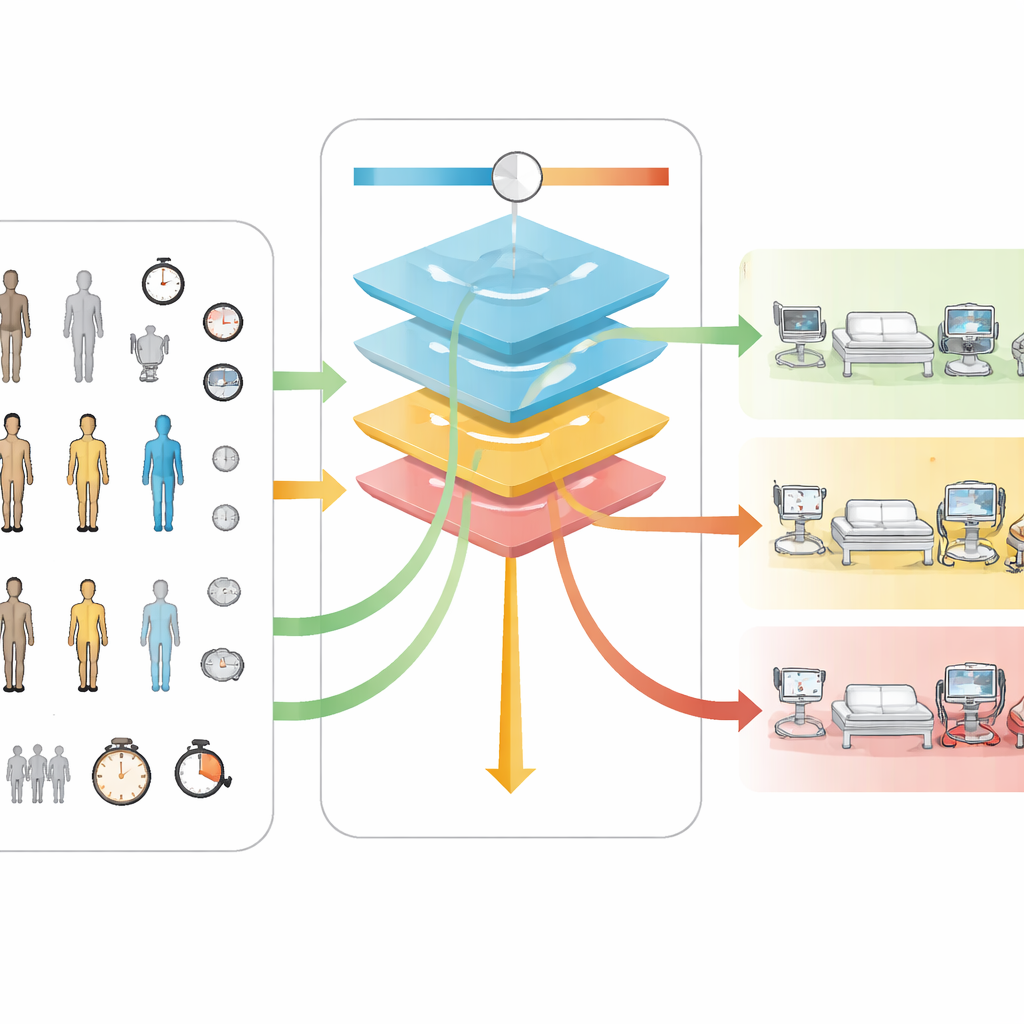
What the computer learned about risk
To keep the system understandable, the team examined which patient features most influenced the model’s decisions. Across different ways of measuring importance, five factors consistently stood out: how long the surgery took, the size of the tumor, the patient’s position during surgery, body mass index, and age. Longer operations and larger tumors tended to push predictions toward higher-intensity monitoring. These findings align with earlier medical studies, which also flagged these factors as key risk indicators, lending credibility to the model’s behavior. However, some of these details—especially final surgery duration—are only known at the end of the procedure, so the current version is best suited to deciding where a patient should go immediately after surgery, not for advance scheduling days before.
What this means going forward
Neuro-TACTIC is not yet ready to guide care on its own, but it shows that a three-tier, adjustable approach to postoperative placement is technically feasible. The model reaches moderate accuracy in separating low-, medium-, and high-risk patients and behaves consistently when the safety-versus-cost slider is moved. For patients and hospitals, the long-term promise is a decision aid that can be tailored to local staffing levels and risk tolerance, helping ensure that intensive care beds go to those who need them most, while others safely recover on less intensive wards. Before that can happen, the authors emphasize that larger, multi-hospital studies and real-world testing will be needed to confirm both medical benefits and resource savings.
Citation: Naser, P.V., Fischer, M., Peregrino, R.D. et al. A cost-sensitive multiclass machine learning framework for postoperative neurosurgical triage (Neuro-TACTIC). Sci Rep 16, 9847 (2026). https://doi.org/10.1038/s41598-026-45092-1
Keywords: neurosurgical triage, intensive care unit, postoperative monitoring, machine learning, healthcare resource allocation