Clear Sky Science · en
The analysis for mechanism deduction and empirical test of tourists’ behavior decision-making under the background of COVID-19
Why travel choices changed in a time of illness
The COVID-19 pandemic did more than close borders; it forced people to rethink whether, when, and how to travel at all. This study looks inside that moment of hesitation before a trip and asks what really drives tourists’ choices: fear of infection, trust in safety measures, feelings of duty to others, or simple practical limits like money and time. By tracing how these forces interact, the research helps explain why some people canceled journeys, others postponed them, and some kept traveling with new habits.
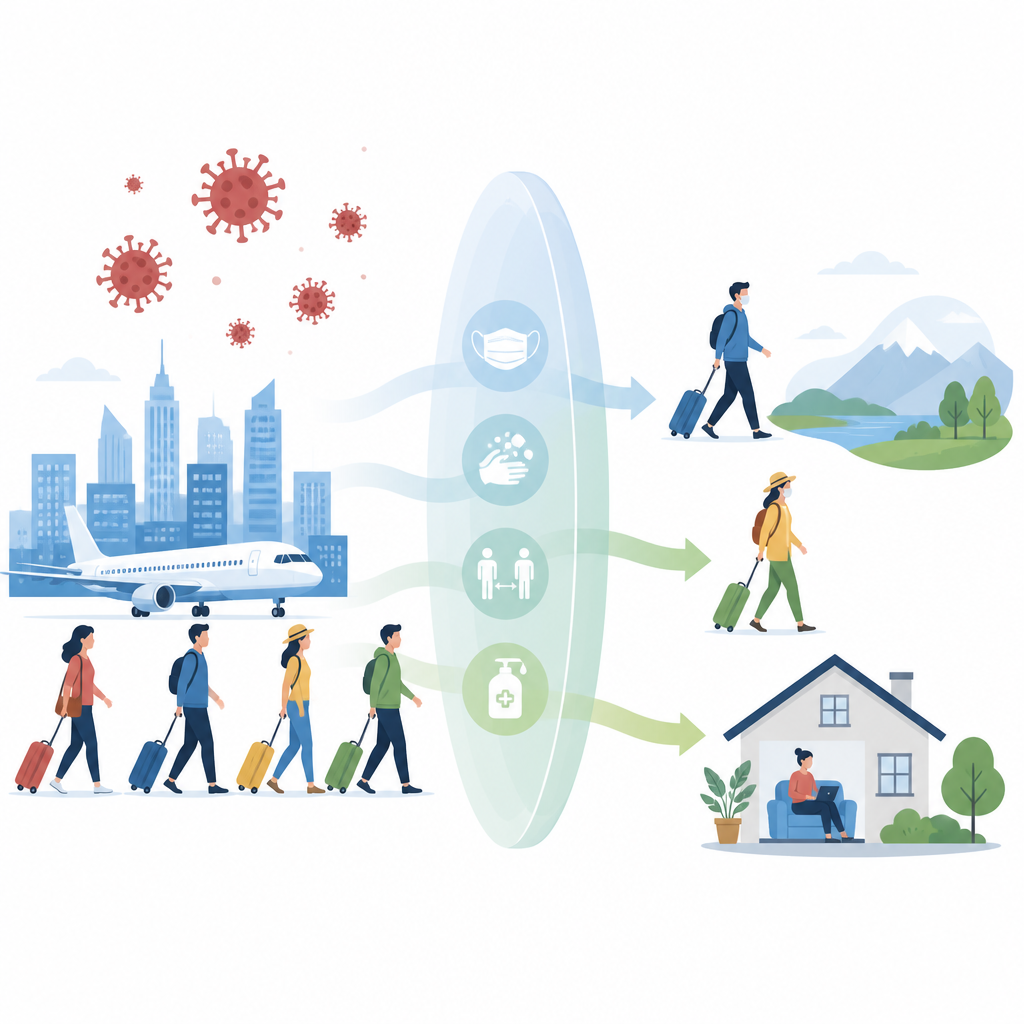
How the study followed travelers’ choices
The researchers surveyed 360 people in China who already had travel plans when COVID-19 struck. Each person answered questions about how they viewed the epidemic, what protective steps they were willing to take, how much social pressure they felt from family and friends, and whether they ended up canceling, delaying, or changing their trips. The team used a well-known decision framework from psychology, which says that our actions are shaped by our attitudes, by what we think others expect, and by how much control we feel we have over a choice. They then extended this framework to include people’s understanding of the epidemic, their use of protective measures, and their personal sense of moral duty.
Seeing the outbreak with the head, not just the gut
A key idea in the study is “epidemic perception,” which focuses on what people know and understand about an outbreak, rather than just how afraid they feel. When travelers had a clearer grasp of how serious and contagious COVID-19 was, they were more likely to take protective steps like mask-wearing and self-monitoring. They also felt stronger pressure from those around them to act carefully and developed more negative views about traveling during the crisis. In short, better knowledge of the disease did not simply scare people; it triggered a chain of protective, social, and moral responses that shaped their travel decisions.
When personal duty becomes part of the ticket
The study found that moral feelings played a central role. Travelers who felt a duty to protect others, follow public health advice, and cooperate with control measures were more inclined to see canceling, delaying, or adjusting their trips as necessary, correct, and meaningful. These people also felt less free to “just go anyway,” and they were more likely to form clear intentions to change their plans. In this way, travel during COVID-19 became a question not only of personal risk but also of doing the right thing for family, community, and society at large.
Safety measures that make travel feel possible again
One of the most striking findings concerns non-pharmaceutical interventions, such as handwashing, distancing, and mask use. At first glance, these might seem to push people away from travel by reminding them of danger. Instead, the study shows almost the opposite: travelers who embraced these measures were less likely to intend to cancel their trips. By lowering the sense of danger, protective habits made it easier for some people to keep traveling while still feeling reasonably safe. This helps explain why, even under strict rules, not all journeys stopped; many were reshaped rather than abandoned.
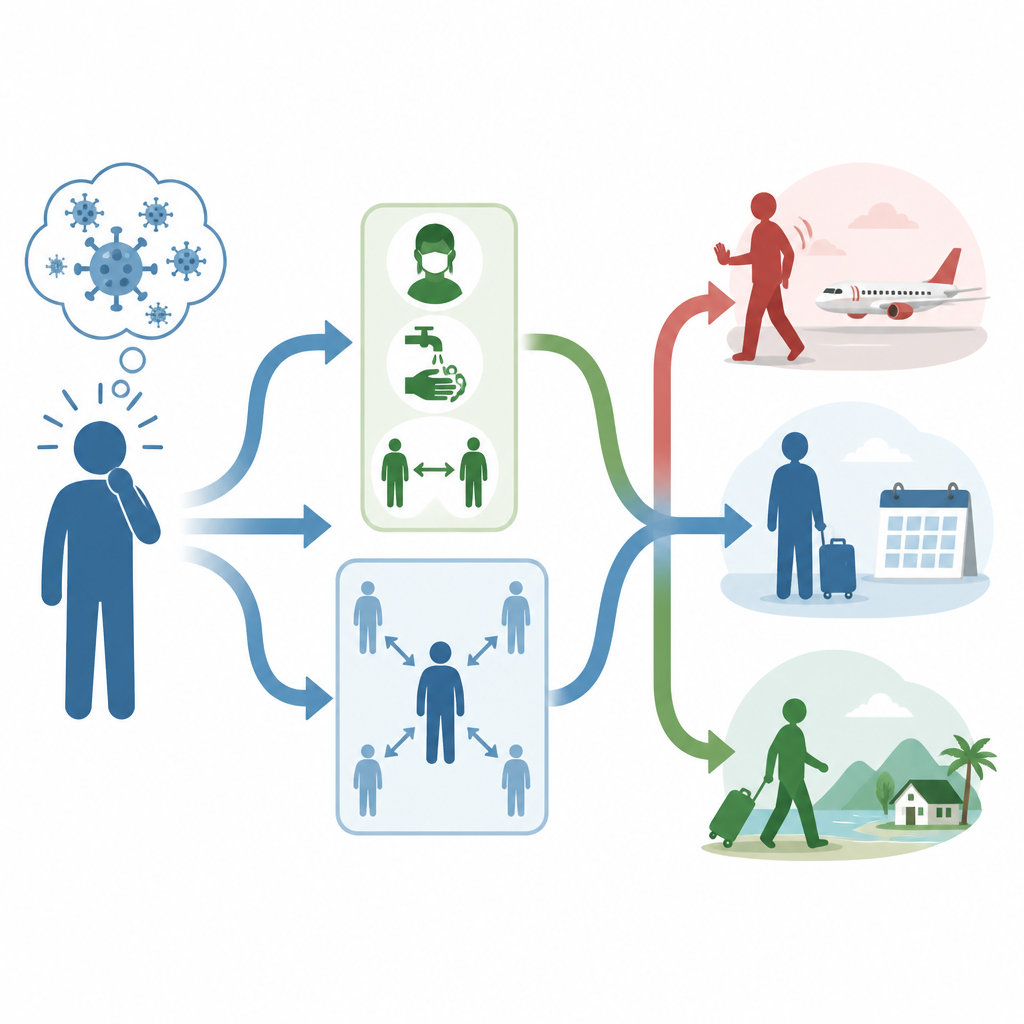
Friends, family, and the limits of practical hurdles
Social expectations amplified these patterns. When people felt that their close circle approved of canceling or changing trips, they were more likely to feel a personal duty to do so and to adopt negative views of traveling during the outbreak. These social influences were powerful enough that, in the middle of the crisis, practical issues like time and money mattered less for deciding whether to travel. However, such practical factors still affected what people actually did in the end; they shaped whether stated intentions turned into real cancellations or changes once the moment of decision arrived.
What this means for future crises
For a lay reader, the message is that travel choices during a health crisis are not just about fear or bargains on tickets. They arise from a mix of clear information about the disease, visible safety steps, strong social cues, and personal conscience. This study suggests that officials and tourism businesses can help people make safer, more confident choices by sharing reliable facts, showcasing protective measures, and encouraging a sense of shared responsibility. When that happens, travelers are better able to balance their wish to explore with the need to protect others.
Citation: Zong, K., Chen, H. & Yang, R. The analysis for mechanism deduction and empirical test of tourists’ behavior decision-making under the background of COVID-19. Sci Rep 16, 15845 (2026). https://doi.org/10.1038/s41598-026-45040-z
Keywords: COVID-19 travel, tourist behavior, risk perception, moral responsibility, safety measures