Clear Sky Science · en
Comparative study of the aroma profiles and chemical and microbiological properties of bovine kefir enriched with lyophilized colostrum of different milk kinds
Why this fizzing milk drink matters
Kefir, a tangy fermented milk drink, has gained fans as a convenient way to enjoy live “good” bacteria. This study explores whether adding a small amount of colostrum, the first nutrient rich milk produced after birth, can make kefir more stable, more flavorful, and friendlier to its helpful microbes. For anyone interested in functional foods, gut friendly drinks, or how small recipe tweaks change what we taste, the results offer a peek inside the science of a modern fermented dairy.
Turning “first milk” into a daily drink
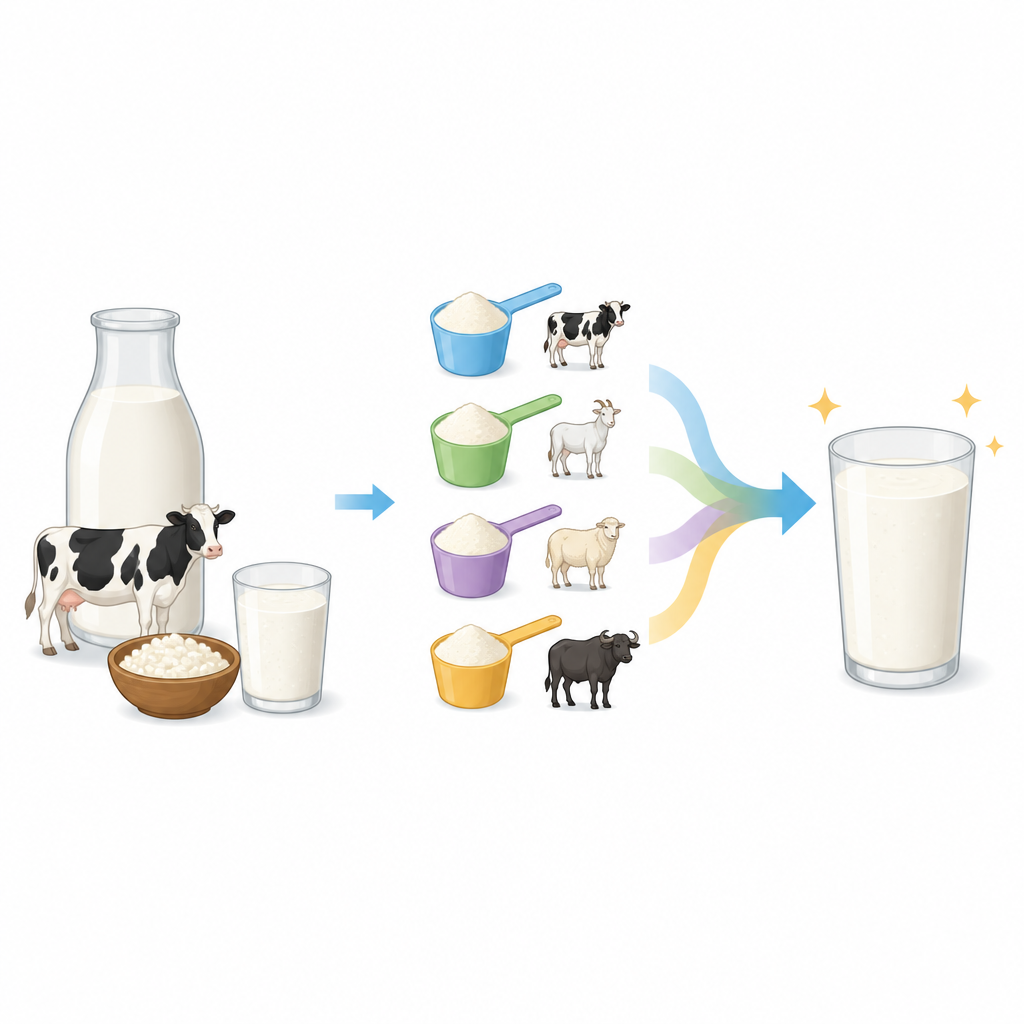
The researchers focused on bovine kefir made from cow’s milk and enriched it with freeze dried colostrum from four animals: cow, goat, sheep, and buffalo. Colostrum is naturally packed with proteins, fats, minerals, and bioactive compounds, but it spoils quickly in liquid form. By gently freeze drying it into a powder and adding just 1 percent by weight before fermentation, the team created five versions of kefir: a control with no colostrum and four enriched types. All were fermented with the same commercial kefir starter and stored cold for two weeks, while the team tracked texture, color, acidity, microbes, and aroma molecules.
Keeping the drink smooth and stable
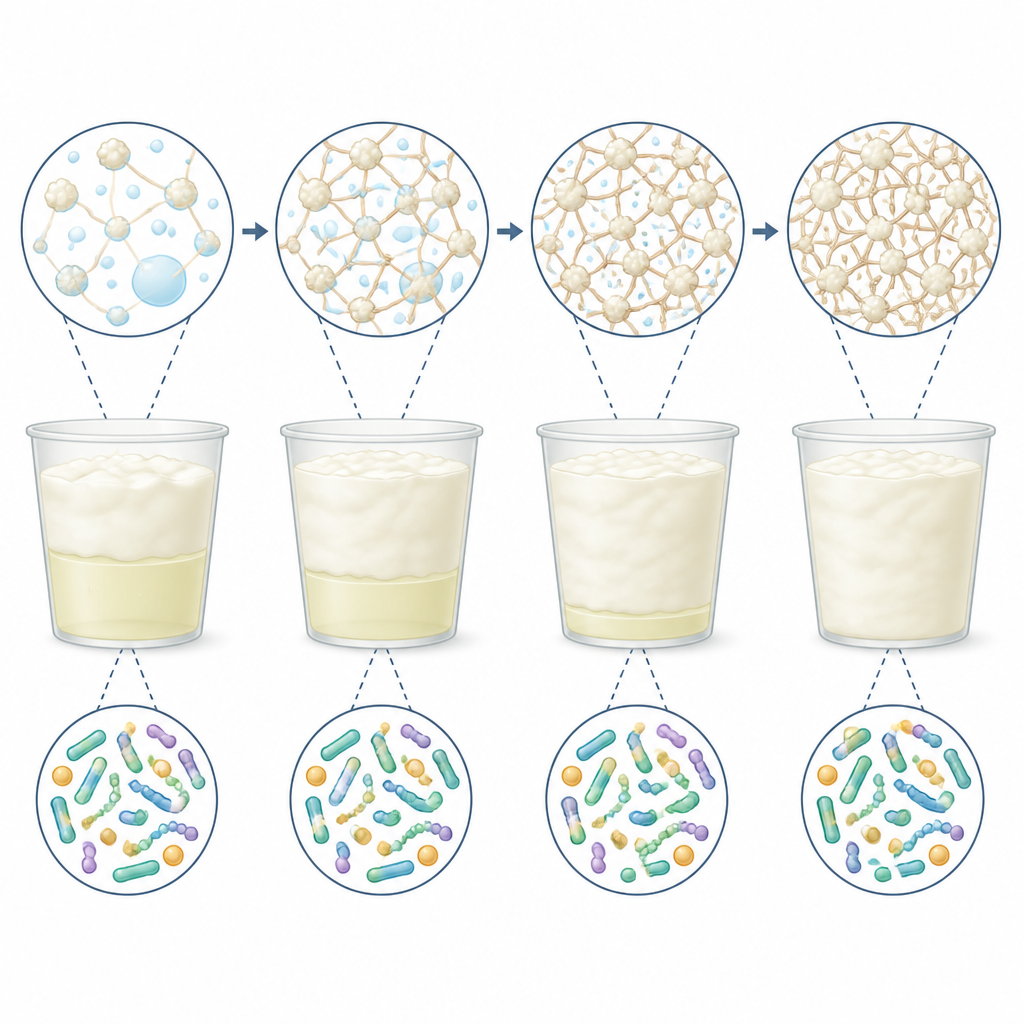
One practical question was whether colostrum could help the drink stay smooth instead of separating into thick curd and watery whey. Compared with the control, all colostrum enriched kefirs had higher total solids from extra protein and fat, which helped form a stronger gel. Over 14 days, they showed less syneresis, the watery seepage often seen in yogurt, and higher water holding capacity, especially in the buffalo and goat versions. In other words, the enriched kefirs held onto their water better and looked more uniform. Color measurements showed that all samples darkened slightly over time, but colostrum slowed the loss of lightness and helped maintain the creamy, appealing appearance that matters to shoppers.
Helping friendly microbes hold their ground
The team also counted three main microbial groups: Lactococci, Lactobacilli, and yeasts. These communities give kefir many of its potential health benefits and its characteristic tang. Lactococci numbers stayed high and steady across all samples. In the control kefir, Lactobacilli declined during storage, slipping below 7 log CFU per milliliter, while in every colostrum enriched kefir they remained above that level. Yeast numbers were highest in buffalo and sheep colostrum kefirs and lowest in the control, yet overall acidity stayed within a similar range. The authors suggest that colostrum’s proteins, minerals, and bioactive components act as a buffer, preventing the drink from becoming too acidic and creating a more comfortable environment for beneficial bacteria throughout storage.
Shaping the smell and taste of kefir
A key part of the work was mapping 34 aroma compounds using gas chromatography–mass spectrometry, then using statistical tools to see how profiles clustered. Across all samples, the main groups were acids, alcohols, aldehydes, and ketones. Acids such as acetic, butanoic, and hexanoic acids dominated in every kefir and are tied to sour, buttery, and fatty notes. Kefirs made with sheep and cow colostrum had the richest and most varied aroma fingerprints, including more types of alcohols and aldehydes that contribute fruity, green, or creamy nuances. Goat colostrum kefir showed a distinct pattern of volatiles, while buffalo colostrum kefir had fewer different compounds but stood out for certain acids and the buttery ketone acetoin. Principal component analysis confirmed that sheep colostrum kefir sat apart from the others with the most complex and intense volatile profile, while the control and cow colostrum kefirs clustered together with simpler aromas.
What this means for future kefir lovers
To a lay drinker, the message is straightforward: adding a small amount of colostrum powder to cow’s milk kefir can make the beverage thicker, less prone to watery separation, more visually appealing, and more supportive of its live “good” bacteria, without upsetting its overall acidity. Depending on the animal source, colostrum also steers the aroma in different directions, with sheep and cow colostrum giving the most layered smell and taste. While this study did not test health outcomes directly, it shows that colostrum can be used as an ingredient to fine tune both the stability and sensory character of kefir, opening the door to new functional dairy drinks that deliver a more pleasant and consistent experience in the glass.
Citation: Yörükoğlu, T., Demirkol, M., Cingöz, A. et al. Comparative study of the aroma profiles and chemical and microbiological properties of bovine kefir enriched with lyophilized colostrum of different milk kinds. Sci Rep 16, 14799 (2026). https://doi.org/10.1038/s41598-026-44814-9
Keywords: kefir, colostrum, fermented dairy, probiotic bacteria, aroma compounds