Clear Sky Science · en
Information and communications technology-based versus handout-based home exercise programs for heel pain syndrome: a prospective randomized study
Why sore heels and phone apps belong in the same story
Many people develop sharp heel pain that is worst with the first steps out of bed. Two common culprits—plantar fasciitis and Achilles tendinitis—can make everyday walking difficult. Doctors often prescribe simple stretching exercises to be done at home, usually taught in the clinic and reinforced with printed handouts. This study asked a modern question: if those same exercises are delivered through a smartphone app with videos and reminders, do people actually feel and function better than with paper instructions alone? 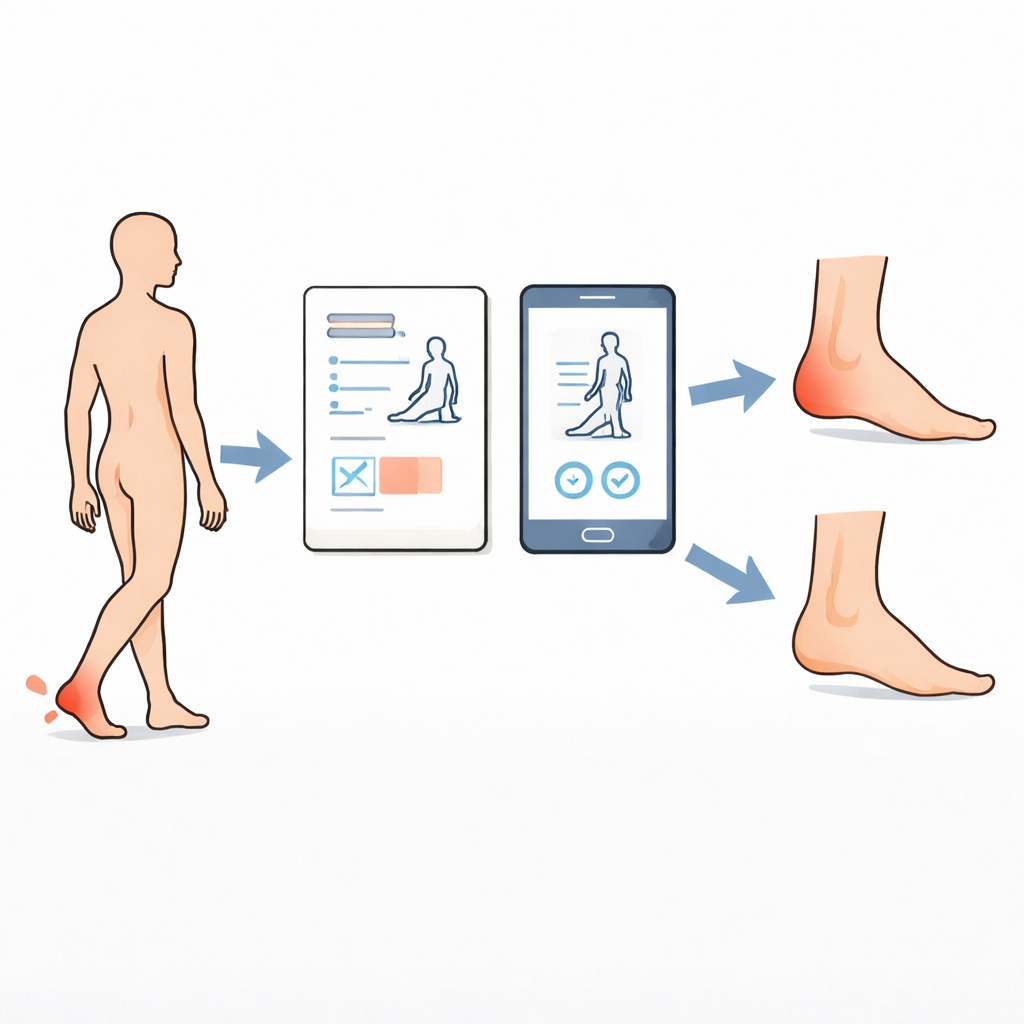
Two ways to coach the same home exercises
The researchers recruited 87 adults with heel pain lasting at least two weeks, all diagnosed with plantar fasciitis, Achilles tendinitis, or both. Everyone was prescribed the same stretching and strengthening routine, tailored to the type of heel problem, to be done three times a day for 12 weeks. What differed was how the instructions were delivered. One group used an information and communications technology (ICT) exercise therapy platform on their smartphones, which provided guided videos, narration, subtitles, and regular reminders. The other group received traditional printed handouts plus an in-person demonstration from their doctor, then performed the same program at home using those sheets.
How success was tracked over six months
To understand whether one approach worked better, the team followed participants for 24 weeks and asked them to rate several aspects of their heel problem. The main measure was “first-step pain”—how much it hurt when they first put weight on the foot, scored on a 0-to-10 scale. They also recorded pain at rest and during activity, a foot function index that reflects daily limitations, and a general health survey that captures physical and mental well-being. At each visit, patients also rated how recovered they felt, from not at all better to completely recovered. Importantly, the researchers focused not only on statistical differences, but also on whether changes were big enough for patients to notice as meaningful relief.
What the app seemed to add
Both groups improved over time, but the pattern favored the smartphone platform. In the app group, the drop in first-step pain was large enough to exceed a commonly used “minimal clinically important difference” at every follow-up point, meaning the relief was likely noticeable in everyday life. The handout group improved too, but at the four-week mark their average change was smaller and did not meet that threshold. When the researchers compared the two groups directly with a more complex statistical model, however, the difference in first-step pain did not reach conventional significance, so they could not claim a clear win for the app on that primary measure.
Better function, better overall physical health
Where the digital platform stood out more clearly was in secondary outcomes. People using the app showed greater gains in foot function at both early (four-week) and later (24-week) checks, suggesting they were walking and using their feet more comfortably in daily life. Their scores on the physical portion of the general health survey also improved more than those of the handout group by the end of the study, indicating broader physical benefits beyond just heel pain. More participants in the app group reported feeling mostly or completely recovered at 12 and 24 weeks, even though both groups sometimes received extra treatments such as pain medicine, insoles, or shockwave therapy at similar rates. 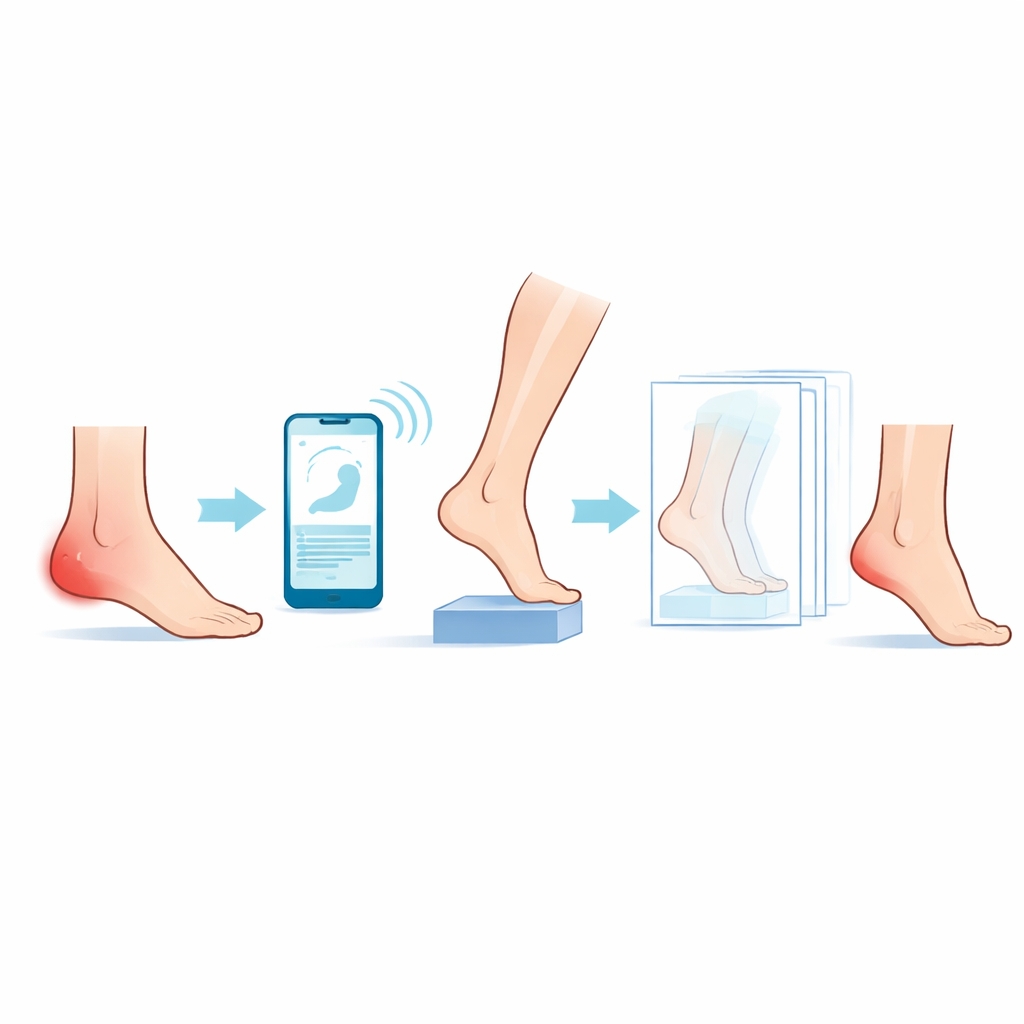
What this means for people with sore heels
In plain terms, doing the right stretches and exercises helped most participants, regardless of whether instructions came on paper or via phone. The app did not prove definitively superior for the main pain rating when judged by strict statistical rules, but it did help people reach meaningful pain relief, move more easily, and feel physically better overall more often than handouts alone. The study suggests that guided videos, reminders, and clearer instructions may help people perform their exercises more accurately and stick with them longer. For patients with stubborn heel pain—and for clinics designing home programs—using a well-designed digital platform may offer a practical edge, though more research is needed to confirm how much better it is than traditional methods and whether it remains cost-effective in the long run.
Citation: Shim, D.W., ParK, K.H., Lee, J.W. et al. Information and communications technology-based versus handout-based home exercise programs for heel pain syndrome: a prospective randomized study. Sci Rep 16, 13584 (2026). https://doi.org/10.1038/s41598-026-44709-9
Keywords: heel pain, plantar fasciitis, Achilles tendinitis, home exercise, digital rehabilitation