Clear Sky Science · en
Lipidomics of allantoic fluid collected by allantocentesis indicates a possible mechanism underlying partial litter loss in multifetal pregnancies of ewes
Why this matters for farmers and animal health
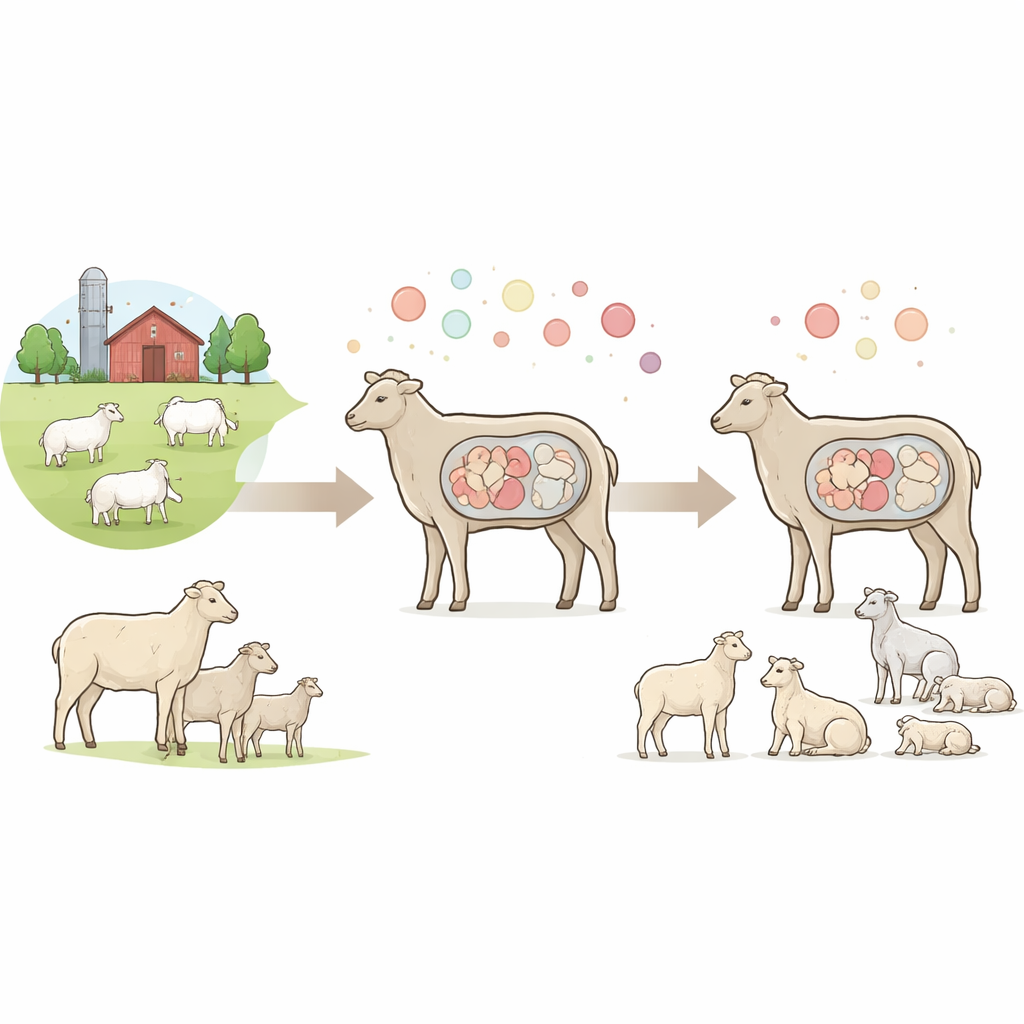
Sheep farmers often discover, to their frustration, that not every fetus detected during pregnancy survives to birth. In large litters, it is common for some lambs to be born healthy while their littermates are stillborn, even though they look normal and are the right size. This study takes a deep look inside the womb—into the mother’s blood, the placenta, and a little‑known fetal fluid called allantoic fluid—to uncover hidden metabolic clues that may explain why some lambs in multifetal pregnancies do not make it to their first breath.
A closer look at late pregnancy in ewes
The researchers followed 25 highly prolific ewes carrying two to four fetuses, a common situation in modern breeds selected for large litters. By the end of pregnancy, 11 ewes delivered litters in which every lamb was born alive, while 14 ewes experienced partial litter loss, meaning at least one lamb was stillborn. The team collected repeated blood samples from the mothers during late pregnancy, sampled placental tissue at birth, and, crucially, drew allantoic fluid from each fetus a few days before lambing. Allantoic fluid, which surrounds the fetus, helps manage waste and reflects aspects of fetal metabolism, making it a promising window into fetal health.
What the mothers’ blood revealed
Comparing ewes with fully vital litters to those with partial litter loss uncovered notable differences in maternal metabolism and stress hormones. Ewes that ultimately had all lambs survive showed higher levels of a ketone body called β‑hydroxybutyrate, an important energy source for ruminant fetuses, especially when glucose is limited. In contrast, ewes that lost one or more fetuses had higher insulin and cortisol levels. This pattern suggests that, late in gestation, their bodies were less geared toward mobilizing and redirecting energy to the fetuses and more toward maintaining their own energy balance under stress. Such a shift could subtly limit fuel and hormonal support to some fetuses, setting the stage for trouble just before birth.
Signals from the placenta
The placenta acts as the life‑support interface between ewe and fetus, and changes in its gene activity can hint at deeper problems. In placentas from pregnancies with partial litter loss, the researchers found higher activity of the androgen receptor, which responds to male‑type hormones and has been linked in other studies to inflammation and poorer blood vessel formation. At the same time, there were trends toward lower activity of a key growth factor gene (IGF2) and the gene encoding the main receptor for stress hormones (NR3C1). Together, these shifts point to a placenta that is trying—but failing—to adapt to a challenging environment, with altered growth and stress‑response signaling that could compromise fetal survival.
What fetal fluid says about lung readiness
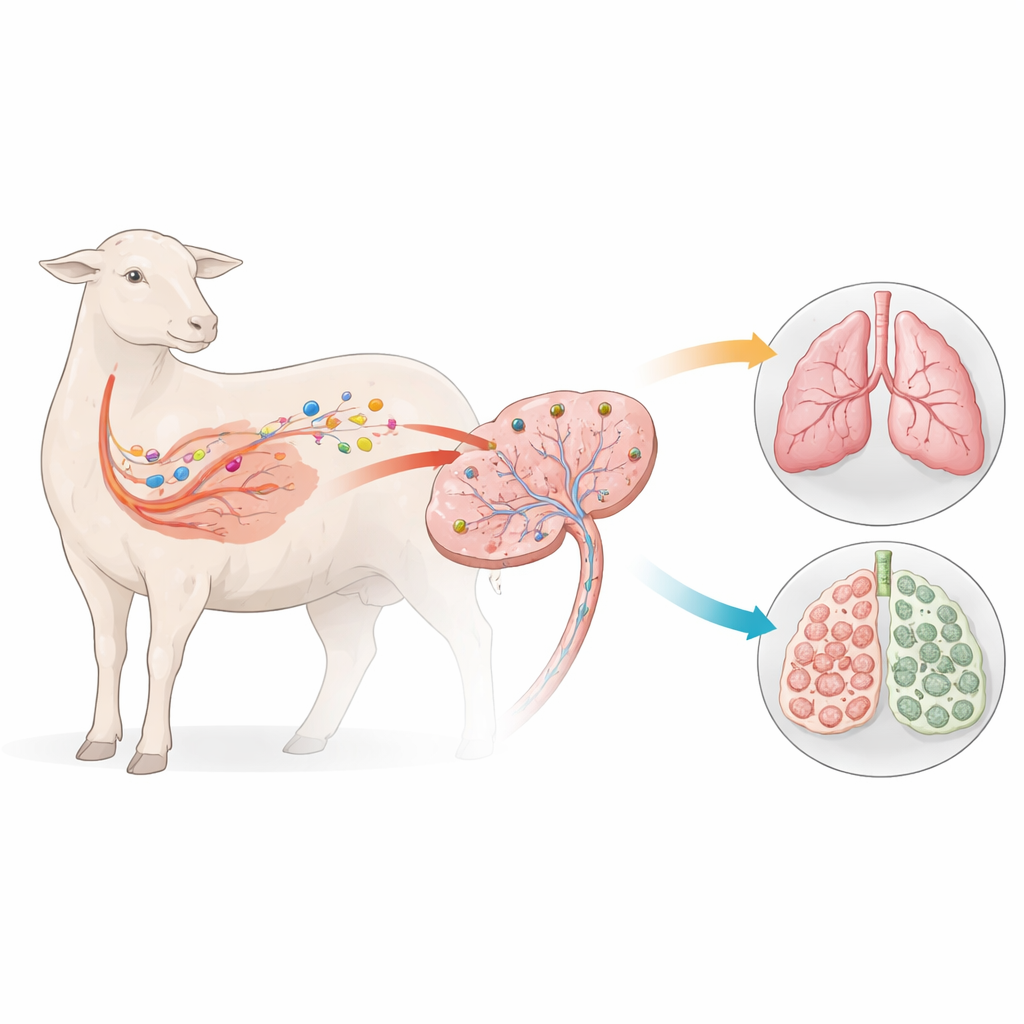
The most striking clues came from the untargeted lipidomics—a broad survey of fat‑like molecules—in allantoic fluid taken from fetuses within litters that later showed partial loss. By matching fluid samples to individual lambs using DNA, the team compared stillborn lambs to their liveborn littermates. They identified 24 lipid compounds that differed between the two groups. Stillborn lambs had lower levels of a particular phosphatidylglycerol, a molecule known from human and animal work to be a key component of lung surfactant, the slippery coating that allows newborn lungs to inflate. At the same time, stillborn lambs had higher levels of several other lipids, including sphingomyelins, lysophosphatidylcholines, and certain phosphatidylethanolamines and related molecules. In many species, the normal pattern before birth is a rise in lung‑friendly surfactant lipids such as phosphatidylglycerol and certain phosphatidylcholines, with relatively stable or falling levels of sphingomyelin.
Piecing together a likely chain of events
Putting these threads together, the authors propose that partial litter loss in multifetal sheep pregnancies reflects a gradual breakdown across the ewe–placenta–fetus axis rather than a sudden, random event at birth. Maternal metabolic strain and elevated cortisol appear to stress the placenta, which responds with altered hormone and growth signaling. This, in turn, is echoed in the lipid profile of the fetuses’ allantoic fluid, especially molecules that are tightly linked to lung maturation. The pattern—low phosphatidylglycerol with high sphingomyelin and related lipids—resembles an immature surfactant profile seen in human newborns who develop respiratory distress. The study therefore suggests that many stillborn lambs in large litters may die because their lungs are simply not biochemically ready to function at birth, even though the lambs look normal. These insights could eventually guide better nutrition, management, or biomarker‑based monitoring to reduce fetal loss in prolific flocks.
Citation: Alon, T., Ross, M., Spirer, J. et al. Lipidomics of allantoic fluid collected by allantocentesis indicates a possible mechanism underlying partial litter loss in multifetal pregnancies of ewes. Sci Rep 16, 14002 (2026). https://doi.org/10.1038/s41598-026-44636-9
Keywords: sheep reproduction, fetal lung maturity, placenta and hormones, litter size and survival, pregnancy metabolites