Clear Sky Science · en
Safety precaution compliance and associated factors among pesticide user farmers in Dera district, Northwest Ethiopia, 2024: a health belief model approach
Why this study matters for everyday life
Pesticides help farmers protect crops and feed their families, but they can also quietly harm health and the environment if used without proper care. This study from Dera district in Northwest Ethiopia looks closely at how smallholder farmers actually handle pesticides and what drives them to follow—or ignore—basic safety steps. Its findings matter not only for rural communities in Ethiopia, but for anyone concerned about food production, worker safety, and hidden health risks in farming.
The hidden costs of crop protection
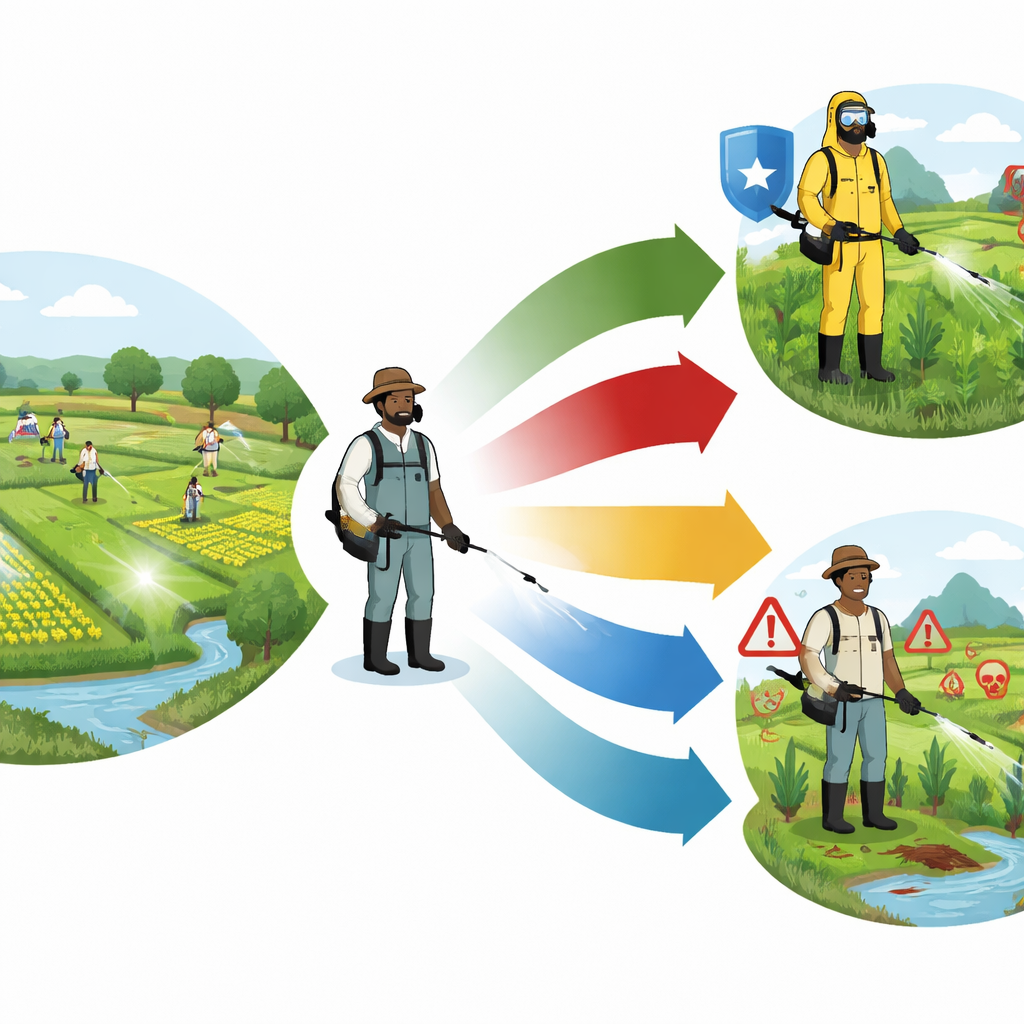
Pesticides are widely used across the developing world to control insects, weeds, and plant diseases, and they are essential to many farmers’ harvests. Yet worldwide, pesticide poisoning kills hundreds of thousands of people each year, most of them in low- and middle-income countries. In Ethiopia, more than three out of four farmers report illness after spraying. The health problems range from irritated eyes and skin, dizziness, and stomach upset to chronic diseases such as cancer. These harms often go unreported, and they are made worse when farmers lack training, cannot afford protective equipment, or underestimate the danger.
Looking at beliefs, not just behavior
To understand why safety rules are or are not followed, the researchers used a framework from health psychology called the Health Belief Model. Instead of assuming that farmers ignore safety out of carelessness, this model asks what people believe about their own risk, how severe they think the consequences are, whether they see real benefits to being careful, what obstacles stand in the way, and how confident they feel about taking protective action. The team surveyed 437 pesticide-using farmers in seven irrigated villages, asking about their background, how they store and dispose of pesticides, whether they eat or drink while spraying, and how they think and feel about these practices.
What farmers are doing now
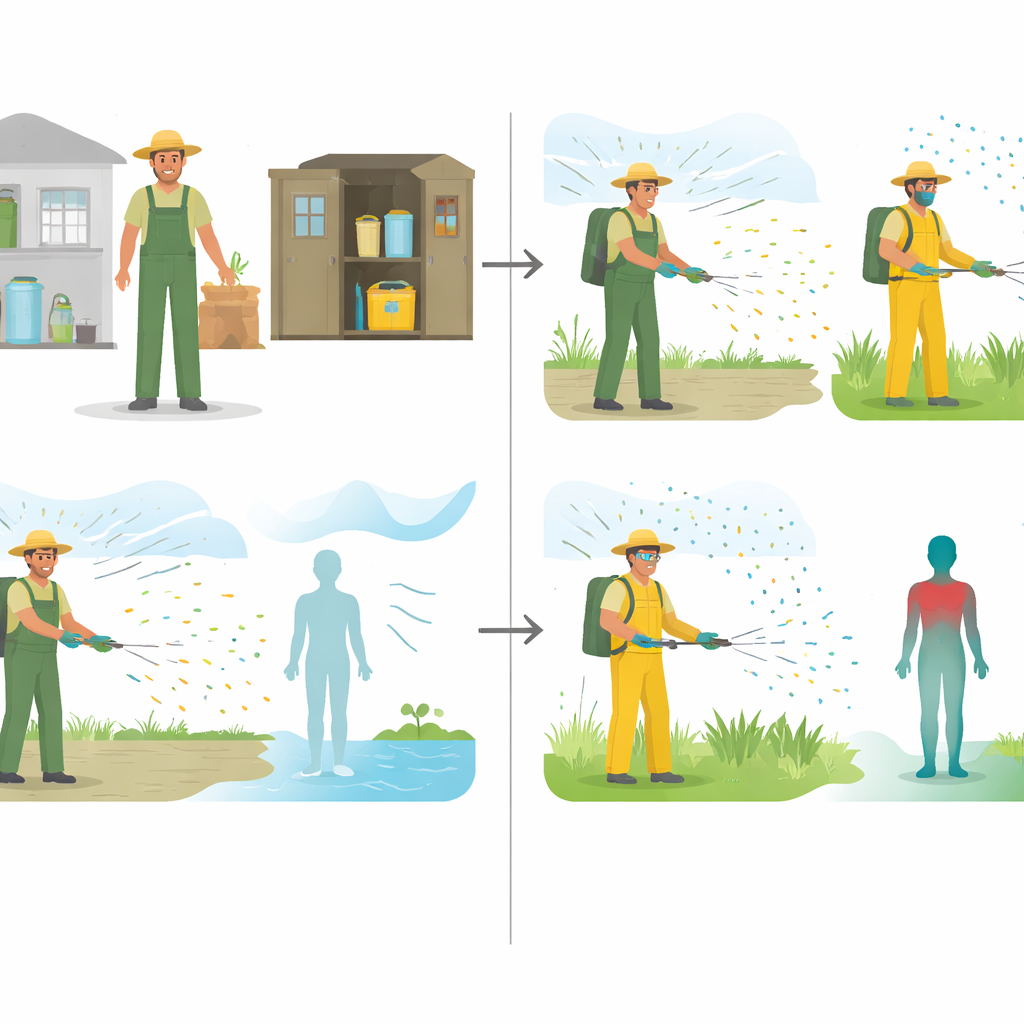
Only about four in ten farmers in Dera district met the study’s standard for good safety compliance. Most participants were men in their thirties and forties, with limited formal schooling and low income. While many had more than five years of experience using pesticides, risky habits were common. Over half kept leftover pesticides in a separate room, but a large minority stored them in bedrooms or kitchens. Nearly seven in ten kept leftovers for less than six months, yet more than three-quarters tossed empty containers into open fields, and some even discarded them into rivers. These patterns not only expose farmers and their families to chemicals, but also contaminate soil and water used by the wider community.
Experience and mindset shape safety
The study found that both practical experience and inner beliefs strongly influenced whether farmers protected themselves. Those with more time handling pesticides were more likely to follow precautions than newcomers. Storing pesticides in bedrooms sharply reduced the chances of safe behavior, while better storage and longer, more deliberate keeping of leftovers were linked with improved compliance. Beliefs mattered even more: farmers who felt personally at risk, who believed pesticide-related illness could be very serious, and who were convinced that protective measures truly helped were many times more likely to act safely. Confidence in their own ability to manage pesticides and an awareness of the barriers they faced—such as cost or discomfort—also predicted better compliance when those barriers were acknowledged and addressed.
Turning insight into safer farms
Overall, the study paints a sobering picture: most pesticide users in this Ethiopian district are not yet taking enough precautions to protect their health or their environment. But it also offers a roadmap for change. Training that clearly explains the real risks of pesticide exposure, shows the concrete benefits of simple actions like using masks and gloves, and builds farmers’ confidence could significantly improve safety. Providing affordable protective gear, promoting safer storage and disposal of containers, and encouraging alternatives to heavy pesticide use would reduce hidden harms while preserving crop yields. For lay readers, the message is clear: safe food and healthy farming communities depend not just on what chemicals are used, but on how people understand and handle them every day.
Citation: Workineh, E.A., Belay, E. & Molla, E. Safety precaution compliance and associated factors among pesticide user farmers in Dera district, Northwest Ethiopia, 2024: a health belief model approach. Sci Rep 16, 10791 (2026). https://doi.org/10.1038/s41598-026-44420-9
Keywords: pesticide safety, smallholder farmers, Ethiopia agriculture, protective equipment, health beliefs