Clear Sky Science · en
Exploring the link between sensory habituation in everyday life and attentional control abilities
Why getting used to background noise matters
Every day we are surrounded by sights, sounds, and sensations that our brains quietly tune out: the hum of a computer, the feel of clothes on our skin, the buzz of a refrigerator. This ability to “get used to” ongoing stimulation helps us focus on what really matters, like a friend’s voice or a road sign. The study in this article asks a simple but important question: do people who struggle to tune out everyday sensory clutter also find it harder to focus their attention when tasks are mentally demanding?
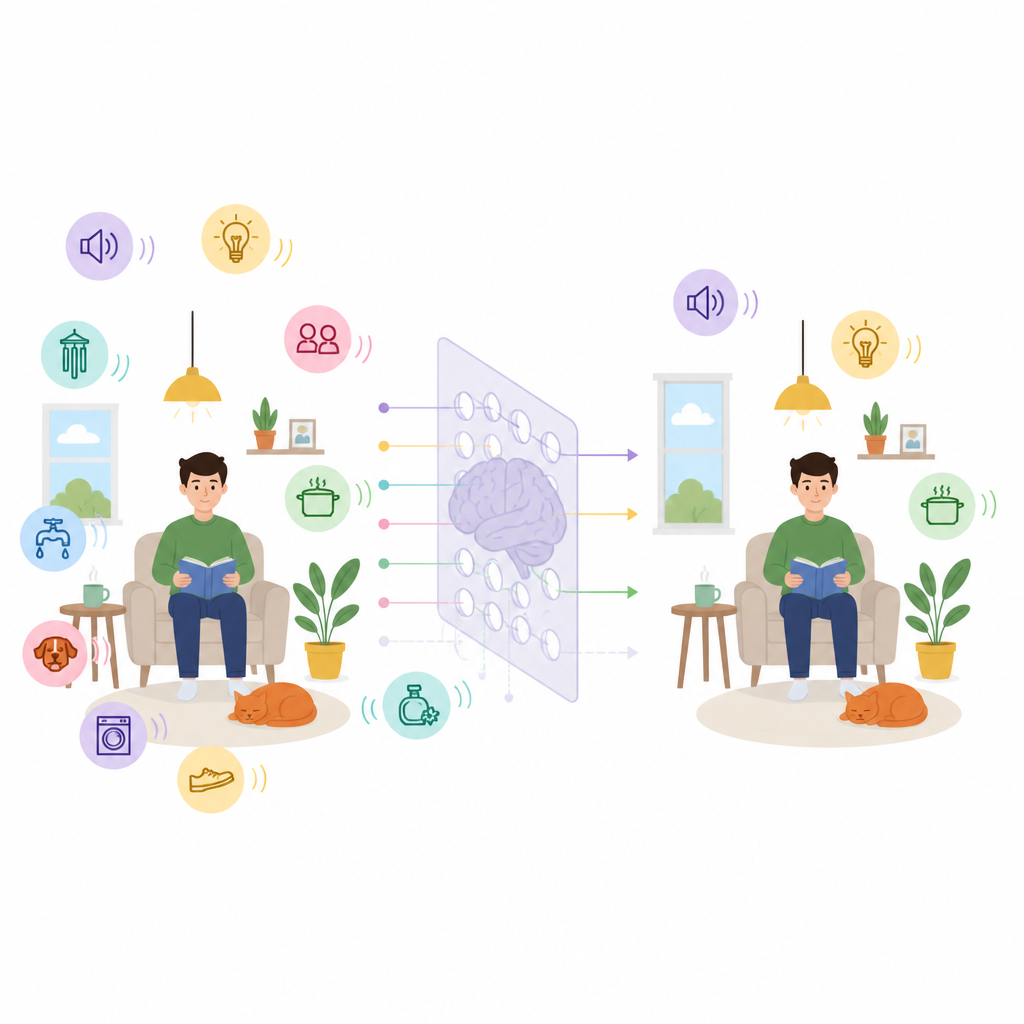
How the brain learns to ignore
The authors focus on sensory habituation, which is the gradual reduction of our response to repeated or continuous sensations. Habituation is not just tired senses; it is an active way the brain decides that some signals are no longer worth precious processing resources. Earlier work shows that babies who habituate quickly tend to have better later thinking skills, and that brain regions at the front of the head help control this filtering. These same regions also support attentional control, the ability to ignore distractions and focus on what is relevant. This overlap led the researchers to suspect that people’s everyday experience of adapting to sensory input might be closely tied to how well they handle interference in attention-heavy tasks.
Measuring daily life sensitivity
To explore this link, the team tested 143 adults online. Participants first filled out three questionnaires. One measured how long they typically take to get used to ongoing sensations, such as the smell of perfume or the feeling of sand on the skin. Higher scores meant slower or more difficult habituation. A second questionnaire assessed how sensitive people are to sights, sounds, and other senses in daily life, with higher scores reflecting stronger sensitivity. The third questionnaire captured autistic traits in the general population, including social style, preference for detail, and flexibility. Together, these tools created a profile of how each person experiences and reacts to the sensory world.
A test of focus amid conflicting details
Next, participants performed a computer task that mimicked the challenge of focusing on the “big picture” while ignoring distracting details. They saw large letters built out of smaller letters and had to respond when certain target letters appeared, whether at the large or small level. On some trials, the large and small letters did not match, forcing people to suppress one level to detect the other. This setup allowed the researchers to compare performance when attention had to overcome conflict with performance on simpler trials without such conflict, while recording both accuracy and speed.
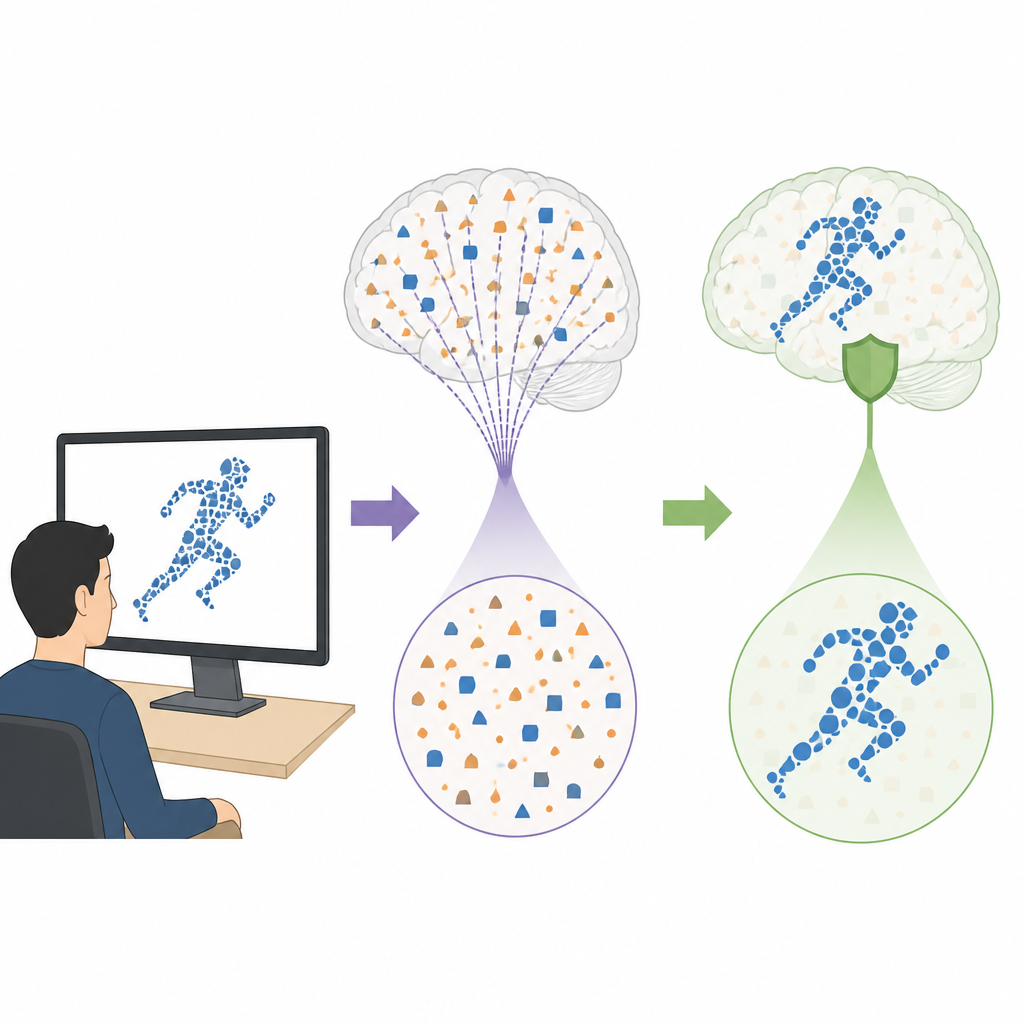
What slower adaptation revealed
The results showed a clear pattern. People who reported taking longer to adapt to everyday sensory input were less accurate at spotting targets defined by the overall, large shape when the small letters were conflicting. Individuals with higher sensory sensitivity showed a similar drop in accuracy for these “big picture” trials. At the same time, people with slower habituation and those with more autistic traits tended to respond faster on easier, non-target trials that did not require suppressing one level of the stimulus. More detailed analysis suggested that traits related to noticing fine details and certain communication styles were linked to this speed advantage in low-conflict visual search.
What this means for everyday life
For a layperson, the take-home message is that how quickly we get used to background sensations is closely tied to how we control our attention. People who find it hard to tune out ongoing noise, flickering lights, or lingering tactile feelings may also find it harder to ignore irrelevant details when a task demands focusing on the overall scene. Yet these same individuals can be especially quick and precise when the situation is simple and mainly calls for sharp, detail-focused perception. The study suggests that understanding both habituation and attention together can shed light on why some people, including many neurodivergent individuals, feel easily overwhelmed by their surroundings while also showing strengths in focused visual search and detail detection.
Citation: Tarantino, V., Santostefano, A., Oliveri, M. et al. Exploring the link between sensory habituation in everyday life and attentional control abilities. Sci Rep 16, 15260 (2026). https://doi.org/10.1038/s41598-026-44401-y
Keywords: sensory habituation, attention control, sensory sensitivity, autistic traits, visual perception