Clear Sky Science · en
Increased risk of cardiovascular diseases among patients with carpal tunnel syndrome in a multicenter global retrospective cohort study
A sore wrist that may warn of heart trouble
Many people think of carpal tunnel syndrome as an annoying wrist problem caused by typing or repetitive work. This study suggests it may be much more than that. By tracking millions of medical records worldwide, the researchers found that people with carpal tunnel syndrome are more likely to go on to develop serious heart and blood-vessel problems, including heart attacks and strokes. In other words, tingling in the hand could sometimes be an early warning sign of deeper trouble in the rest of the body.
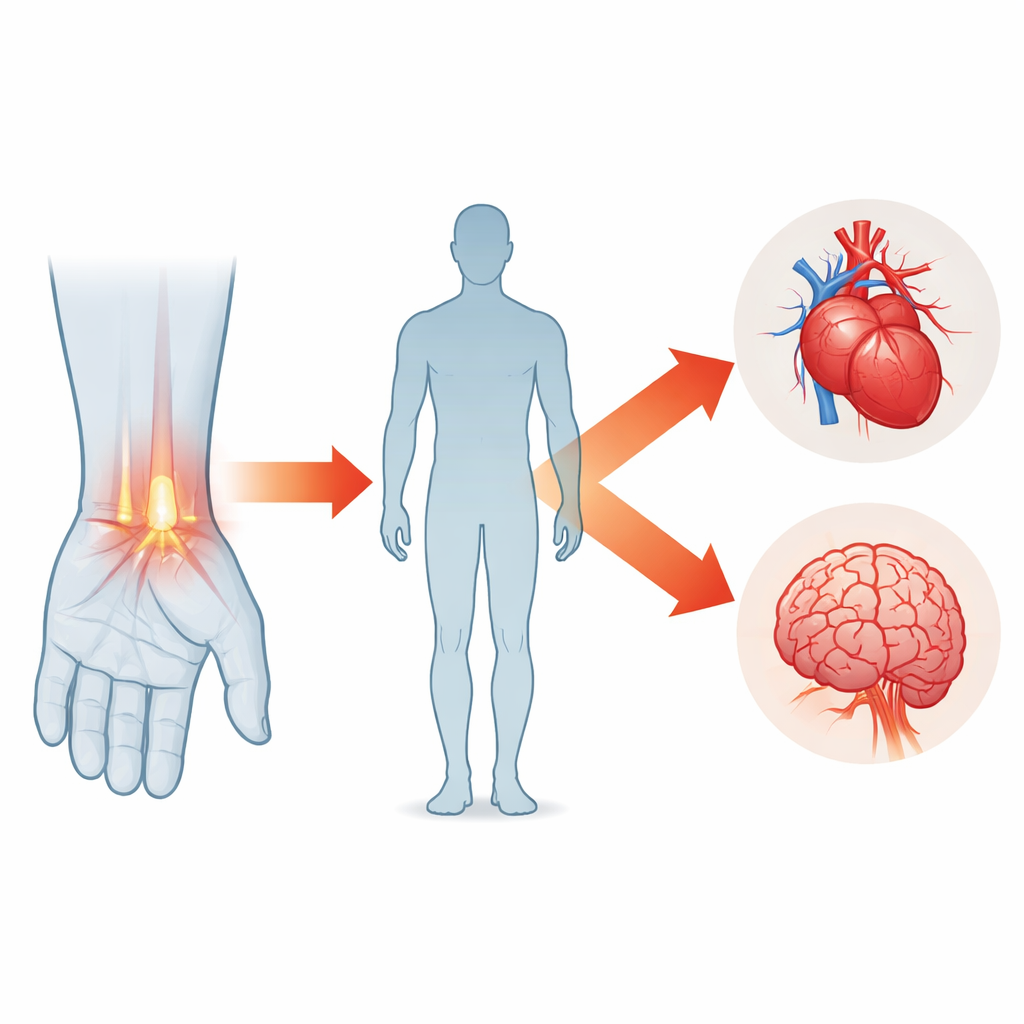
From a pinched nerve to a whole-body signal
Carpal tunnel syndrome happens when a major nerve in the wrist is squeezed inside a narrow passageway, leading to pain, numbness, or weakness in the hand. For years, doctors treated it as a local nerve problem. But large studies have shown that people with this condition often also have obesity, diabetes, thyroid disease, and arthritis. These are all conditions tied to long-lasting inflammation and changes in how the body handles fats and sugars—processes that also raise the risk of heart disease. This connection led scientists to wonder: does carpal tunnel syndrome mark a body-wide state that also endangers the heart and brain?
A global look at wrist pain and heart disease
To explore this, the team used a worldwide electronic health record network covering more than 150 million people. They identified about 620,000 adults with carpal tunnel syndrome and more than 8.6 million similar adults without it. To make a fair comparison, they carefully matched each patient with carpal tunnel syndrome to a patient without it, aligning factors such as age, sex, body mass index, major illnesses like diabetes and high blood pressure, use of common medicines, and even some lifestyle-related diagnoses. This produced two very similar groups of over 615,000 people each, followed for up to 15 years to see who developed different heart and circulation problems.
Higher chances of stroke, heart attack, and more
The results were striking. People with carpal tunnel syndrome were about 40% more likely to suffer a major cardiovascular event—such as heart attack, heart failure, or stroke—than their matched counterparts. Looking at specific problems, they had higher risks of heart attack, both types of stroke (caused by clots and by bleeding), blood clots in the lungs, and diseases of the arteries in the legs and brain. They were also more likely to develop structural heart problems, including valve disease and rhythm disturbances. The strongest link was with a rare condition called cardiac amyloidosis, in which abnormal protein deposits stiffen the heart muscle: patients with carpal tunnel syndrome were more than twice as likely to later receive this diagnosis. These patterns held true for men and women, younger and older adults, and across different racial groups.
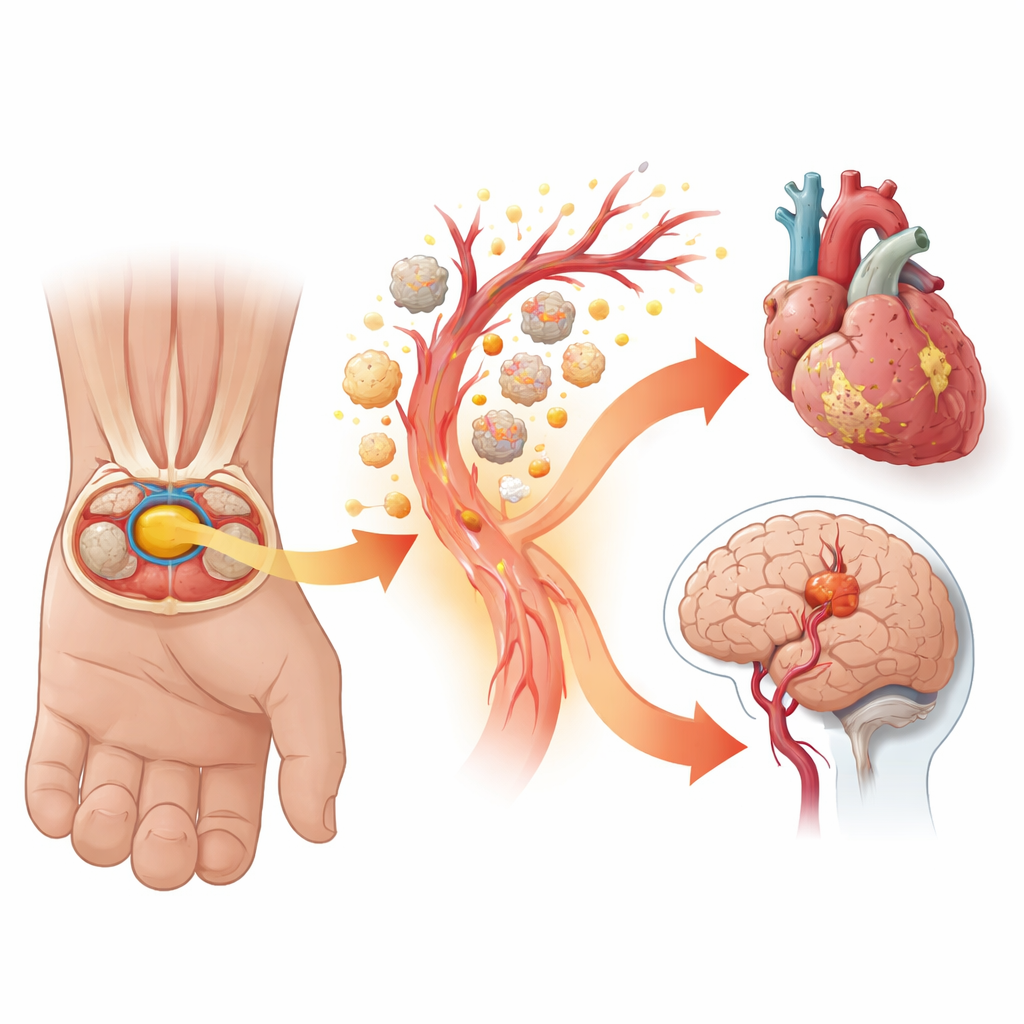
Stronger risk than in other inflammatory joint diseases
To see how serious this risk was, the researchers compared people with carpal tunnel syndrome to patients with two chronic inflammatory spine and joint diseases, rheumatoid arthritis and ankylosing spondylitis. These conditions are already known to raise heart risk, and guidelines advise extra caution when estimating heart disease in such patients. Yet, even against these high-risk groups, people with carpal tunnel syndrome had higher chances of major cardiovascular events, heart attacks, and cardiac amyloidosis. The researchers tested many alternative definitions of carpal tunnel syndrome, varied the length of follow-up, and tried different statistical approaches. In every case, the link with later heart and vascular disease remained.
What this means for patients and doctors
This study does not prove that carpal tunnel syndrome directly causes heart disease. Instead, it suggests that both may spring from shared roots: chronic low-grade inflammation, metabolic problems such as obesity and diabetes, and in some patients, early deposits of amyloid protein that first affect the wrist and later the heart. For everyday care, the take-home message is clear. When someone is diagnosed with carpal tunnel syndrome—especially in middle age or later—it may be wise for clinicians to look more closely at blood pressure, blood sugar, cholesterol, weight, and other heart risk factors, and to consider screening for conditions like cardiac amyloidosis when appropriate. A numb hand, in short, can sometimes be the body’s early signal that the heart and blood vessels need attention.
Citation: Chang, HC., Lo, SW., Lu, HY. et al. Increased risk of cardiovascular diseases among patients with carpal tunnel syndrome in a multicenter global retrospective cohort study. Sci Rep 16, 13866 (2026). https://doi.org/10.1038/s41598-026-44286-x
Keywords: carpal tunnel syndrome, cardiovascular risk, heart attack, stroke, cardiac amyloidosis