Clear Sky Science · en
Influential factors of residents’ online green behavior in China: the mediating role of social trust
Why a phone game about trees matters
Imagine that the tiny choices you make every day—taking the bus, paying with your phone, skipping plastic cutlery—quietly help plant real trees in distant deserts. In China, hundreds of millions of people do exactly this through a mobile feature called Ant Forest. This study asks a simple but important question: what makes people actually keep using such an app to live more "green" online, rather than just liking the idea in theory? The researchers focus on two forces inside people’s minds: how serious they feel environmental problems are, and how much they trust other people and institutions.
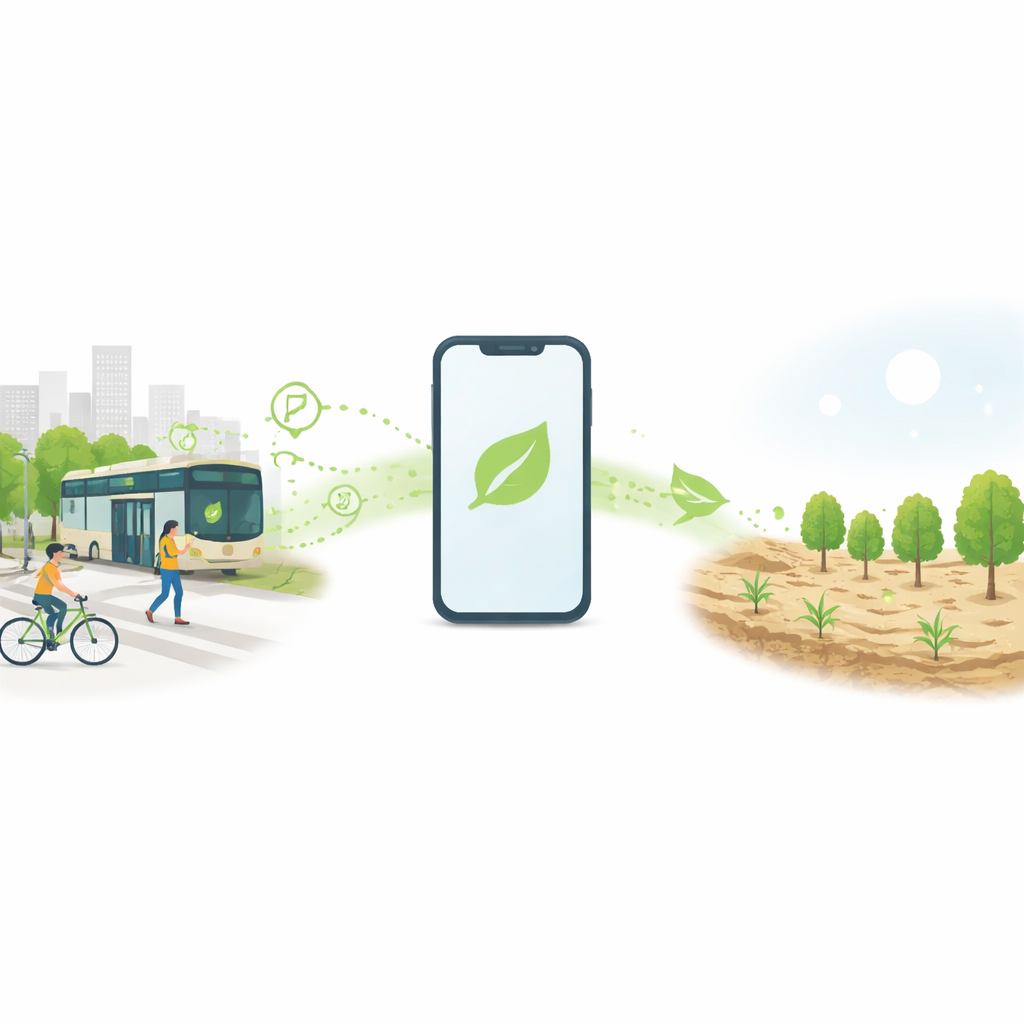
From clicks on a screen to trees in the ground
Ant Forest is part game, part environmental tool built into a popular payment app. When users do low‑carbon activities such as biking instead of driving, taking public transportation, using electronic receipts, buying second‑hand items, or reducing single‑use packaging, the system rewards them with virtual "energy" points. When enough points are collected, partner organizations fund the planting of real trees in arid regions of China, and users can see their virtual trees grow on screen. Because more than 500 million people have joined, these small digital actions have added up to a meaningful contribution to tree planting and public awareness about climate and pollution.
How people’s worries about the environment drive action
The first factor studied is environmental risk perception—how strongly people feel that pollution and environmental damage threaten humans, animals, and plants. Earlier research has shown that when people perceive higher risks, they are more willing to buy green products, support climate policies, and change everyday habits. In this study, over 500 Chinese residents answered questions about how dangerous they believe environmental pollution is, and how often they use Ant Forest. The analysis showed a clear pattern: the more seriously people rated environmental risks, the more frequently they engaged with the app. In other words, feeling that the environment is in real danger appears to be a powerful starting point for online green behavior.
Why trust makes online green behavior possible
But awareness alone does not guarantee action. Ant Forest takes place entirely online: you cannot see the trees being planted, the land being restored, or the work of partner groups with your own eyes. This is where social trust comes in—people’s general belief that others are honest and that society’s systems generally do what they claim. The study found that people with higher levels of social trust also used Ant Forest more often. They were more likely to believe that the app correctly tracks their low‑carbon choices, that the organizations involved really plant and care for the trees, and that other users are also taking part rather than free‑riding. Without this basic confidence in others, even people who worry about the environment may hesitate to invest time and emotion in an online platform.
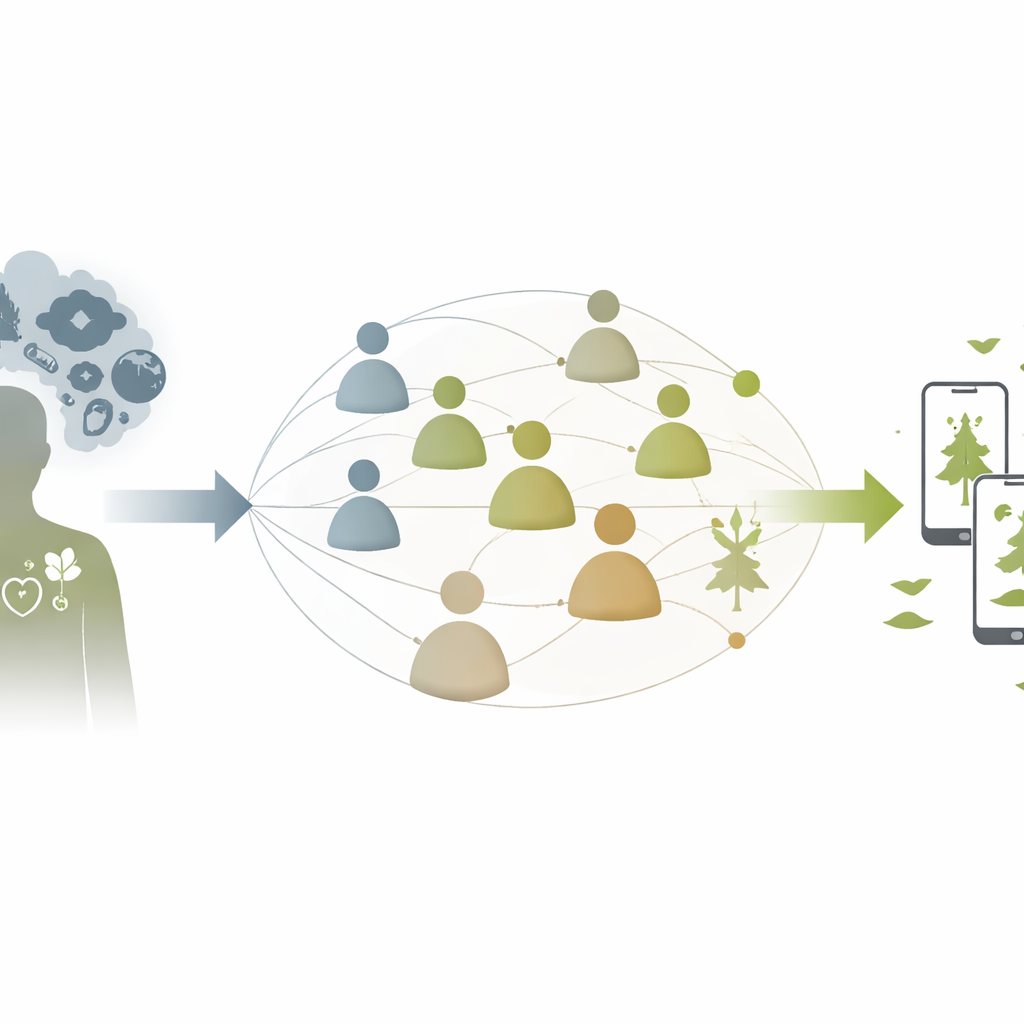
A bridge from concern to real‑world impact
The most striking finding is that social trust acts as a bridge between environmental concern and behavior. Statistical tests showed that environmental risk perception boosts social trust, and that this higher trust then partly explains why concerned people are more active on Ant Forest. In numbers, a modest but meaningful slice of the effect of environmental worry on app use flows indirectly through trust. This means that simply increasing fear about environmental damage is not enough; people also need to feel that if they act, others—companies, nonprofits, governments, and fellow citizens—will act with them and not let them down.
What this means for digital green tools
To a non‑specialist reader, the takeaway is straightforward. Online platforms like Ant Forest can turn scattered individual choices into large‑scale environmental benefits, but they work best when people are both worried enough about the environment to want change and trusting enough to believe that their digital efforts matter. The authors suggest that designers of green apps and public agencies should highlight the real risks of pollution in clear, engaging ways, while also being transparent about how and where trees are planted and how progress is monitored. Strengthening trust—through open data, photos and videos from planting sites, and visible cooperation across society—can help transform online taps and swipes into lasting, real‑world environmental gains.
Citation: Li, Y., Yu, X. & Wang, R. Influential factors of residents’ online green behavior in China: the mediating role of social trust. Sci Rep 16, 13451 (2026). https://doi.org/10.1038/s41598-026-44191-3
Keywords: online green behavior, social trust, environmental risk perception, Ant Forest, digital environmental platforms