Clear Sky Science · en
Climate-induced shifts in cod spawning phenology across the North Atlantic
Why the Timing of Cod Births Matters to Us
Cod has fed coastal communities on both sides of the North Atlantic for centuries. Yet many cod populations have crashed, threatening food supplies, jobs and marine ecosystems. This study asks a deceptively simple question with big consequences: as the ocean warms and light and plankton patterns change, is the timing of cod reproduction also shifting, and how might that affect the future of these iconic fish?
Following Cod Eggs Across an Entire Ocean
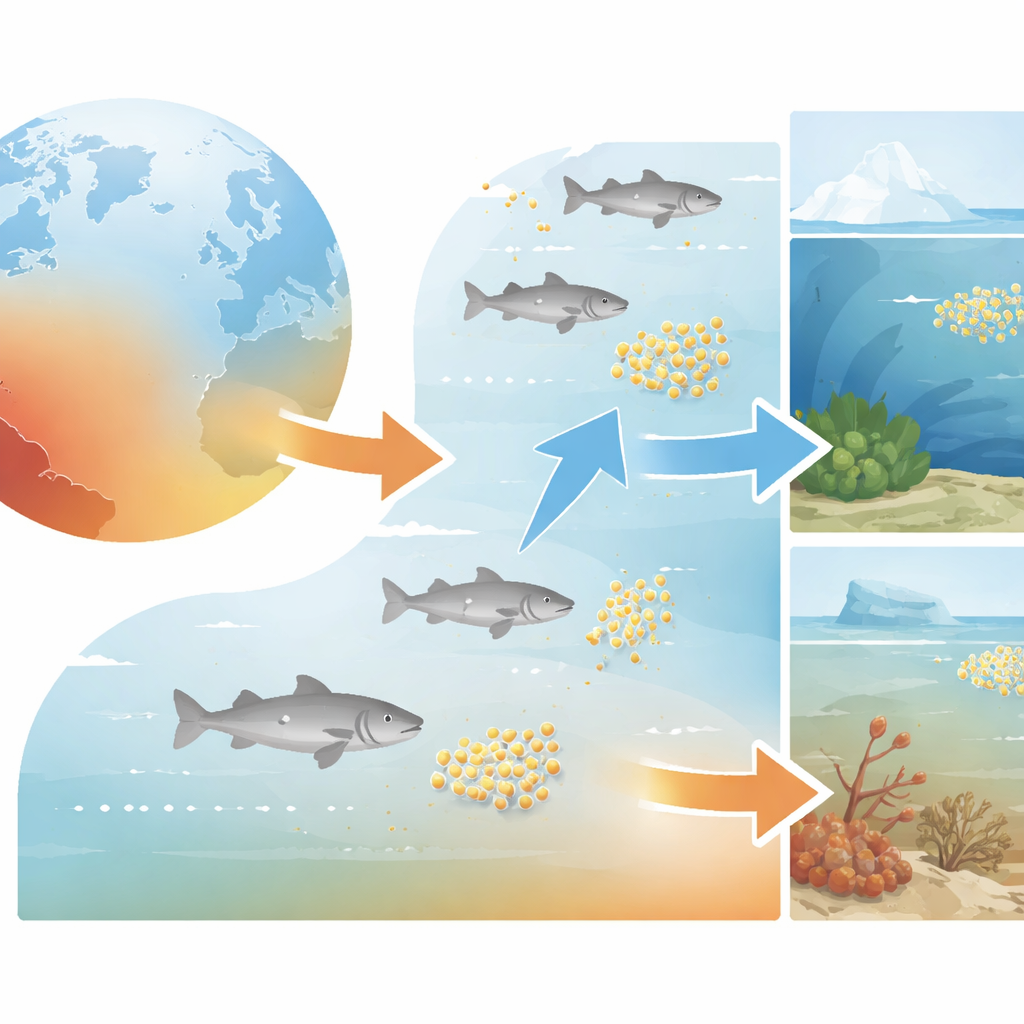
Instead of tracking adult fish, the researchers focused on cod eggs, because spawning is the first and essential step in rebuilding a stock. Cod usually release their eggs once a year in late winter or spring, and those floating eggs need the right temperature, light and food conditions to survive. The team gathered more than a thousand records of cod eggs collected since the 1960s from across the North Atlantic. They then combined these observations with large environmental datasets describing sea surface temperature, sunlight in the upper ocean, plant-like plankton (measured via chlorophyll), salinity and sea ice. Using these ingredients, they built a daily, ocean‑wide model that estimates where and when conditions are suitable for cod eggs.
Building a Climate-Sensitive Map of Spawning Habitat
To translate scattered egg observations into a continuous picture, the scientists used an ecological niche model, a statistical tool that learns the range of environmental conditions where a species tends to occur. They trained separate models for the western and eastern North Atlantic, recognizing that cod in these regions experience different climates and have distinct genetic backgrounds. The model estimates how suitable each patch of ocean is for cod eggs on every day from 1959 to 2020, then applies extra filters for low salinity, long-lasting sea ice and long periods with too little plankton food. When they compared their modeled spawning seasons with detailed field studies for 17 cod stocks, the match was high: about 84 percent of the months identified as spawning months by observers were correctly captured by the model.
Two Seas, Two Very Different Futures
Armed with this daily map, the authors zoomed in on two well‑studied cod populations: one off eastern Newfoundland in the northwest Atlantic, and one in the North Sea off northern Europe. These areas sit in very different parts of cod’s comfort zone. Eastern Newfoundland lies near the middle of cod’s preferred temperature range, while the North Sea is already on the warm edge. The model shows that in eastern Newfoundland, suitable egg habitat used to last from spring into summer, but in recent decades has become more concentrated in spring. In other words, the timing of good conditions has shifted, suggesting that cod there may adjust their spawning season to keep up with changing temperatures and sea ice. In the North Sea, by contrast, the already short window of suitable conditions at the start of the year has shrunk, with no clear sign that spawning is shifting to compensate.
Climate, Plankton and Fishing Pressures
The study also explored how these shifting windows of egg habitat relate to adult stock size and the tiny animals that cod larvae eat. In the North Sea, years with better egg habitat coincided with more of a key plankton species and with stronger cod stocks, reinforcing earlier work that links warming, changing plankton and poor cod recruitment. In eastern Newfoundland, however, the same clear links were missing. There, the model suggests that environmental conditions alone cannot explain the sharp collapse and slow recovery of cod. Other influences—especially heavy past fishing, changes in the broader food web, and fluctuating ice and temperature regimes—likely disrupted both adult cod and their prey in more complex ways than a single habitat index can capture.
What This Means for Managing Cod in a Warming World
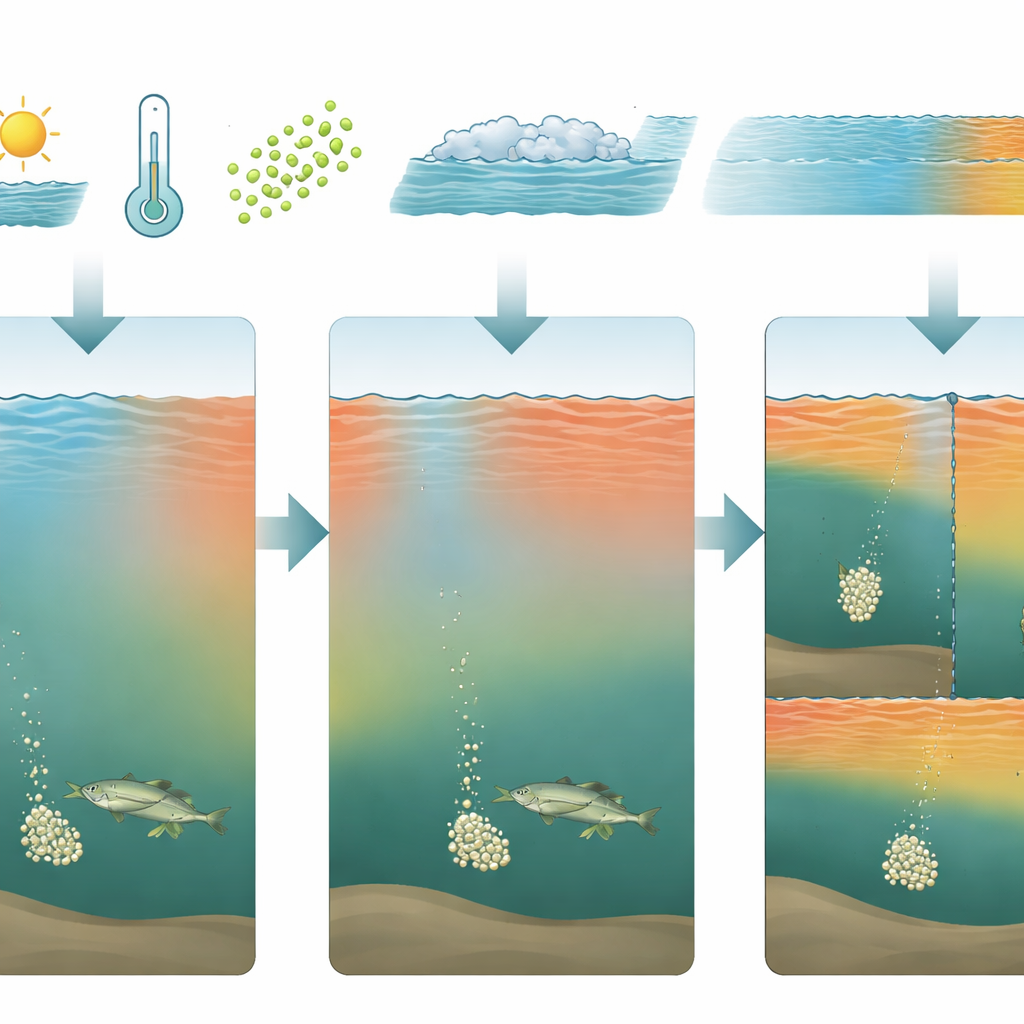
For readers, the main takeaway is that climate change is not just shifting where cod can live; it is also reshaping when cod can successfully reproduce. In cooler regions like eastern Newfoundland, cod may partly buffer warming by adjusting the timing of spawning, at least for now. In warmer areas such as the North Sea, that flexibility appears limited, and the window for successful spawning is closing. Because fishing further reduces the number and age of spawners, it can strip away the stock’s ability to cope with environmental change. The authors argue that future cod management must consider both the position of each stock within its environmental comfort zone and the direction of climate trends. Otherwise, some cod populations may become extremely difficult—or even impossible—to rebuild, no matter how strictly we limit catches.
Citation: Pollet-Calderini, C., Kirby, R., Castant, J. et al. Climate-induced shifts in cod spawning phenology across the North Atlantic. Sci Rep 16, 13982 (2026). https://doi.org/10.1038/s41598-026-44116-0
Keywords: Atlantic cod, climate change, spawning timing, North Atlantic, fisheries management