Clear Sky Science · en
Indirect screening for paternal perinatal depression independent of maternal factors using mother-reported EPDS-partner in a community-based cohort in Japan
Why Fathers’ Feelings Around Birth Matter
When a baby arrives, attention usually centers on the mother’s health and the child’s growth. Yet fathers, too, can struggle with depression during pregnancy and after birth, and their mood can shape the wellbeing of the whole family. This study from Japan explores a simple, indirect way to spot fathers who may be suffering—even when they rarely come to clinics—by asking mothers structured questions about how their partners seem to be doing.
Hidden Strain in New Fathers
Research has shown that roughly one in ten fathers worldwide experience significant depressive symptoms around the time of a child’s birth, a rate similar to that of mothers in many studies. Unlike mothers, whose mood shifts can be driven partly by dramatic hormonal changes, fathers’ depression is often tied to job worries, relationship strain, sleepless nights, and the sudden weight of responsibility. When fathers are depressed, conflicts at home may increase, mothers may feel less supported, and children can face a higher risk of behavior problems and even maltreatment. Yet fathers are rarely screened as systematically as mothers, in part because they attend fewer prenatal and postnatal visits.
A Mother’s View as a Window Into Fathers’ Mood
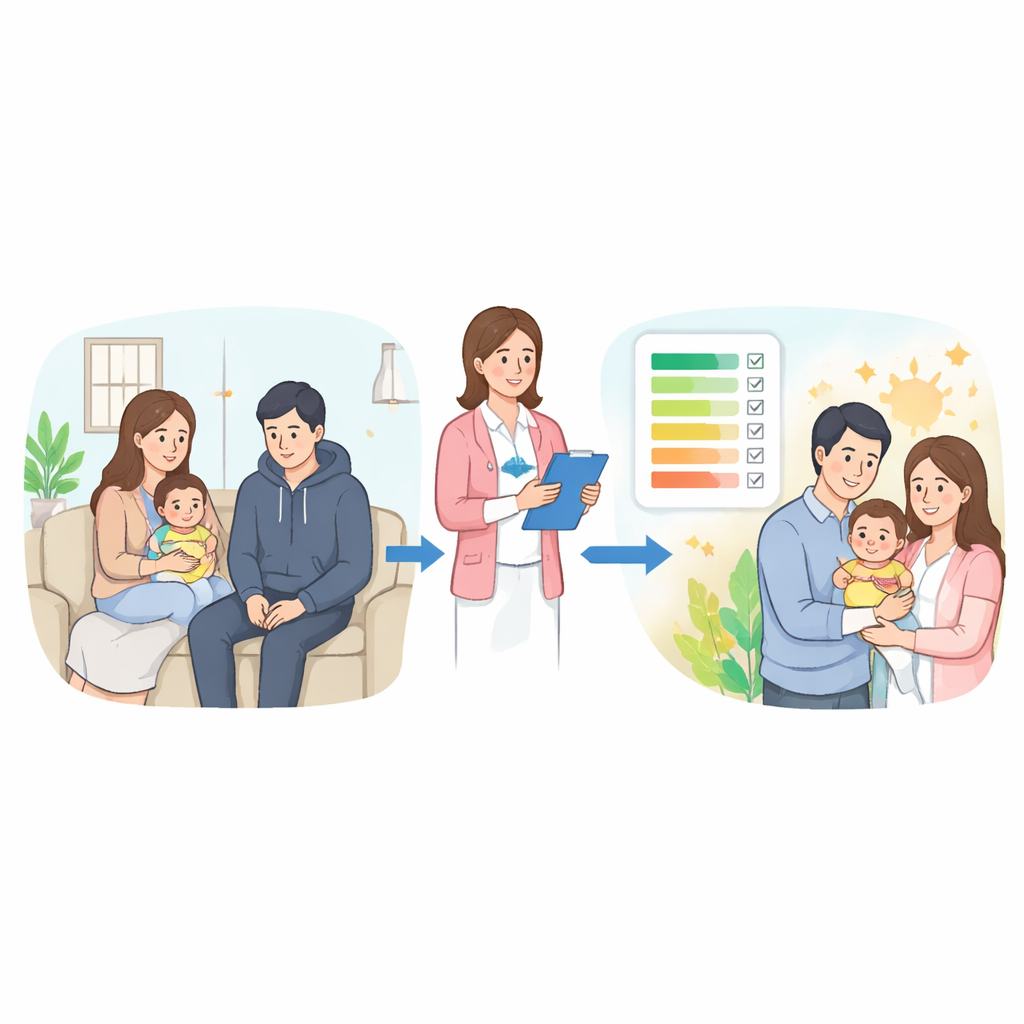
To tackle this gap, researchers focused on a tool called the Edinburgh Postnatal Depression Scale‑Partner (EPDS‑P). Instead of asking fathers directly about their mood, this questionnaire asks mothers to rate how often they notice signs such as sadness, loss of interest, or anxiety in their partners. In Towada City, a rural community in northern Japan with strong home‑visit services, public health nurses and midwives invited couples to take part during pregnancy and again after birth. Fathers filled out a standard depression checklist for themselves, while mothers filled out both their own mood questionnaire and the EPDS‑P about their partners. This allowed the team to see how well the mother‑based ratings matched fathers’ own reports of depressive symptoms.
How Well the Indirect Check Performed
The study analyzed data from 385 couples during pregnancy and 411 after birth, with over 250 couples followed across both time points. About 11% of fathers met the threshold for notable depressive symptoms before the baby was born, and about 6% did so afterward—rates similar to international estimates and close to the mothers’ rates in this sample. Importantly, most fathers who were depressed after birth had already shown signs during pregnancy, underscoring the value of early screening. When the researchers compared mothers’ EPDS‑P scores with fathers’ own depression scores, the indirect tool showed “fair” ability to distinguish between depressed and non‑depressed fathers both before and after birth. Using low cut‑off scores—3 during pregnancy and 4 after birth—captured a majority of affected fathers while keeping the number of false alarms at a level manageable for community services.
Independent of Mothers’ Own Distress
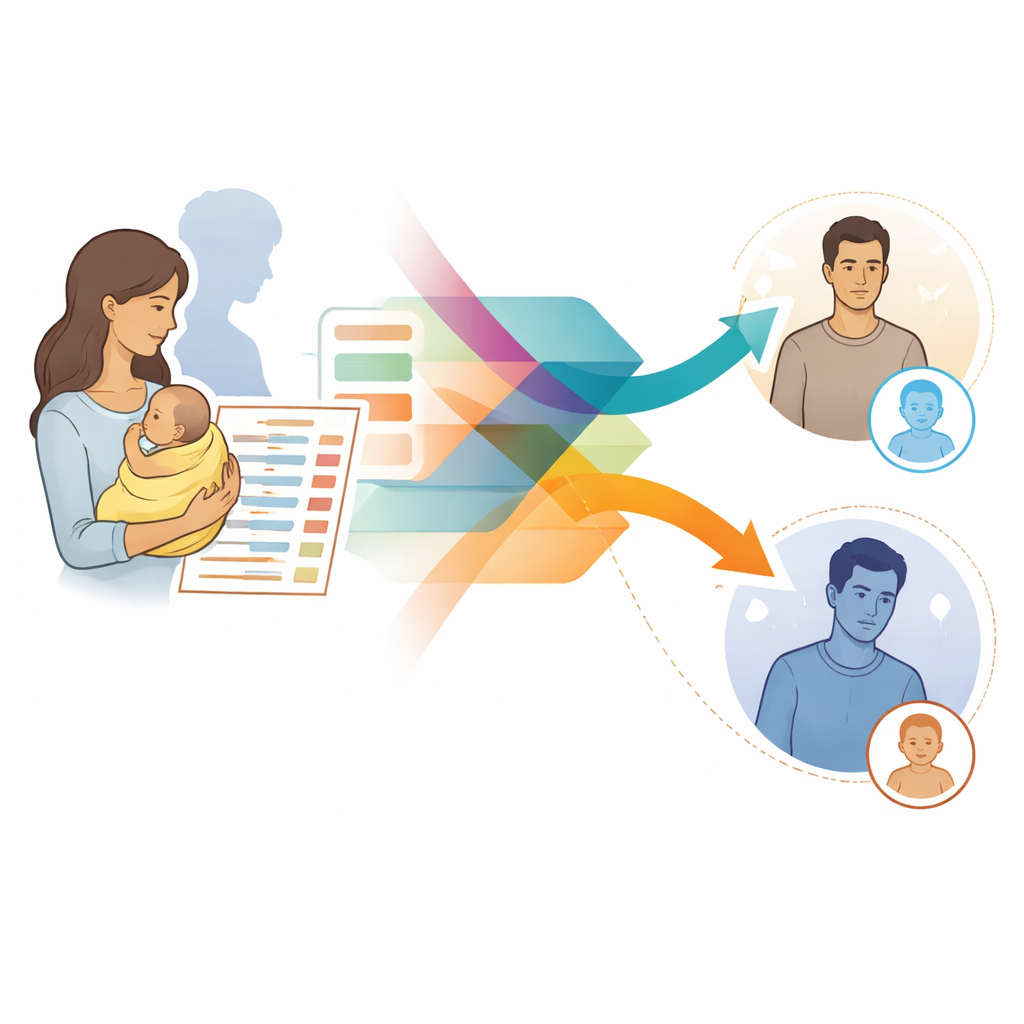
A key concern with any partner‑rated tool is whether the rater’s own mood colors their judgment. To test this, the researchers examined whether mothers’ depression levels, bonding with the baby, age, or other background factors distorted EPDS‑P scores. They found only weak links: mothers who felt more depressed tended to rate their partners slightly higher, but this effect was small, and most of the variation in EPDS‑P scores could not be explained by maternal factors or demographics. In more advanced statistical models, the mother‑rated EPDS‑P was strongly tied to fathers’ depression status even after accounting for these possible influences, suggesting that mothers’ observations capture something specific about paternal risk rather than merely echoing their own distress.
What This Means for Families and Care
The authors conclude that mother‑reported screening can be a practical way to flag fathers who may be struggling, especially in settings where men seldom attend checkups. While it is not a diagnosis and may miss some cases, the EPDS‑P offers a low‑cost starting point for home‑visiting nurses and other front‑line workers to identify at‑risk fathers and gently encourage further support. Used alongside tools completed directly by fathers when possible, this approach could help shift perinatal care from a mother‑only focus toward truly family‑centered mental health support, improving the emotional climate in which children grow.
Citation: Tokumitsu, K., Sugawara, N., Fisher, S.D. et al. Indirect screening for paternal perinatal depression independent of maternal factors using mother-reported EPDS-partner in a community-based cohort in Japan. Sci Rep 16, 12315 (2026). https://doi.org/10.1038/s41598-026-43513-9
Keywords: paternal perinatal depression, postnatal mental health, father screening, family-centered care, Japan community study