Clear Sky Science · en
Efficacy and safety of RC48 alone or combined with PD-1 inhibitors in high-risk non-muscle invasive bladder cancer
Why this matters for people with bladder cancer
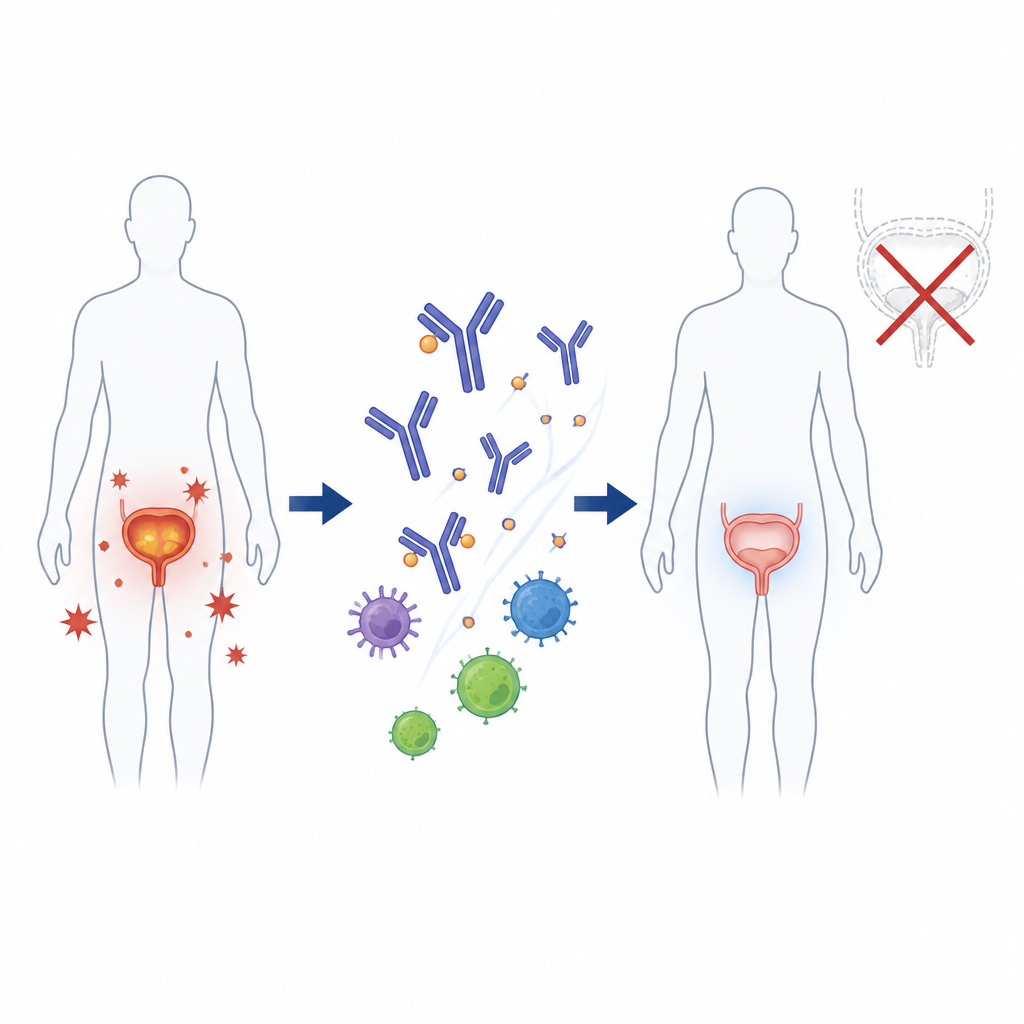
Many people with early stage but high risk bladder cancer face a difficult choice when standard treatments fail: remove the bladder or live with a high chance that the cancer will come back or get worse. This study explores whether a targeted medicine called RC48, used alone or with a type of immunotherapy, can control the disease while allowing patients to keep their bladder.
A tough problem in bladder care
Most bladder cancers are found before the tumor grows into the muscle wall, but a sizeable group is still considered high risk because the cancer often returns or progresses. The usual approach combines surgery inside the bladder with a live bacteria treatment called BCG, placed directly into the bladder. Unfortunately, some patients do not respond, cannot tolerate BCG, or live in areas where it is hard to obtain. For them, the standard next step is removal of the bladder, a life changing operation. This is especially troubling in tumors that carry high levels of a protein called HER2, which tend to respond poorly to BCG and recur more often.
A drug designed to seek and destroy cancer cells
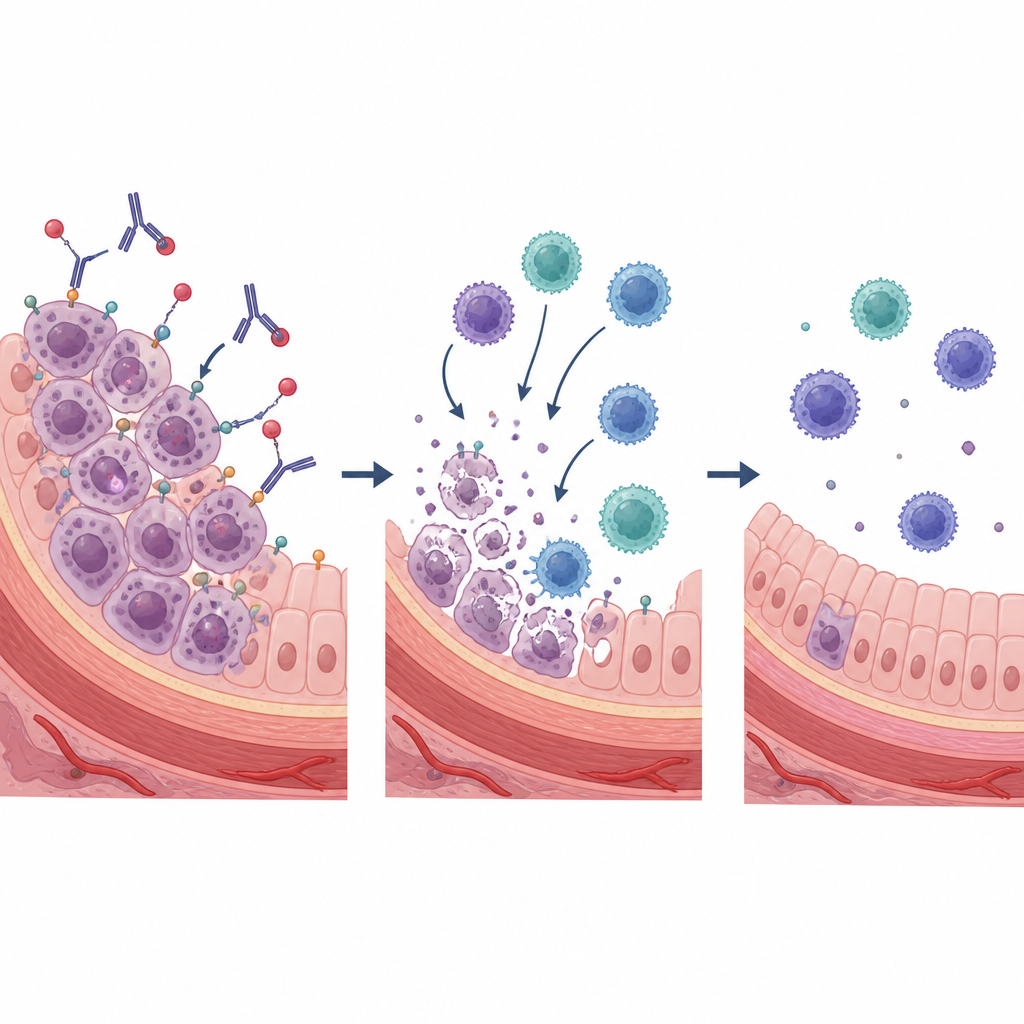
RC48 is a type of drug that links an antibody, which can recognize HER2 on the surface of cancer cells, to a powerful chemotherapy payload. The antibody helps deliver the drug directly to cancer cells, where the payload is released and can also affect nearby cells. Previous trials in patients with advanced bladder cancer showed that RC48, alone or with PD 1 blocking drugs that boost immune attack on tumors, could shrink tumors with acceptable side effects. The current study asks whether the same strategy can work earlier in the disease, as a whole body treatment aimed at saving the bladder in people who are unable or unwilling to rely on BCG.
Real world results in a small patient group
The researchers examined records from 32 patients with high risk non muscle invasive bladder cancer treated at two hospitals in Beijing between 2022 and 2024. All had HER2 detected in their tumors and either did not respond to BCG or could not receive it. Three patients received RC48 alone, while 29 received RC48 plus a PD 1 inhibitor such as toripalimab, tislelizumab, or pembrolizumab. Over a median follow up of just over a year, about 72 percent of patients had no visible cancer on bladder inspection, urine tests, and scans within a year of starting treatment. This complete response rate was 86 percent in those whose cancer had already failed BCG and 68 percent in those who could not undergo BCG for other reasons.
How long responses lasted and how safe treatment was
Among those who cleared all signs of cancer, the typical time before any new high grade disease or progression was almost 17 months. Overall, half of the patients remained free of serious recurrence at six months, and the bladder was still intact in nearly three quarters of the group at that time. Only one person developed cancer that invaded the muscle of the bladder during the study window. Side effects were fairly common but usually mild: about half the patients had some treatment related problem, most often tingling or numbness in the hands and feet, skin rash, or mild changes in liver tests. Only two patients had severe side effects, including one serious case of lung inflammation related to immune therapy, and there were no treatment related deaths.
Clues from tumor markers and study limits
The team also looked for patterns in HER2 levels and treatment response. Patients whose tumors showed the strongest HER2 staining tended to have better short term responses, although even those with lower levels sometimes benefited, possibly because the drug affects nearby cells and may help the immune system recognize the tumor. In a few patients who later had their bladder removed, HER2 levels in the tumor appeared to drop after treatment, but the numbers were too small to draw firm conclusions. The study has several limits: it is retrospective, includes only 32 people, and has relatively short follow up. Very few patients received RC48 alone, making it hard to compare single drug and combination approaches.
What this could mean for patients
For people with high risk early bladder cancer who cannot rely on BCG and wish to avoid bladder removal, these early results suggest that RC48 based treatment, especially when paired with PD 1 inhibitors, may offer a way to control the disease while keeping the bladder, at least in the short term. However, the authors stress that this is preliminary evidence from a small real world group. Larger, carefully controlled studies that follow patients for longer will be needed before RC48, alone or in combination, can be firmly placed in treatment guidelines or used widely as an alternative to bladder removal.
Citation: Guo, X., Wang, S., Ma, Y. et al. Efficacy and safety of RC48 alone or combined with PD-1 inhibitors in high-risk non-muscle invasive bladder cancer. Sci Rep 16, 15796 (2026). https://doi.org/10.1038/s41598-026-43393-z
Keywords: bladder cancer, non-muscle-invasive, HER2, RC48, immunotherapy