Clear Sky Science · en
Social determinants of health as risk and protective factors for health care access among sexual and gender minority parents
Why this study matters to parents and families
As more LGBTQIA+ people become parents, their ability to get respectful, timely health care for themselves affects the well-being of entire families. This study looks at how everyday social conditions, such as feeling supported or isolated and feeling safe to share one’s identity, shape whether sexual and gender minority parents seek or delay needed medical care.
Who was studied and what was asked
Researchers used data from The PRIDE Study, a large national online project that follows LGBTQIA+ adults over time. They focused on 555 sexual and gender minority parents and compared them with 555 sexual and gender minority adults of the same age who were not parents. Participants reported their background, income, schooling, type of health insurance, and whether they had a regular doctor. They also answered questions about how open they were with health care providers about their sexual and gender identity, how often they hid it, how much emotional support they felt, and how socially isolated they felt. A year later, they were asked if they had put off, skipped, or avoided medical care they believed they needed, and why.
Key differences between parents and non-parents
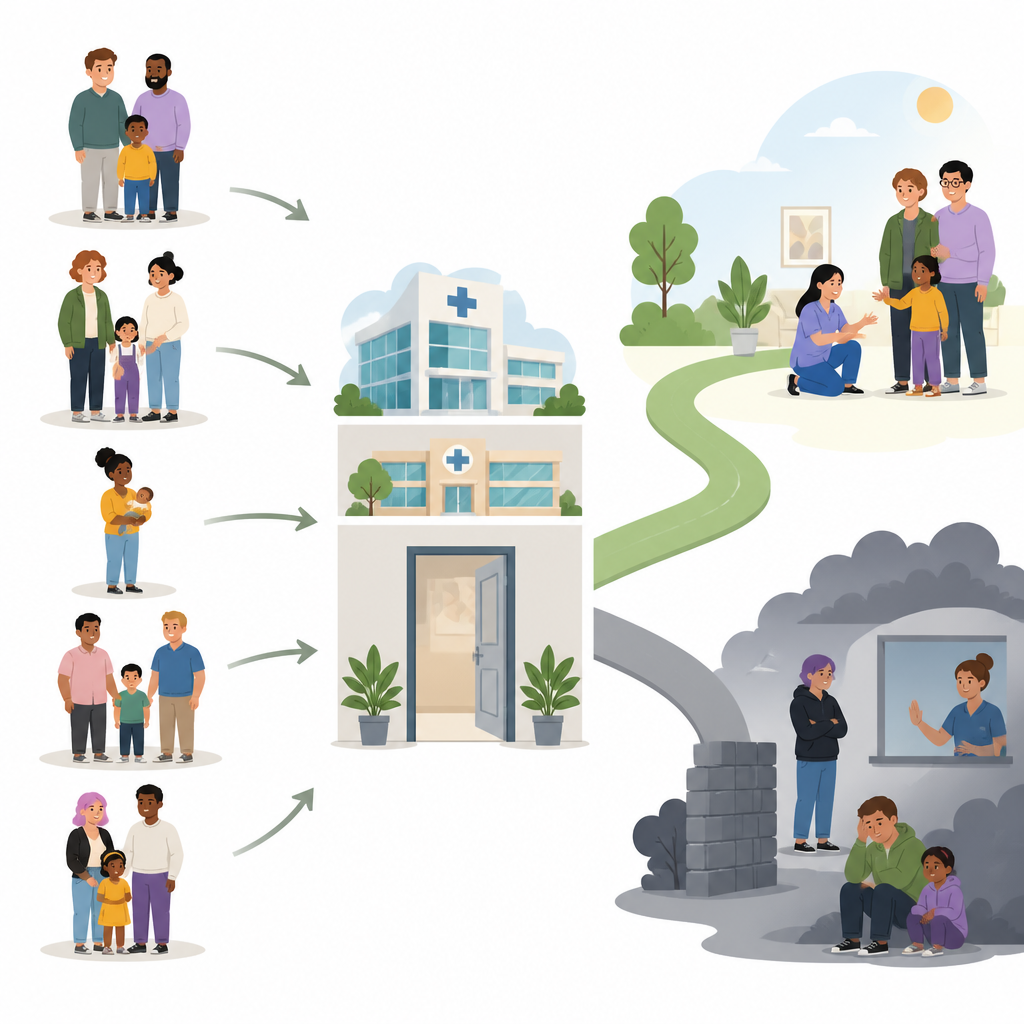
The study found that sexual and gender minority parents were less likely than non-parents to say that their providers knew about their sexual or gender identity. Parents also reported avoiding health care more often because they feared being disrespected or mistreated. At the same time, parents and non-parents were similar in many ways: they had comparable incomes, similar levels of emotional support and social isolation, and were about equally likely to delay or miss care for reasons like cost, insurance rules, or trouble getting an appointment in time.
How support and isolation shape care-seeking
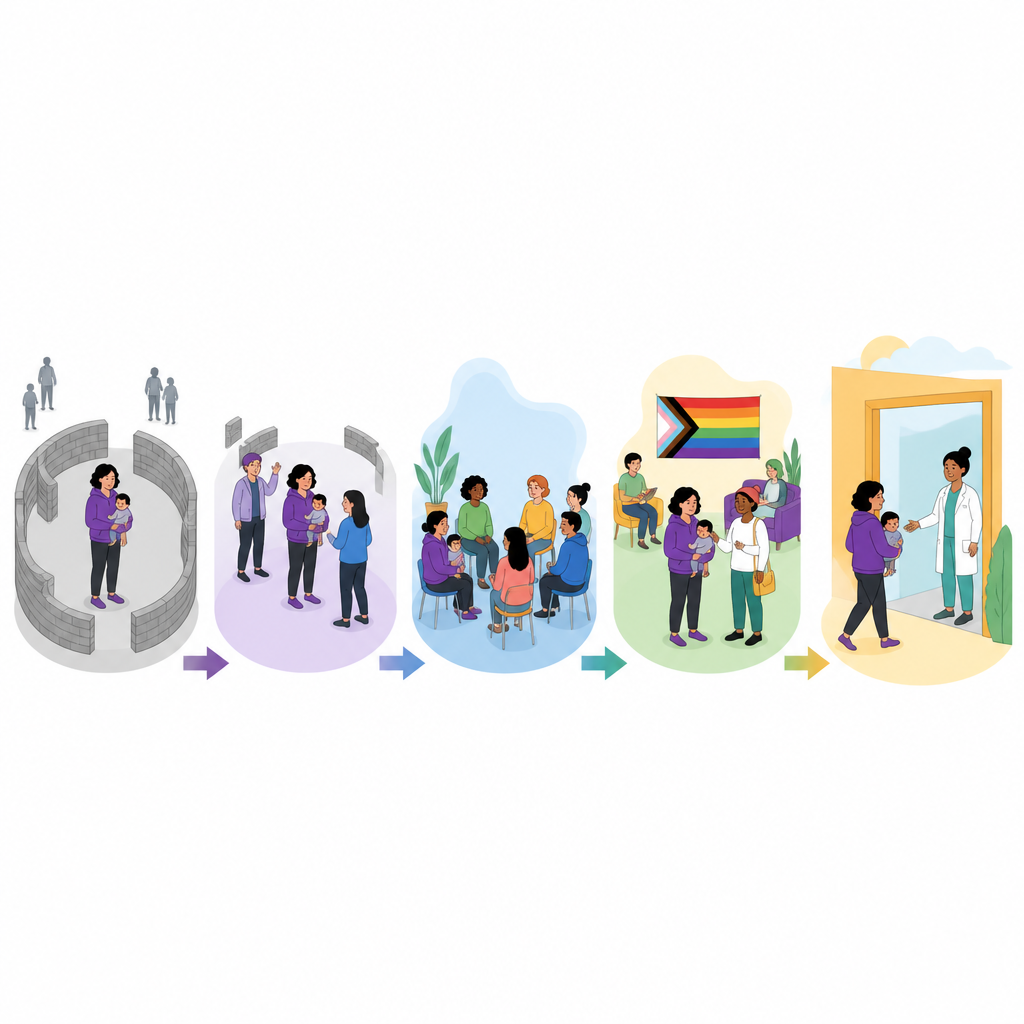
Among parents, social connections and feelings of safety made a clear difference. Parents who felt more socially isolated at the start of the study were more likely a year later to say they had delayed needed care and to report avoiding care because they expected disrespect or poor treatment. In contrast, parents who had at least one LGBTQ+ space where they felt safe were less likely to avoid care due to fear of being mistreated. Emotional support also appeared helpful in simple analyses, although its effect was weaker once other factors, such as age, gender, income, and disability, were taken into account.
The role of identity concealment in the clinic
The way parents managed their sexual and gender identity with providers also mattered. Parents who more often hid or downplayed their identity with health professionals were more likely to report avoiding needed care because of fear of disrespect or mistreatment. This suggests that feeling unable to be open in medical settings may both reflect past negative experiences and contribute to ongoing worries about how they will be treated. Notably, simply having health insurance or a regular primary care provider did not, by itself, predict whether parents delayed or avoided care, pointing toward relationship-based and community factors rather than access on paper.
What this means for families and care systems
Overall, the study shows that sexual and gender minority parents face distinct challenges when seeking care for themselves, even compared with other LGBTQIA+ adults. Greater isolation and the need to hide one’s identity are linked with putting off or avoiding needed health care, while safe LGBTQ+ spaces appear to protect against these patterns. For families, this means that strengthening social networks, building welcoming community spaces, and ensuring that clinics are truly inclusive can help parents feel safer getting care, which may, in turn, support the health of both parents and their children.
Citation: Zhang, A., Leonard, S.A., Lubensky, M.E. et al. Social determinants of health as risk and protective factors for health care access among sexual and gender minority parents. Sci Rep 16, 15966 (2026). https://doi.org/10.1038/s41598-026-43114-6
Keywords: LGBTQ+ parents, health care access, social support, identity disclosure, social isolation