Clear Sky Science · en
Association between mental health and social pressure among undergraduate students in Karachi, Pakistan: an analytical cross-sectional study
Why this study matters to everyday life
For many families, a university degree represents hope for a better future. Yet behind the success stories, countless students quietly struggle with worry, sadness, and pressure from all sides. This study looks closely at how different kinds of social pressure – from family expectations to money troubles and competition with classmates – are linked to stress, anxiety, and depression among undergraduates in Karachi, Pakistan. Its findings speak to anyone who has ever wondered whether today’s academic race is costing young people their peace of mind.
University years under growing strain
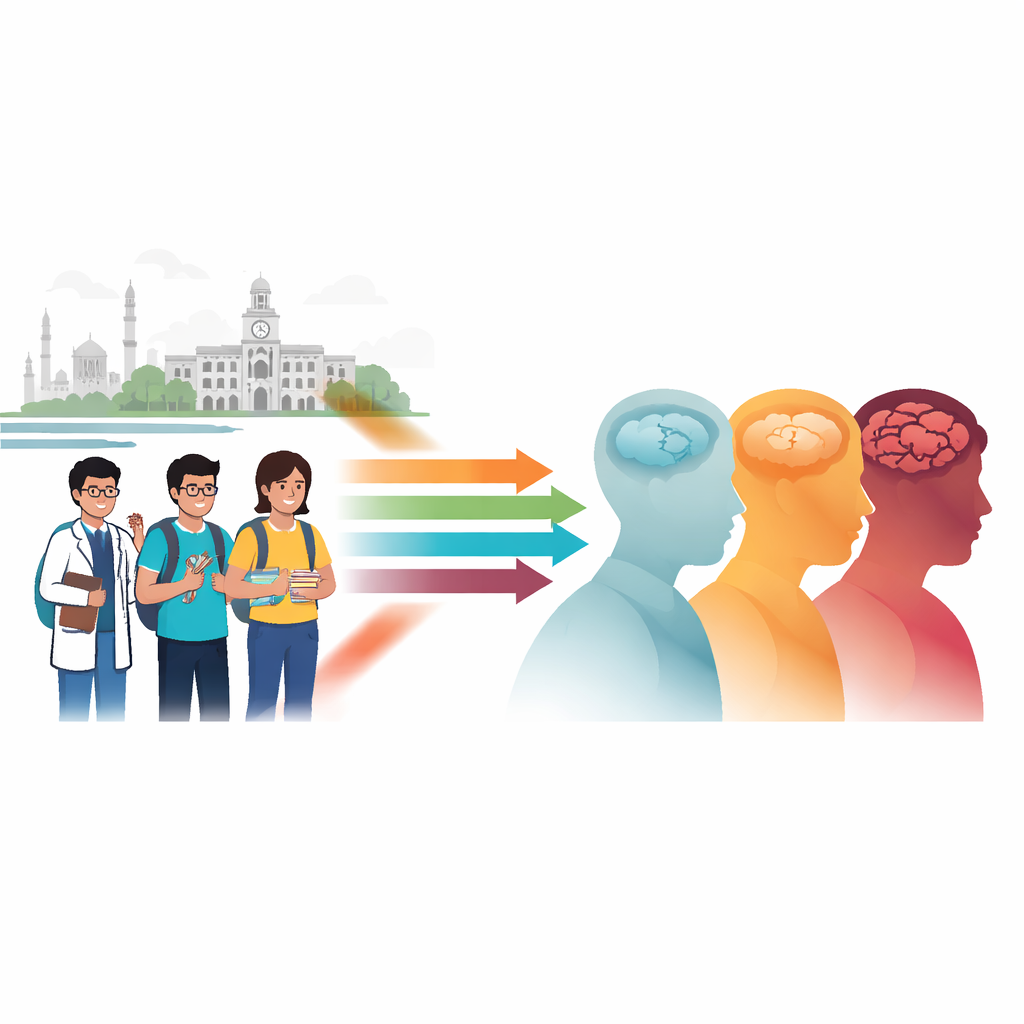
University is often described as a time of opportunity, but it is also a period of intense change. Young adults must juggle demanding coursework, new social circles, financial responsibilities, and worries about future jobs. Around the world, research shows that students report more emotional distress than many of their non-student peers. In Pakistan, earlier studies already hinted at high rates of depression and anxiety on campuses, but most focused on single issues like exams or money. The authors of this paper wanted to take a broader view and ask: what happens when multiple pressures pile up at once?
Looking at pressure from all sides
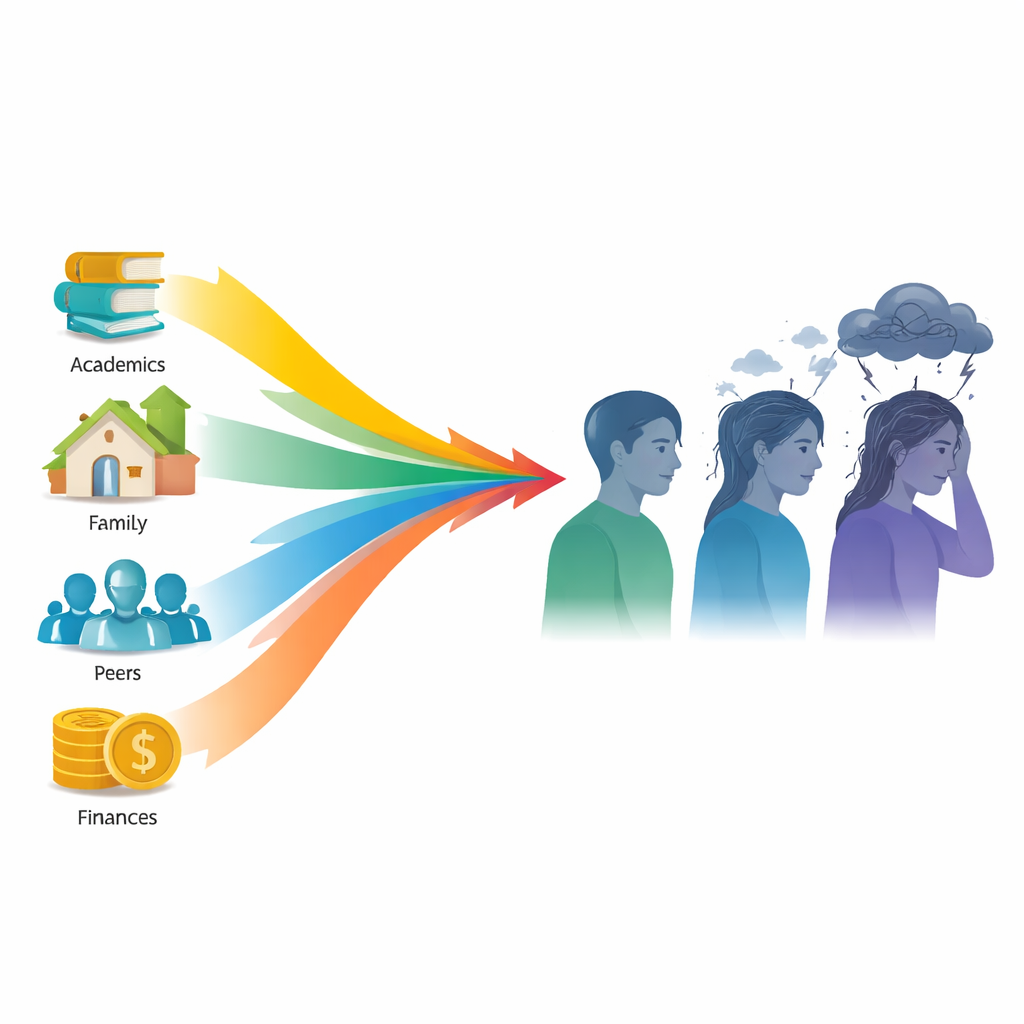
The researchers carried out an analytical cross-sectional study among 400 undergraduates aged 18 to 25 years at three major universities in Karachi, spanning medicine, engineering, and humanities. Students completed a detailed online questionnaire that included a standard tool for screening symptoms of depression, anxiety, and stress, as well as a new 34-question scale designed to capture social pressure as students actually experience it. This scale combined four domains: academic load and performance demands; expectations and obligations within the family; financial worries about fees and household income; and peer influences such as competition and comparison. By summing scores across all items, the team created an overall picture of how heavily pressure weighed on each student.
How common emotional distress really was
The results revealed a worrying level of psychological strain. Fewer than one in three students had depression scores in the normal range, and nearly four in ten fell in the severe to extremely severe range. Anxiety was even more widespread, with about half of the students showing severe to extremely severe symptoms. Stress levels were also high, with nearly a third experiencing serious stress symptoms. Medical and engineering students tended to fare worse than those in humanities programs, reflecting the heavier workloads and higher stakes often associated with professional degrees.
When more pressure means worse mental health
To understand how pressure and mental health were linked, the researchers used statistical models that accounted for age, gender, family income, family structure, and field of study. They found a clear pattern: as overall social pressure scores rose, so did the odds of having moderate to severe depression, anxiety, and stress. For example, a modest step up in pressure was associated with sharply higher chances of serious depressive symptoms, especially among medical and engineering students. Students from lower-income households, those with ongoing physical health problems, women, and those living in complex family arrangements such as joint families were particularly vulnerable. In joint households, multiple relatives’ expectations may intensify the sense of being constantly watched and judged, adding to everyday strain.
What the findings mean for students and families
In plain terms, this study shows that it is not just one tough exam or one argument at home that wears students down. Instead, many young people face a steady current of demands from teachers, parents, peers, and finances that, taken together, strongly increase the risk of serious emotional distress. The authors conclude that supporting student mental health in Pakistan – and likely in other low- and middle-income countries with similar cultures – will require tackling social pressure as a whole, not just single stressors. That could mean reducing unhealthy academic competition, opening conversations about realistic family expectations, easing financial burdens, and creating campus services where students can seek help without shame.
Citation: Ali, R.R., Sameen, S., Azam, S.I. et al. Association between mental health and social pressure among undergraduate students in Karachi, Pakistan: an analytical cross-sectional study. Sci Rep 16, 13248 (2026). https://doi.org/10.1038/s41598-026-42915-z
Keywords: university students, social pressure, mental health, depression and anxiety, Pakistan