Clear Sky Science · en
Impact of preserved ratio impaired spirometry on postoperative outcomes of non-small cell lung cancer surgery
Why this study matters for people facing lung surgery
For many people with early-stage lung cancer, surgery offers the best chance of a cure—but it also carries the risk of complications involving the lungs and heart right after the operation. This study asks a practical question with real-world stakes: among people who already have subtle lung problems that do not fit the classic picture of chronic obstructive pulmonary disease (COPD), who is most likely to run into trouble after lung cancer surgery, and how can doctors spot them in advance?
A lesser-known lung pattern hiding in plain sight
When doctors test lung function with a breathing test called spirometry, they usually look for airflow blockage, as seen in COPD. But there is another pattern, called preserved ratio impaired spirometry (PRISm), in which the overall lung strength is reduced while the usual ratio used to diagnose COPD looks normal. PRISm is surprisingly common—affecting about 7–12% of adults—and has been linked to higher risks of death and heart disease. Until now, however, its importance for people undergoing lung cancer surgery has not been clear. This study focused on patients with non-small cell lung cancer (NSCLC), the most common type of lung cancer, to find out whether PRISm predicts trouble after surgery as strongly as more familiar obstructive lung disease.
How the study was done
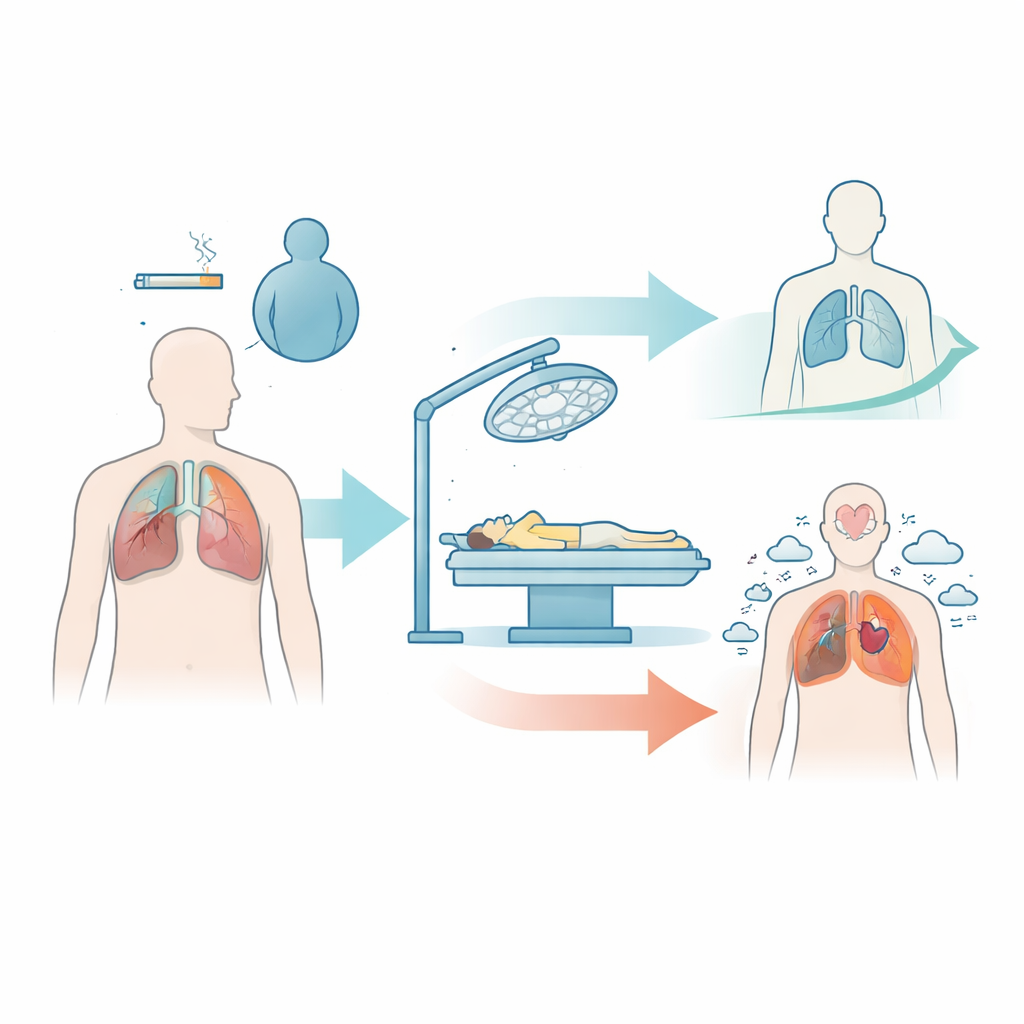
Researchers analyzed 834 adults in South Korea who were scheduled for curative surgery for NSCLC between 2016 and 2020. All participants could walk independently and had good basic physical status before surgery. Based on lung tests done before the operation, patients were divided into four groups: normal lung function; PRISm; mild obstructive lung disease; and moderate obstructive lung disease. The team then tracked problems affecting the lungs—such as pneumonia, lung injury, or severe collapse of part of the lung—and heart problems—such as abnormal heart rhythms or heart attacks—during the first 30 days after surgery. They also followed patients for up to five years to examine survival, while adjusting their analyses for age, sex, smoking, body weight, walking capacity, heart disease, cancer stage, cancer type, and type of operation.
Who faced the greatest risk after surgery
Overall, about 7% of patients developed serious lung complications and 8% developed serious heart complications soon after surgery. But these problems were far from evenly distributed. People with PRISm had lung complication rates of 11.5% and heart complication rates of 16.4%, much higher than those with normal lung function (3.3% and 4.6%, respectively). After accounting for other health factors, PRISm nearly tripled the risk of both lung and heart problems. The risks in the PRISm group were on par with, and in some cases higher than, those seen in people with mild obstructive lung disease. Patients with moderate obstruction fared worst of all, reinforcing the idea that the more impaired the lungs, the higher the surgical risk.
The special danger of low lung capacity within PRISm
Not all PRISm patients were alike. The researchers looked more closely at those whose lung capacity, measured as forced vital capacity (FVC), was clearly below normal. Within the PRISm group, patients with low FVC had far higher rates of both lung and heart complications than those whose FVC was closer to normal, even though both technically fell under the same spirometry label. In adjusted analyses, low-FVC PRISm more than tripled the risk of postoperative lung and heart problems compared with PRISm patients whose lung capacity was preserved. This suggests that a subset of PRISm patients—possibly those affected by obesity-related breathing restriction, subtle scarring of the lungs, or weakness of breathing muscles—may be especially vulnerable when part of a lung is removed.
What this means for patients and clinicians
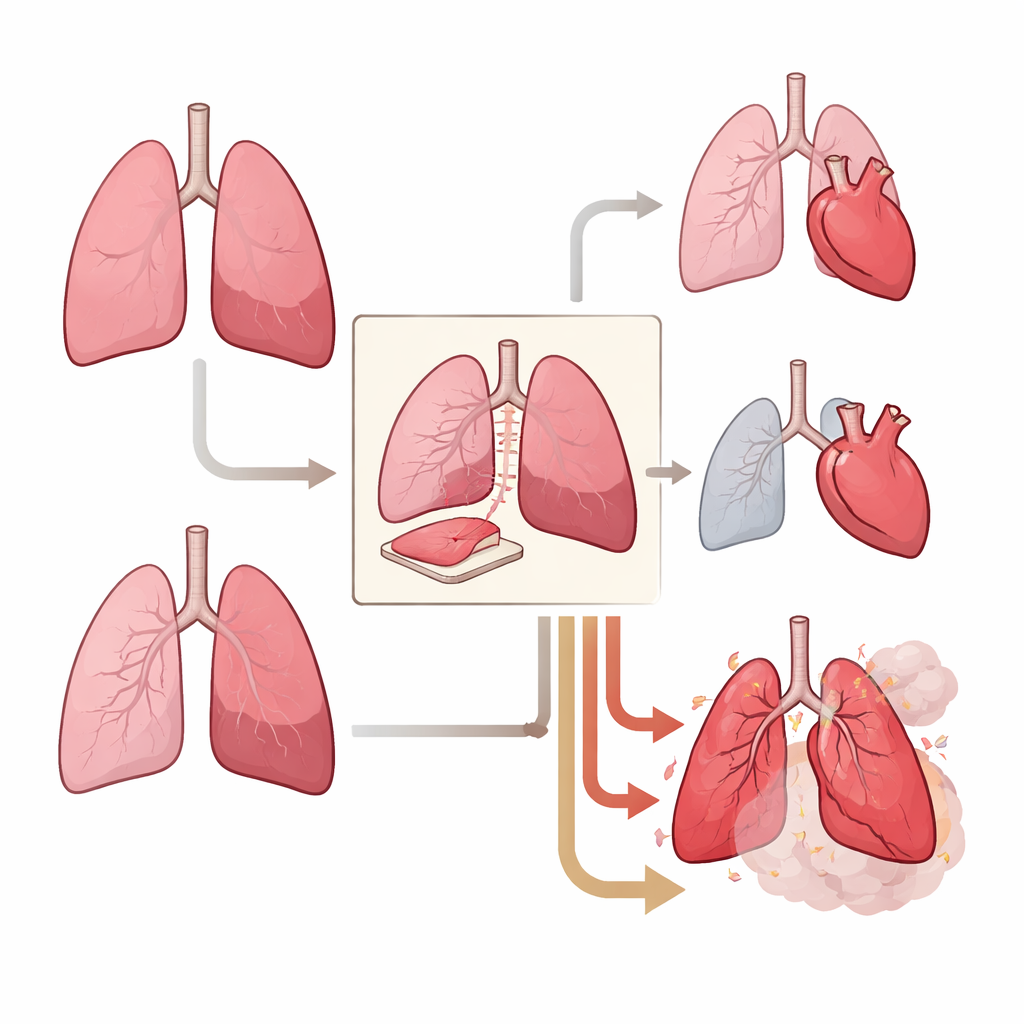
The findings underscore that PRISm is not a harmless or "borderline" lung pattern; it signals a real and independent risk of complications after lung cancer surgery, similar in magnitude to COPD. For patients, this means that even if standard lung ratios look normal, reduced overall lung strength and low lung capacity deserve attention before heading to the operating room. For clinicians, the message is to treat PRISm—especially when accompanied by low FVC, obesity, heart disease, or limited walking capacity—as a red flag. Extra preparation such as breathing exercises, smoking cessation, weight management, and careful coordination among surgeons, lung specialists, and anesthesiologists may help reduce the chance of serious heart and lung problems and support a safer recovery.
Citation: Lee, D., Lee, G., Kong, S. et al. Impact of preserved ratio impaired spirometry on postoperative outcomes of non-small cell lung cancer surgery. Sci Rep 16, 13066 (2026). https://doi.org/10.1038/s41598-026-42778-4
Keywords: lung cancer surgery, PRISm, postoperative complications, lung function testing, cardiopulmonary risk