Clear Sky Science · en
Political polarization threatens fairness and reciprocity in the USA
Why this matters for everyday life
Americans often hear that the country is politically divided, but this study asks a more personal question: does that divide change how fairly we treat one another in simple, everyday exchanges of trust? Using real money and real voters from both major parties, the researchers show that when politics enters the picture, many people are willing not only to withhold kindness from opponents, but to see such coldness as the morally right thing to do.
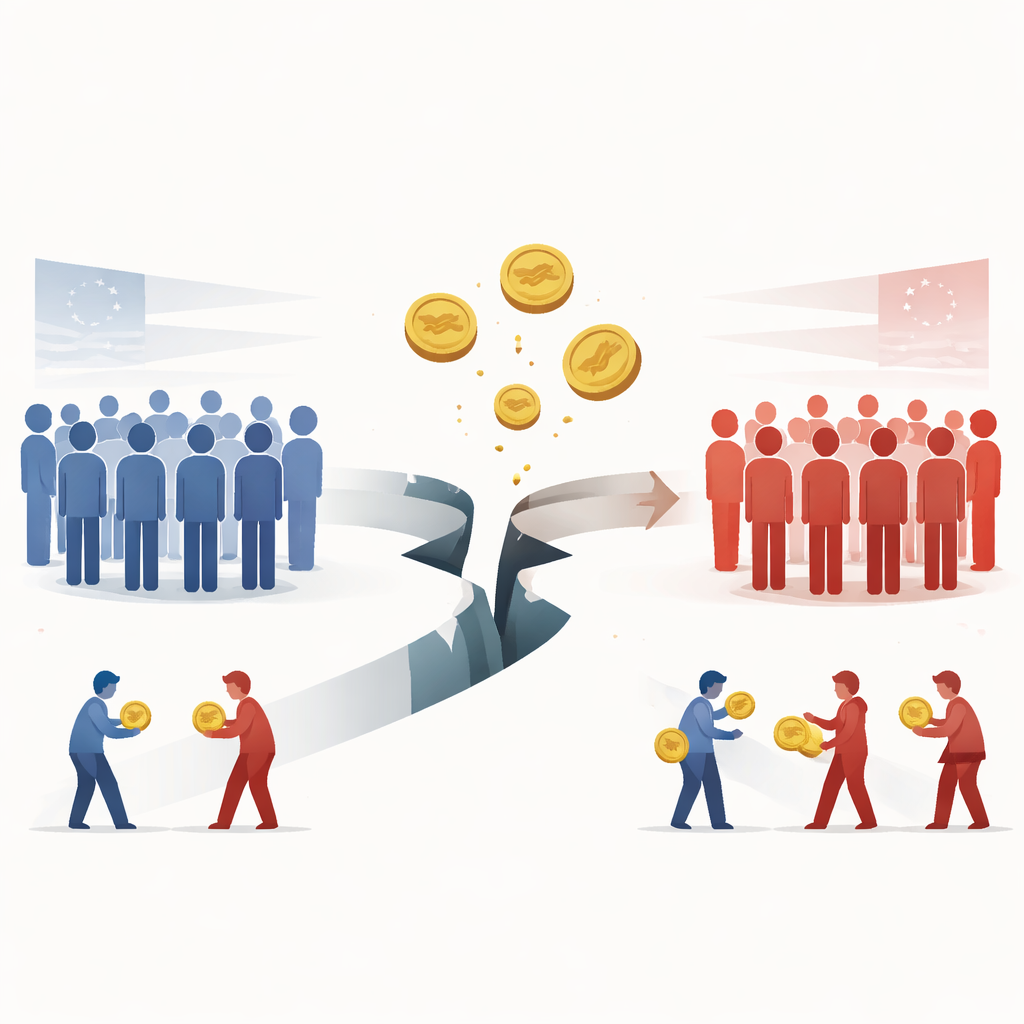
How the researchers tested everyday fairness
To move beyond opinion polls and online shouting matches, the team ran three experiments with more than 1,800 U.S. participants during the heated 2024 election season. In each study, volunteers played short money-sharing games with partners described as either fellow partisans, supporters of the other party, or people whose politics were unknown. The key idea was simple: one person could trust another by sending a small amount of money that could grow if the partner chose to share, or disappear if the partner kept everything. Because real money—up to about eleven dollars—was on the line for some participants, their decisions reflected more than hypothetical talk.
When trust depends on party lines
In the first study, a classic "trust game," one player could send money that would be multiplied, giving the second player a chance to either split the larger sum or keep it all. Compared with anonymous partners, people were somewhat more willing to trust those who shared their party, but they were far more reluctant to trust declared opponents. Crucially, this caution was not just in their heads: when in the second player role, a majority behaved less fairly toward political opponents, choosing more often to keep the windfall for themselves. Many who acted this way also reported that this was what they believed they ought to do toward someone on the “wrong” side.
When hurting an opponent brings no gain
The second study sharpened the moral question by removing any financial benefit from being unkind. In a new "nastiness game," the trusting player again took a risk, but the second player always received the same amount of money regardless of what they did next. The only choice was whether to let the trusting partner earn a bonus or to deny it to them at no personal cost. Even under these conditions, about one third of participants chose to make political opponents go home empty-handed, while treating same-party partners and unknown partners much more gently. Once again, those who punished their opponents tended to say this was the right thing to do, suggesting that hostility had slipped into their sense of moral duty.
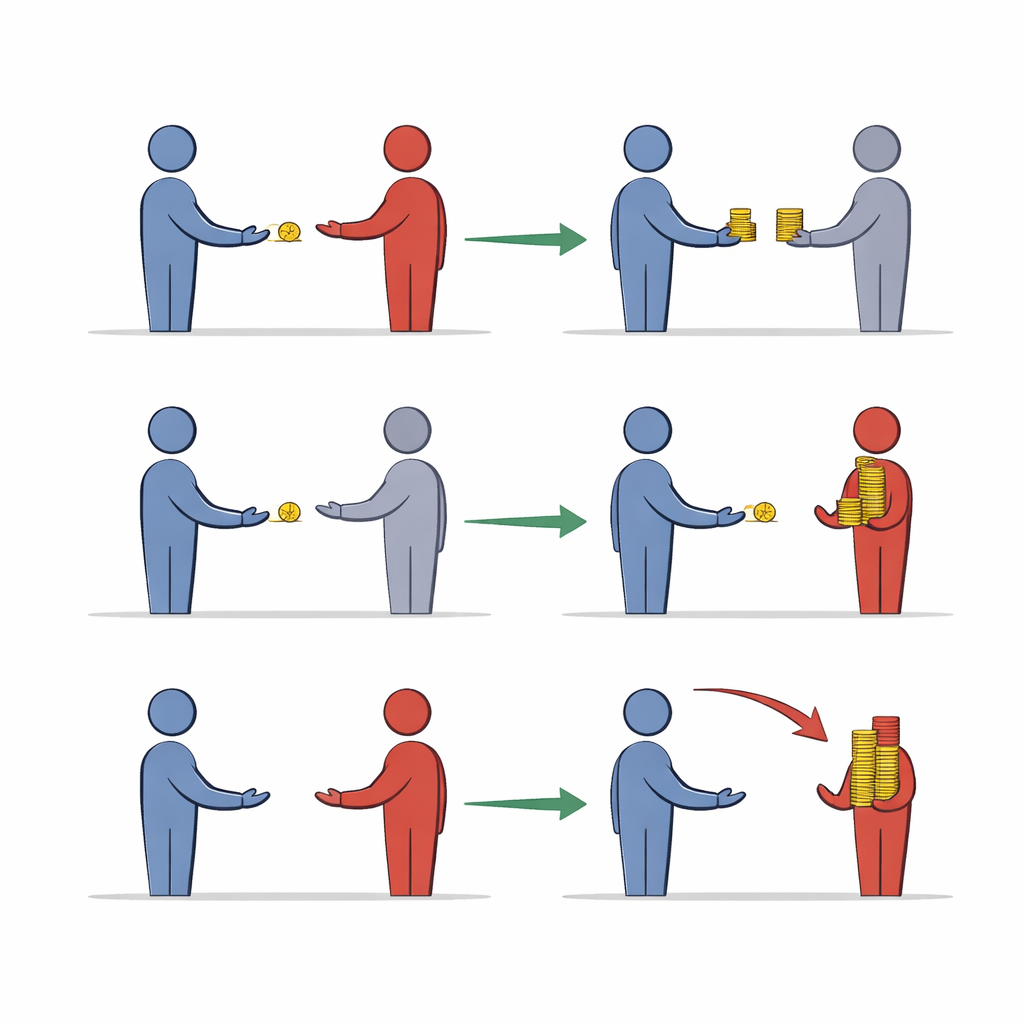
Can warmer feelings fix cold behavior?
The third study tested whether a brief positive experience could soften these patterns. Some participants watched a short video in which people with opposing views worked together and then chose to sit down and talk. As in earlier research, this clip made viewers see political opponents as slightly more likable and somewhat closer to themselves. Yet when it came time to share money in the nastiness game, the deeper behavior hardly shifted: trust toward opponents did not meaningfully increase, and while outright nastiness declined a bit overall, people were just as likely as before to treat opponents worse than allies.
What this means for a divided society
Taken together, the three studies paint a sobering picture. In these simple interactions, Americans did not systematically shower kindness on their own side; instead, they reserved their harshest treatment for those across the aisle. Many felt not just permitted, but morally obliged, to withhold trust and generosity from political opponents—even when there was nothing to gain. If similar attitudes spill into workplaces, neighborhoods, and families, political identity can quietly erode basic norms of fairness and reciprocity that help strangers live together. The findings suggest that easing partisan dislike is only a first step; rebuilding a shared moral commitment to treat opponents decently may be a much harder, but essential, task.
Citation: Fetchenhauer, D., Graczyk, T., Triemer, S.J. et al. Political polarization threatens fairness and reciprocity in the USA. Sci Rep 16, 10750 (2026). https://doi.org/10.1038/s41598-026-42697-4
Keywords: political polarization, trust and reciprocity, partisan conflict, moral judgment, experimental economics