Clear Sky Science · en
Targeting of CD28 and CD38 as a potential novel therapeutic strategy for peripheral T-cell lymphomas
Why this research matters
Peripheral T-cell lymphomas are rare but aggressive blood cancers that often respond poorly to standard treatments. While many patients with B-cell lymphomas now benefit from powerful new antibody-based drugs, options for people with T-cell lymphomas have lagged behind. This study explores a new way to arm the immune system against these cancers by testing whether two surface molecules on T cells, called CD28 and CD38, can be used together as targets for a next-generation, three-part antibody drug.
Understanding the cancer landscape
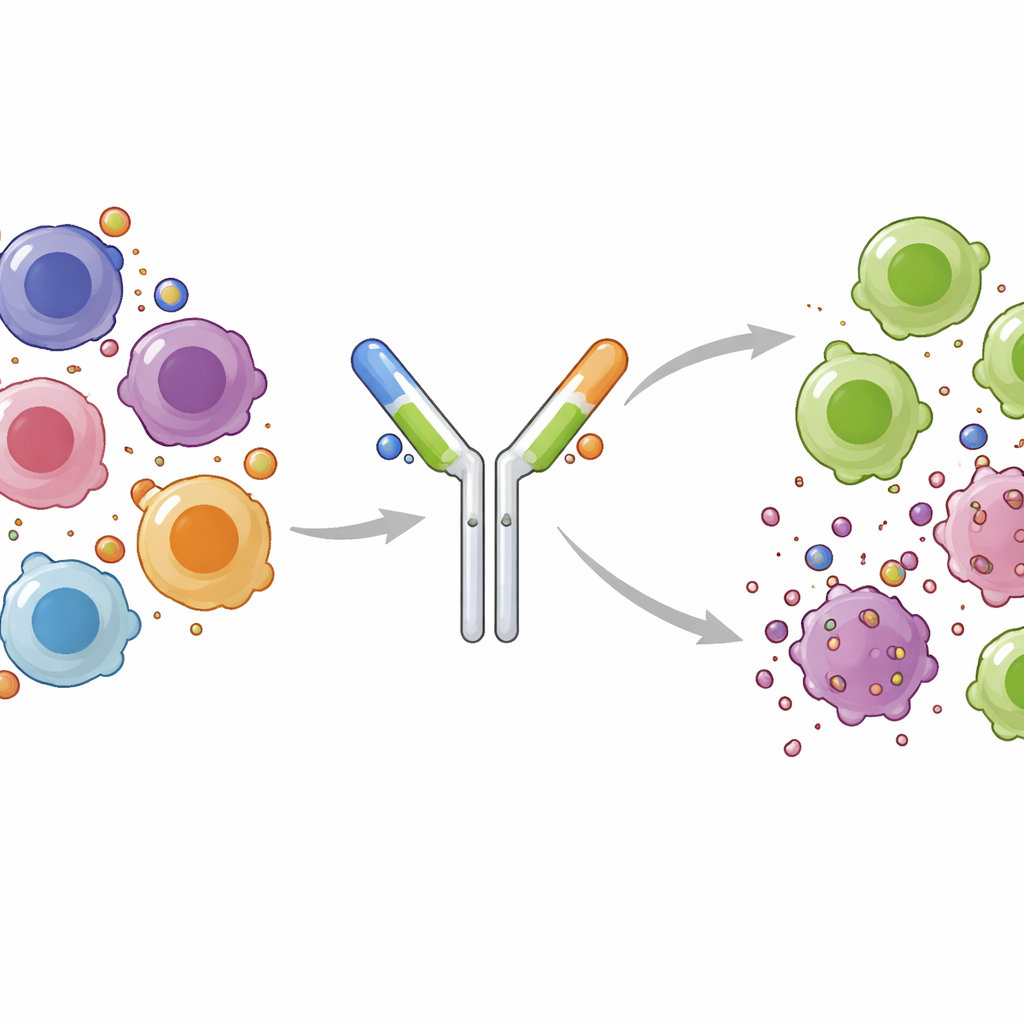
Peripheral T-cell lymphomas are not a single disease but a broad family of more than 30 related cancers. They arise from different types of immune T cells and can appear in lymph nodes, blood, skin, or organs. Despite progress in chemotherapy and immunotherapy, most of the recent advances have helped patients with B-cell cancers, leaving people with T-cell lymphomas with few effective long-term options. Researchers therefore focused on finding new markers on tumor T cells that could guide precision immune-based treatments that spare healthy cells as much as possible.
Two molecular “handles” on tumor cells
The team examined tissue and blood samples from 244 patients with various forms of peripheral T-cell lymphoma. They looked for the presence of two proteins on the surface of tumor cells, CD28 and CD38, which can act as “handles” for antibody drugs. CD28 is a co-stimulatory molecule that normally helps T cells become activated, while CD38 is an enzyme-like protein already targeted successfully in multiple myeloma. Using immunohistochemistry and flow cytometry, the researchers found that 57% of tumors expressed CD28 and 42% expressed CD38; more than 70% had at least one of the two, and about one in three tumors carried both. Interestingly, CD28 was more common in lymphomas thought to arise from helper T cells, whereas CD38 was higher in those linked to more cytotoxic or innate-like T cells.
Putting a three-part antibody to the test
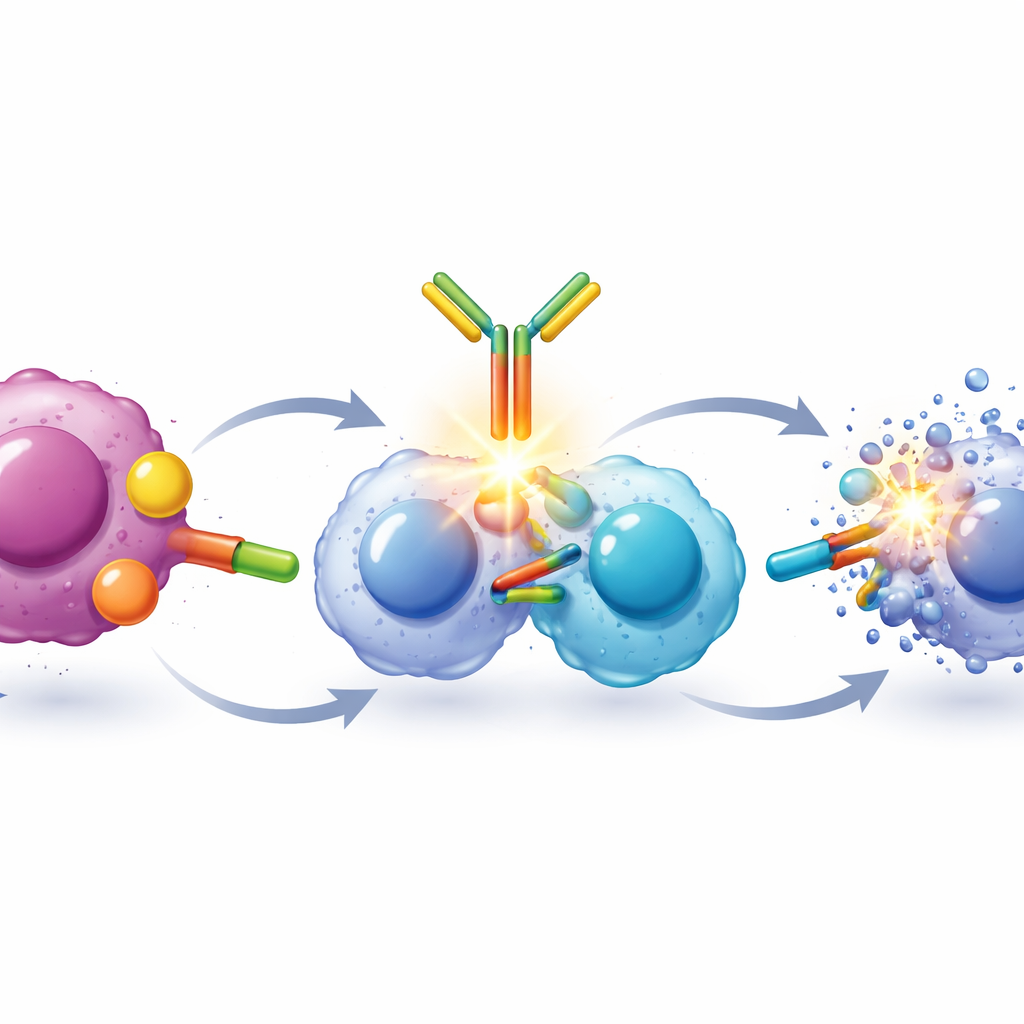
To see whether these markers could be used for therapy, the researchers tested a trispecific antibody called SAR442257. This engineered molecule can bind CD38 and CD28 on tumor cells and CD3 on normal T cells, effectively bringing cancer cells and killer T cells into close contact. In laboratory experiments, SAR442257 was applied to a panel of T-cell lymphoma and leukemia cell lines, as well as to primary tumor cells from patients and from mouse models carrying human lymphomas. Compared with control antibodies that lacked one or both targeting arms, SAR442257 consistently triggered stronger, dose-dependent killing of tumor cells as long as at least CD28 or CD38 was present on their surface.
Boosting healthy immune cells without fueling the cancer
The researchers also asked whether engaging CD28 and CD38 might accidentally stimulate the cancer cells themselves. They co-cultured tumor cell lines with healthy donor immune cells and added SAR442257. The drug strongly activated normal T cells, as shown by increased activation markers, but did not drive proliferation or clear activation of the tumor cells. Additional work indicated that engagement of CD38 played a particularly important role in boosting T-cell activity. Because CD38 is also found on several immunosuppressive cell types in the tumor environment, targeting it could both mark tumor cells for destruction and help dismantle local immune suppression.
What this could mean for patients
For people living with peripheral T-cell lymphomas, especially those whose disease has relapsed or resisted standard care, these findings suggest a promising new direction. The study shows that most of these cancers display CD28 and/or CD38 on their surface and that a trispecific antibody designed to recognize both can effectively redirect the patient’s own T cells to kill the tumor in laboratory and ex vivo models. While clinical trials are still needed to confirm safety and benefit in humans, the work supports CD28 and CD38 as attractive dual targets and points to trispecific antibodies like SAR442257 as potential future treatments for these difficult-to-treat lymphomas.
Citation: Dupuy, A., Pelletier, L., Beldi-Ferchiou, A. et al. Targeting of CD28 and CD38 as a potential novel therapeutic strategy for peripheral T-cell lymphomas. Sci Rep 16, 14531 (2026). https://doi.org/10.1038/s41598-026-42471-6
Keywords: peripheral T-cell lymphoma, trispecific antibody, CD28, CD38, cancer immunotherapy