Clear Sky Science · en
Relying on AI at work reduces self-efficacy, ownership, and meaning while active collaboration mitigates the effects
Why How We Use AI at Work Matters
As artificial intelligence tools quietly slip into everyday office work, they promise faster reports, sharper emails, and polished presentations at the click of a button. But this convenience raises a deeper question: what happens to our sense of skill, pride, and purpose when a machine does much of the work for us? This study explores not just whether AI is used, but how it is used, and shows that the difference between leaning on AI and working with AI can change how competent, responsible, and fulfilled people feel in their jobs.
Three Different Ways to Do the Same Job
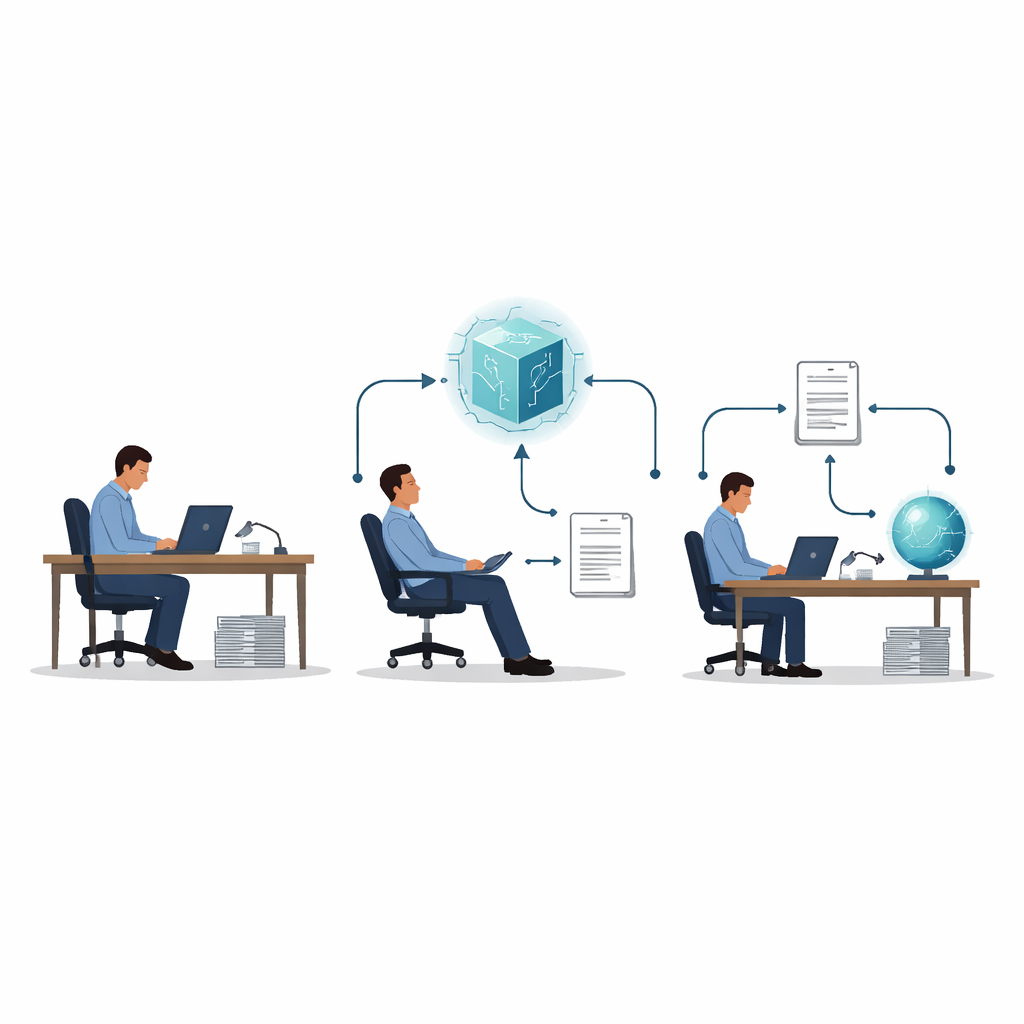
The researchers focused on a familiar kind of knowledge work: professional writing. They recruited working adults from roles such as consulting, data analysis, human resources, management, and marketing, and asked them to complete short, job-relevant writing tasks. Participants were randomly assigned to one of three approaches. One group wrote entirely on their own, with no AI at all. A second group simply copied and pasted AI-generated text into their assignment without changing it. A third group drafted the piece themselves first and then asked AI to improve or refine what they had already written. This setup let the researchers compare working solo, passively outsourcing work to AI, and actively collaborating with it.
What Happens to Confidence, Ownership, and Meaning
Right after the first task, the people who copied and pasted AI text felt noticeably worse on several key dimensions. They were less confident they could do similar work later without AI, felt less like the finished product really belonged to them, and rated the task as less meaningful than those who either worked alone or used AI only after writing their own draft. In contrast, those who started with their own writing and then turned to AI for help looked psychologically similar to the no-AI group: they still felt capable, connected to the outcome, and able to see the point of the work.
The Hidden After-Effects When AI Is Turned Off
The story became more striking when everyone was then asked to complete a second, similar writing task with no AI at all. For this follow-up task, those who had previously relied on copy-and-paste AI still felt less confident in their own abilities and saw the work as less meaningful than the other groups. Their sense of ownership, however, bounced back once they were again doing the work themselves. Enjoyment and satisfaction also flipped: while passive AI use had initially made the first task feel easier and more pleasant, the same people later enjoyed the manual task less and were less satisfied with what they produced, as if the earlier ease of AI had made normal effort feel heavier by comparison.
Beyond One Experiment: Patterns in Everyday Jobs
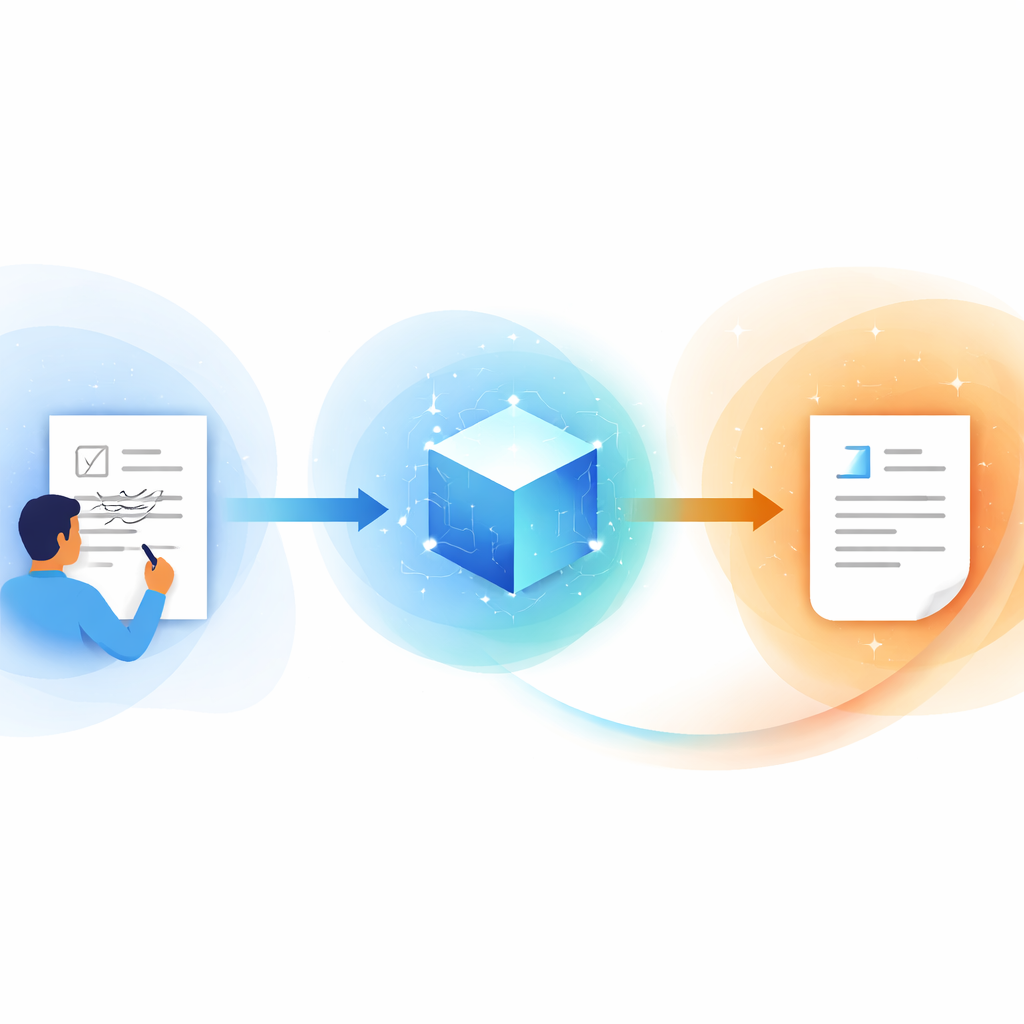
To see whether these patterns appear in real workplaces, the authors ran a separate survey of working adults who already use generative AI in their jobs. People reported how often they depend on AI to generate content with little change, and how often they treat AI as a helper that they edit and guide. Those who leaned heavily on AI in a passive way tended to feel less capable, less attached to their work results, and less satisfied with them overall. Those who actively collaborated with AI showed the opposite pattern, reporting higher confidence, a stronger sense that the work was truly theirs, and better satisfaction with outcomes. These trends held even when people imagined having to do their usual AI-assisted tasks without AI for a day.
What This Means for Our Future With AI
Taken together, the findings suggest that AI’s impact on work is not just about productivity, but about identity and motivation. When AI replaces our effort outright, it can quietly erode our belief in our own abilities and our sense that our work matters, even as it makes tasks easier in the moment. When AI is used as a partner that sharpens what we have already created, people keep feeling capable and connected to what they produce. For workers and organizations alike, the key message is that encouraging active collaboration with AI—rather than passive dependence—may help capture its speed and power without sacrificing the human need for competence, ownership, and meaning at work.
Citation: Lee, E.H., Yin, Y., Jia, N. et al. Relying on AI at work reduces self-efficacy, ownership, and meaning while active collaboration mitigates the effects. Sci Rep 16, 13583 (2026). https://doi.org/10.1038/s41598-026-42312-6
Keywords: workplace AI, self-efficacy, meaningful work, human-AI collaboration, automation and agency