Clear Sky Science · en
Hepatitis E virus in wild boar from Poland
Why a Hidden Forest Virus Matters
Most people think of hepatitis as a disease passed between humans, often linked to poor sanitation or travel. Yet in Europe, a different form—hepatitis E virus (HEV) genotype 3—can quietly move from wildlife to our dinner plates. This study looks at wild boars in Poland and shows how common HEV is in these animals, how it spreads in the landscape, and what that means for anyone who eats game meat or lives near growing wild boar populations.
Watching a Quiet Infection in the Wild
The researchers focused on free-ranging wild boars across 13 regions of Poland. Between early February and late July 2024, they collected blood from 367 animals and spleen tissue from 100 of them, most obtained after hunting or road accidents. Blood samples were tested for antibodies—signs that an animal had previously met the virus—while spleen samples were examined for viral genetic material, which signals an active or very recent infection. The team then linked these laboratory results to maps of local wildlife abundance, livestock numbers and wetlands to see which environmental factors might help the virus spread.
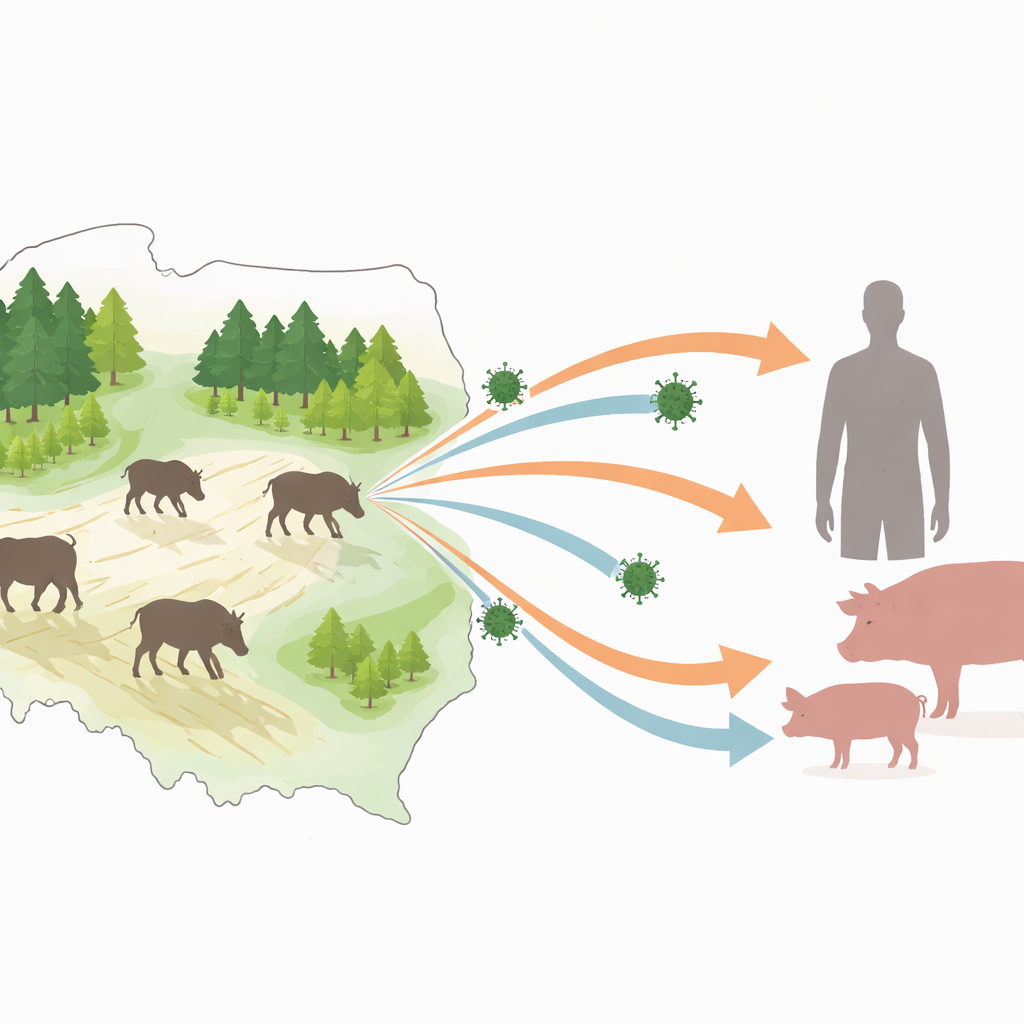
How the Virus Showed Up in Wild Boars
The findings reveal that HEV is far from rare in Polish forests. About 42% of the wild boars carried antibodies, meaning they had been exposed to the virus at some point in their lives. In the subset tested more deeply, one in ten animals had detectable HEV RNA in the spleen, indicating ongoing infection. Every RNA-positive boar also had antibodies, suggesting that many animals become infected and then continue roaming the countryside while still carrying the virus. These infected boars were not confined to a single hotspot but were scattered across several Polish regions, pointing to widespread circulation in the environment.
When More Boars Mean More Virus
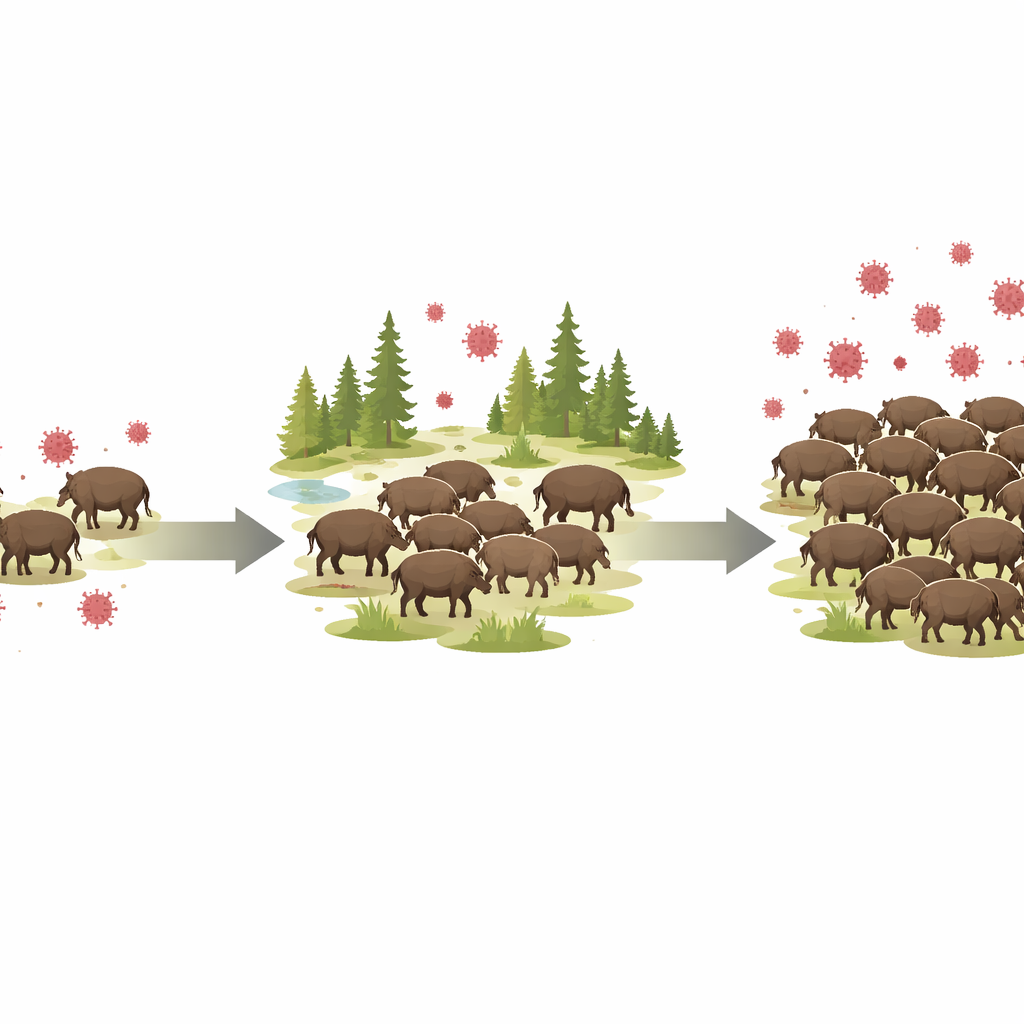
To understand what drives this infection, the authors used statistical models that considered local densities of wild boar, domestic pigs and deer, alongside landscape features such as water bodies and wetlands. Only one factor clearly stood out: how many wild boars lived in a given area. Where boars were denser on the ground, the chance that an individual had antibodies—and thus had encountered the virus—rose. Other potential influences, including pig farming intensity, the presence of other wild ungulates, and sex or age of the animals, did not significantly alter the infection odds. This pattern supports the idea that close contact and overlapping ranges among boars themselves are key to keeping HEV circulating.
Tracing Viral Relatives Across Europe
The team also sequenced short genetic fragments of the virus from five infected boars to find out which viral “families” were present. All belonged to HEV genotype 3, but they fell into two distinct groups. One cluster matched a subtype called HEV‑3c, already known from human and animal cases in countries such as the Netherlands, Germany and Belgium—and closely related to a human strain from the Netherlands. The other cluster formed an unclassified subtype, most similar to viruses previously found in wild boars in Italy and other parts of Europe. These links suggest that HEV strains move across borders with wildlife and possibly along food chains, underlining the importance of international surveillance.
What This Means for People and Food Safety
Taken together, the results confirm that wild boars act as an important natural reservoir of hepatitis E virus in Poland. Large portions of the population have encountered the virus, and some animals carry high amounts of HEV in their tissues while appearing healthy. Because wild boar meat is popular among hunters and consumers of game, and because boar territories can overlap with pig farms and human settlements, there is a real, if often overlooked, risk of the virus spilling over to people through direct contact or undercooked meat. The authors argue that HEV should be seen through a One Health lens—linking wildlife, livestock and human health—and that regular testing, public awareness and safe meat-handling practices are key to reducing this hidden but preventable infection risk.
Citation: Didkowska, A., Klich, D., Matusik, K. et al. Hepatitis E virus in wild boar from Poland. Sci Rep 16, 13100 (2026). https://doi.org/10.1038/s41598-026-42235-2
Keywords: hepatitis E virus, wild boar, zoonotic disease, game meat safety, One Health