Clear Sky Science · en
Impact of dietary replacement of soybean meal with high-protein wheat on gut microbial metabolism in chickens
Why This Chicken Feed Study Matters
Chicken is one of the world’s most popular meats, and much of it is produced using feed based on imported soybean meal. This creates economic and environmental concerns, especially in regions that grow plenty of grain but little soy. The study behind this article asks a simple but far-reaching question: can a special high‑protein wheat partly or fully replace soybean meal in broiler chicken diets without harming growth or gut health? The answer could help make poultry farming less dependent on soy and more aligned with local agriculture.
A New Type of Wheat in the Feed Trough
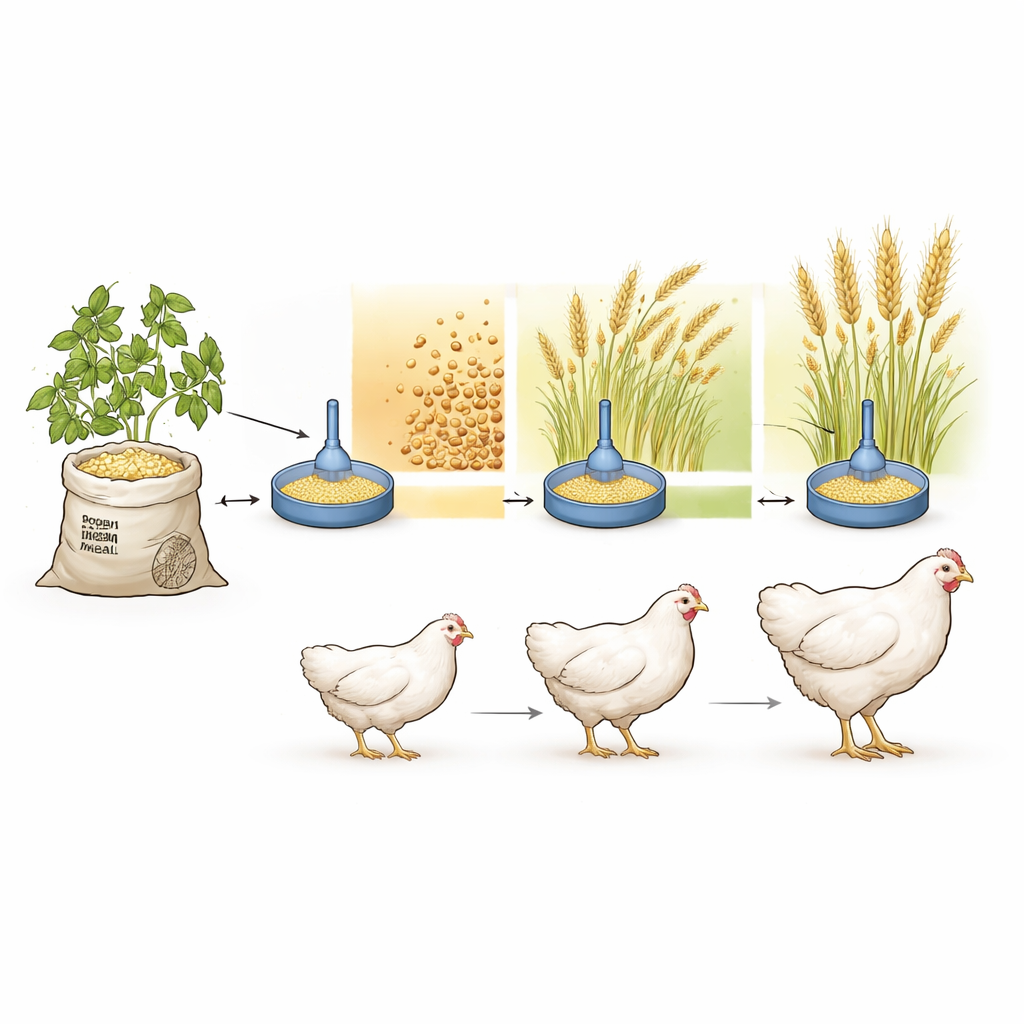
The researchers focused on a winter wheat cultivar called Activus, which has an unusually high protein content and a favorable mix of essential building‑block molecules for growth. They raised broiler chickens from one day old and split them into four groups. One group received a standard diet based on soybean meal and wheat, while the other three had 50%, 75%, or 100% of the soybean meal replaced by high‑protein wheat. To keep things fair, all diets were adjusted so that energy and key amino acids were similar, and the birds were reared under the same commercial‑style conditions.
Watching Bodies and Guts Grow
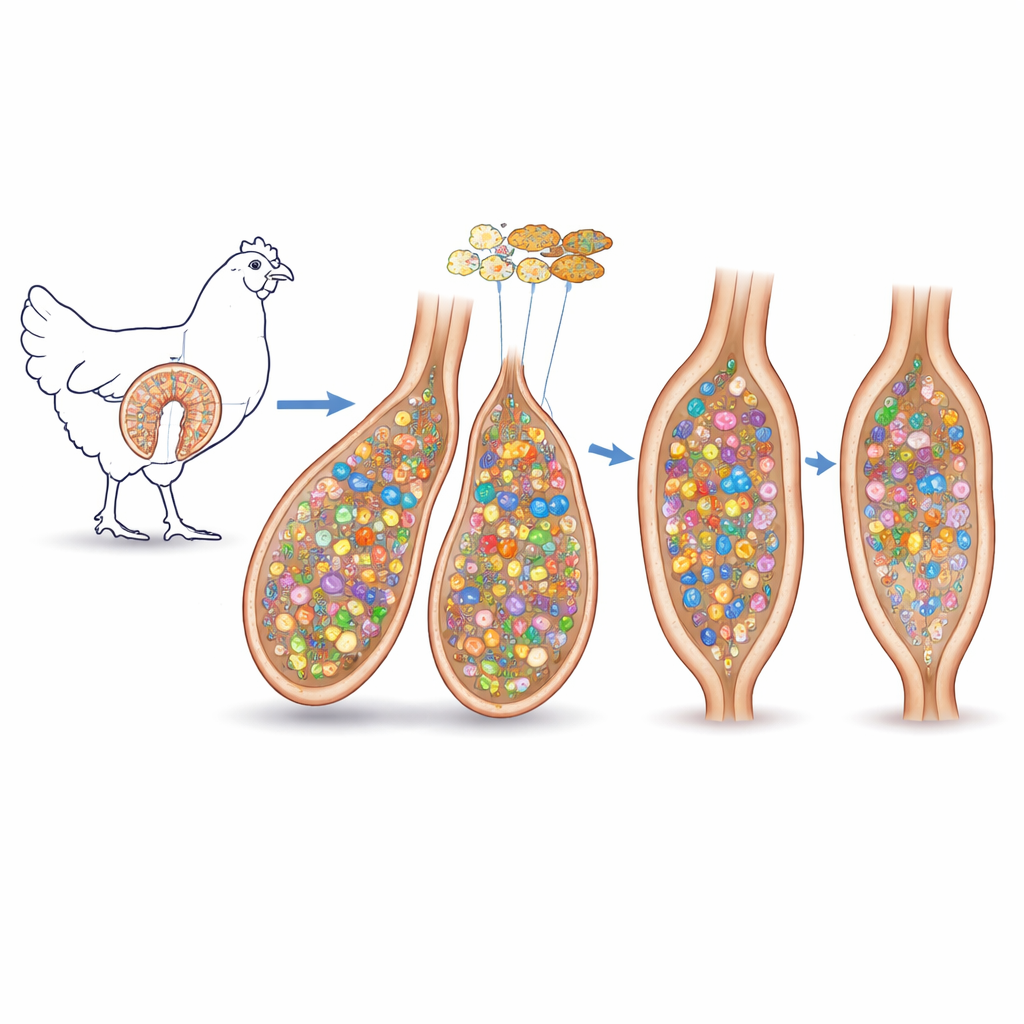
Over six weeks, the team tracked how quickly the birds gained weight and how their caeca developed. The caeca are two blind‑ended pouches branching off the intestine, where microbes break down leftover food and produce short‑chain fatty acids that the bird can use as extra fuel. Birds on the full wheat diet (100% soybean meal replacement) were consistently lighter than those on the standard diet, with body weight about half that of controls early on and still clearly lower at the end of the trial. Their caeca were also smaller and slower to develop, although still within a normal range for healthy birds. In contrast, birds whose feed contained 50% or 75% wheat in place of soybean meal started out a bit lighter, but by the final weeks the 50% group had essentially caught up in body weight and caecal size.
Microbes and Their Tiny Energy Packets
The scientists also examined the communities of bacteria in the small intestine and caeca, focusing on lactic acid bacteria such as Lactobacillus, as well as Escherichia coli and certain intestinal cocci. Lactic acid bacteria are generally seen as helpful partners in digestion, while E. coli and some cocci can cause disease if they become too numerous. In the small intestine, bacterial counts stayed relatively low and did not differ much between diets. In the caeca, however, bacterial numbers were far higher and more sensitive to diet. Young chicks on the full wheat diet had strikingly fewer lactic acid bacteria and other monitored microbes at two weeks of age, suggesting delayed colonization. By three and five weeks, those differences had largely disappeared. At the same time, the team measured short‑chain fatty acids produced in the caeca and found that total levels rose with age in all groups. The mix of these acids gradually shifted toward more propionate and less acetate in maturing birds, but this shift was slowest when soybean meal was fully replaced by wheat.
Testing the Gut in a Bottle
To separate the effects of the diet itself from the effects of slower bird development, the researchers ran a companion in vitro experiment. They took caecal contents from healthy older chickens fed a standard diet and incubated this microbial “starter” with different mixtures of soybean meal and high‑protein wheat in sealed bottles. In this controlled setting, wheat‑rich substrates actually led to equal or higher total short‑chain fatty acid production compared with soybean meal, and methane gas output did not differ between treatments. The balance of different acids also changed little across substrates. This suggests that, once the gut community is fully established, the microbes can handle high‑protein wheat well and even ferment it vigorously.
What the Findings Mean for Poultry Feed
Put together, the results show that a complete switch from soybean meal to high‑protein wheat slows early growth and delays the build‑up of beneficial microbes in young chickens, even though the birds remain healthy. By contrast, partially replacing soybean meal—especially at about 50%—delivers performance and gut fermentation patterns very similar to a standard soy‑based diet. The work suggests that high‑protein wheat can safely replace around half of the soybean meal in broiler diets, preferably starting after the third week of life, without harming gut health or growth. This offers a practical path for poultry producers to reduce reliance on imported soy while maintaining bird performance and keeping the delicate partnership between chickens and their gut microbes intact.
Citation: Miśta, D., Król, J., Pecka-Kiełb, E. et al. Impact of dietary replacement of soybean meal with high-protein wheat on gut microbial metabolism in chickens. Sci Rep 16, 12251 (2026). https://doi.org/10.1038/s41598-026-42098-7
Keywords: broiler nutrition, soybean meal alternatives, high-protein wheat, chicken gut microbiota, short-chain fatty acids