Clear Sky Science · en
The persistence of behavioral disparities post-pandemic: Insights from activity time series data
Why everyday movement still matters after COVID
The COVID-19 pandemic did more than make people sick; it changed how we moved through the world. Some people could stay home and work from laptops, while others had to keep showing up in person to keep society running. This study asks a simple but important question: once lockdowns ended and vaccines arrived, did those differences in everyday movement fade away—or did they leave a lasting mark on how different communities live and take risks?
Following people by following their phones
Instead of surveys or interviews, the researchers turned to an unobtrusive source: anonymized data from mobile phones. They tracked how often people from more than 30,000 neighborhoods in ten U.S. states visited five kinds of places: essentials like grocery stores, healthcare facilities, hotels and restaurants, office buildings, and entertainment spots such as cinemas and amusement parks. For each neighborhood, they built a week-by-week record of visits from early 2020 through spring 2022, and compared it to that area’s own 2019 "normal" levels.
Sorting neighborhoods into two hidden groups
Using time-series clustering—a way of grouping locations that move in similar ways over time—the team discovered that, in every state, neighborhoods consistently fell into just two broad behavioral groups. 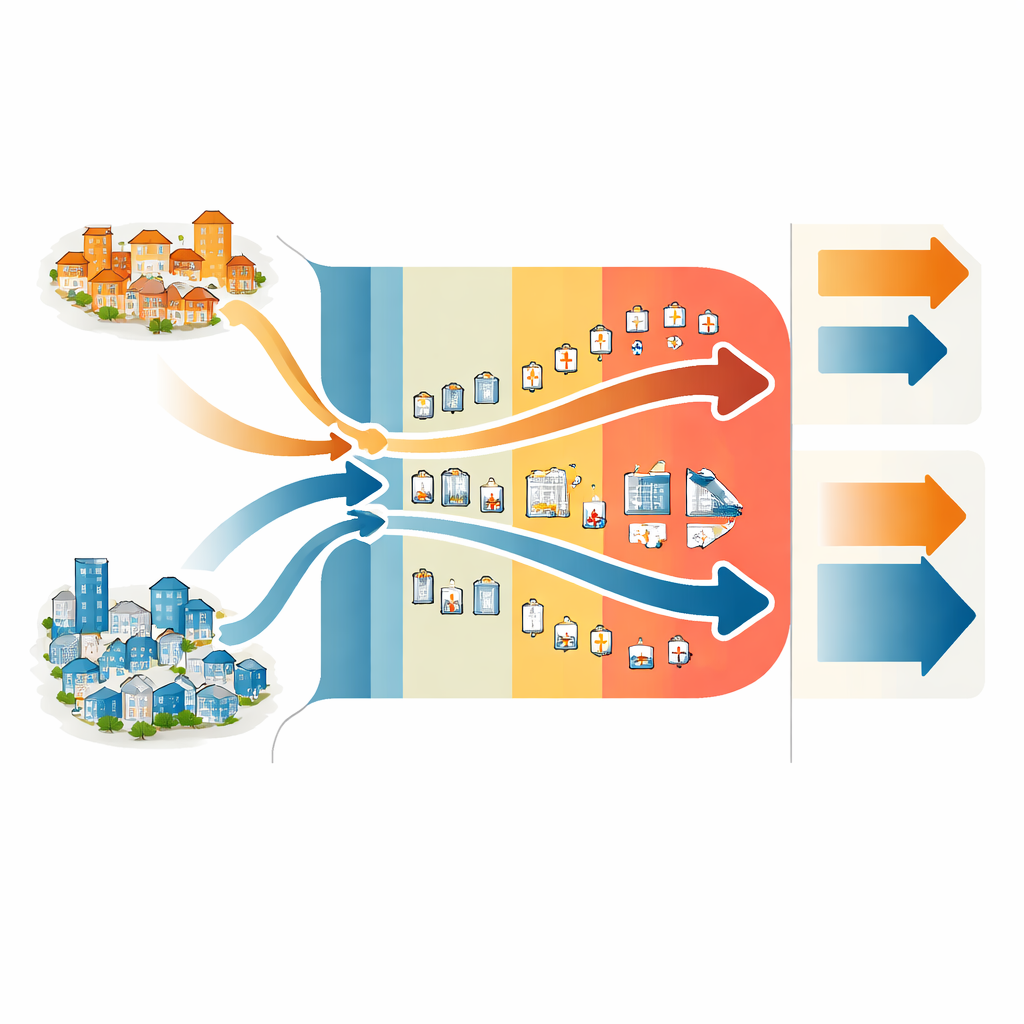
Who stayed out and who stayed in—then and later
During the first stay-at-home orders in early 2020, activity dropped sharply for everyone, especially for entertainment venues. Yet even in that quiet period, the more vulnerable neighborhoods remained more active across all destination types. This likely reflects the reality that many residents in these areas held essential, in-person jobs and had fewer options to work remotely or skip non-urgent trips. As restrictions eased, however, the picture flipped. Within a few months of reopening, the baseline group’s activity levels surpassed those of the vulnerable group in every category, and that gap widened over the Alpha, Delta, and Omicron waves. Entertainment visits eventually surged to well above pre-pandemic levels for both groups, while healthcare visits recovered the least, especially among vulnerable communities.
Risk, waves, and widening gaps
To see how behavior tracked with the virus itself, the researchers compared weekly changes in the gap between groups to changes in COVID-19 case growth. 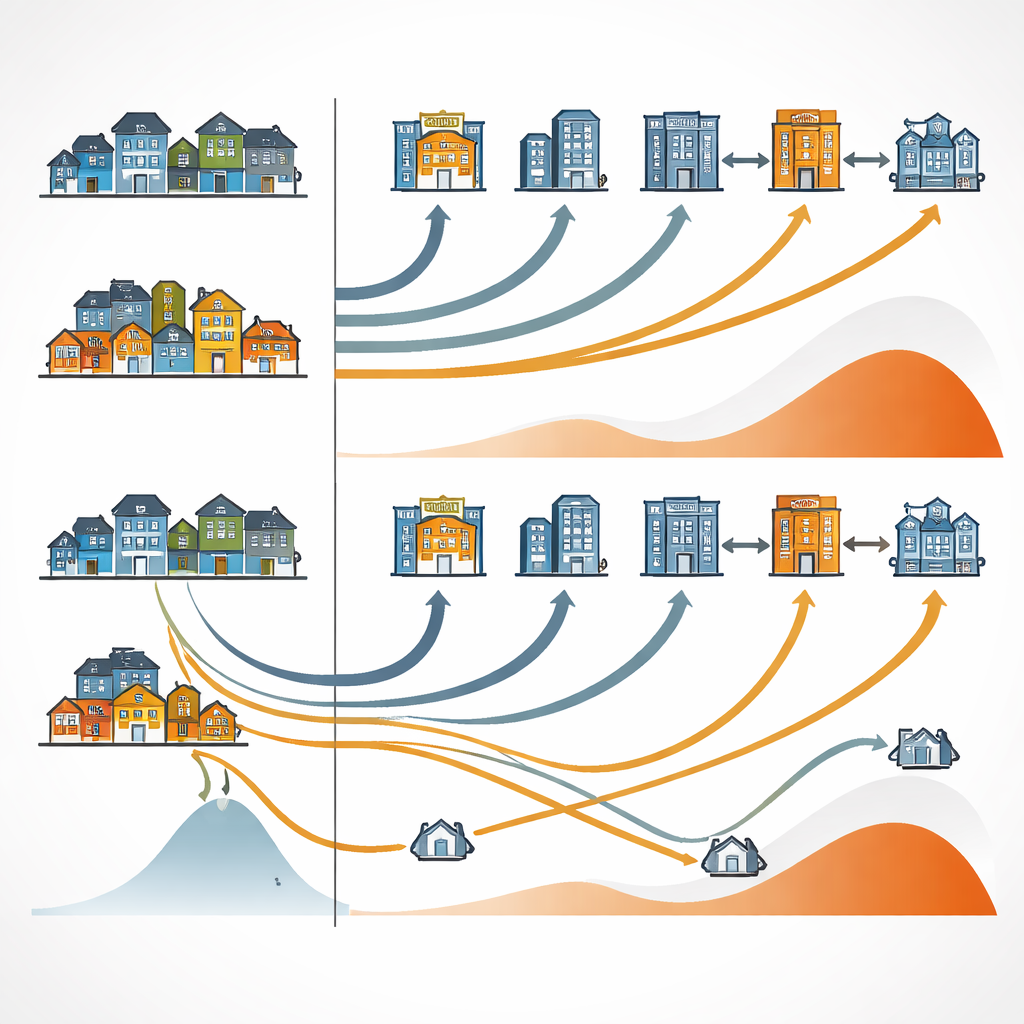
What this means for future public health planning
Put simply, the study shows that the pandemic did not just temporarily separate people into those who could stay home and those who could not. Over time, movement patterns settled into a new divide: more advantaged communities returned more fully to pre-pandemic routines, while vulnerable communities stayed relatively less active, especially when the virus was surging. These differences matter because they shape who bears ongoing social, economic, and emotional costs long after emergency measures end. The authors argue that future health crises will require more tailored strategies—such as targeted financial support, paid sick leave, and focused access to testing and vaccination—so that the burden of staying safe does not fall so heavily on those with the fewest resources.
Citation: Du, H., Xu, S., Rankin, N. et al. The persistence of behavioral disparities post-pandemic: Insights from activity time series data. Sci Rep 16, 12138 (2026). https://doi.org/10.1038/s41598-026-41553-9
Keywords: mobility data, socioeconomic disparities, COVID-19 behavior, public health inequity, pandemic adaptation