Clear Sky Science · en
Retinal BioAge is associated with indicators of cardiovascular-kidney-metabolic syndrome in UK and US populations
Why Your Eye Exam Might Reveal More Than Your Vision
Most of us think of an eye exam as a way to update our glasses prescription, but the back of the eye also offers a surprising window into overall health. This study explores whether a simple retinal photograph, analyzed by artificial intelligence, can estimate how fast a person is aging on the inside and flag hidden problems with the heart, kidneys, and metabolism—conditions that together drive much of the world’s serious illness and early death.
Looking at Aging Through the Back of the Eye
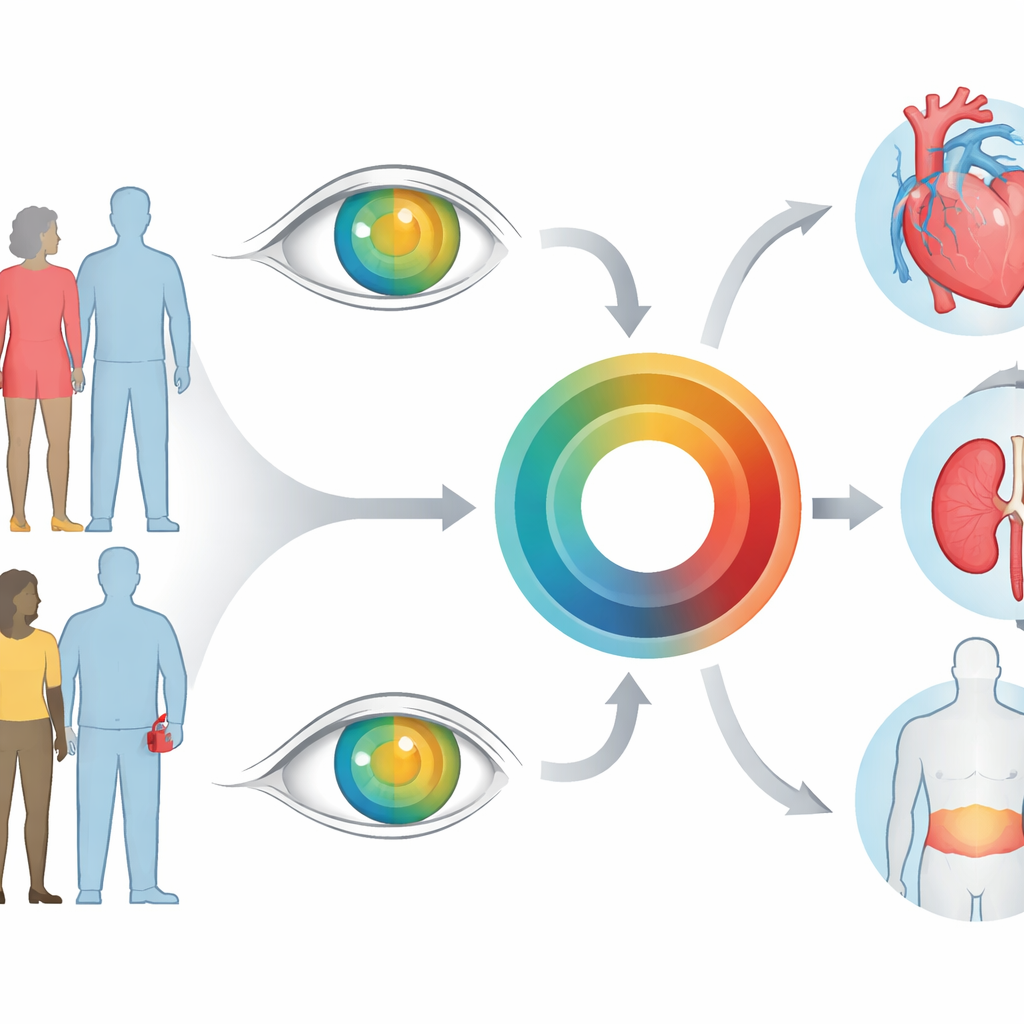
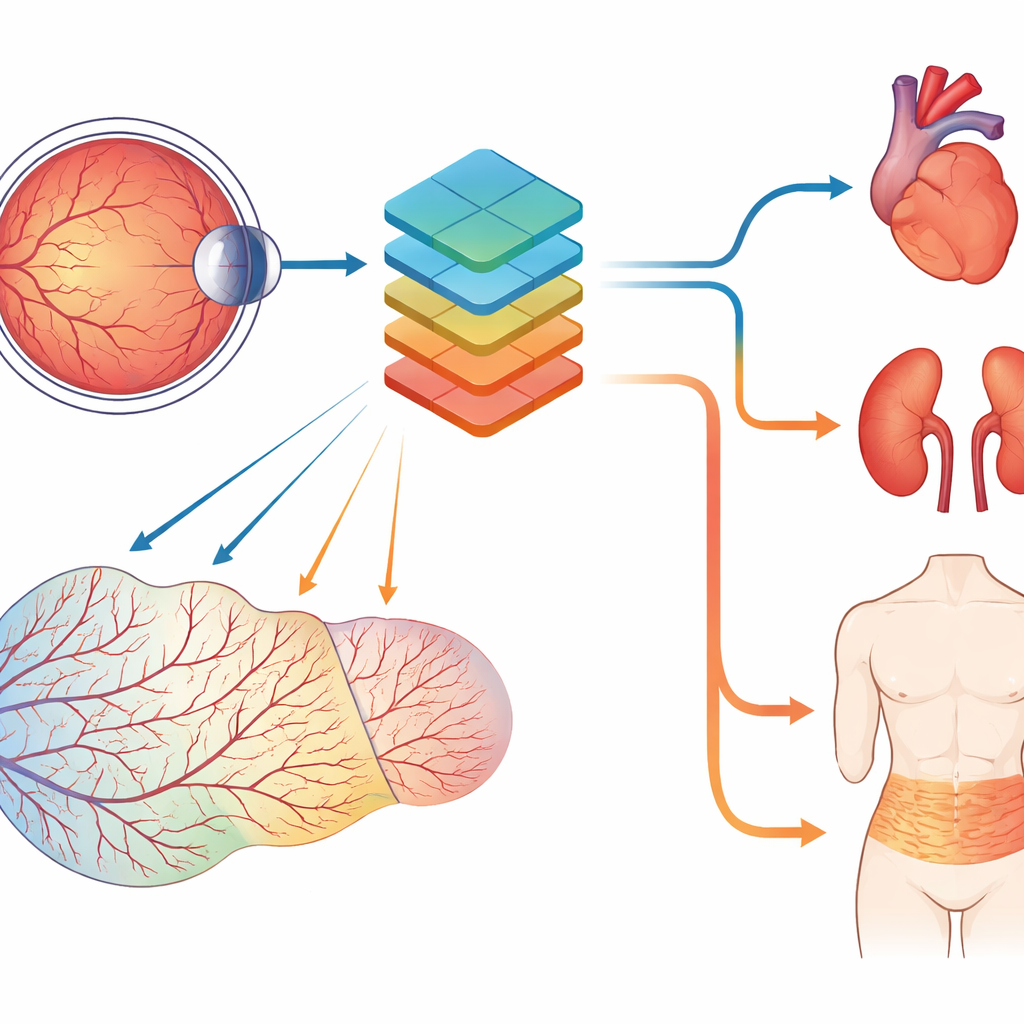
The retina is the only place in the body where doctors can directly see tiny blood vessels without surgery. Changes in these vessels are already used to spot damage from high blood pressure and diabetes. Building on this idea, the researchers developed a deep-learning system that reads subtle patterns in retinal images to estimate a person’s “retinal BioAge”—an age based not on birthdays but on how old their vascular system appears. They then compared this retinal BioAge with each person’s actual age to calculate a “BioAgeGap.” A positive gap means the eye looks older than the calendar suggests, hinting at accelerated biological aging.
Two Large Groups on Both Sides of the Atlantic
To test how this eye-based age measure relates to real-world health, the team turned to two major datasets. One came from the UK Biobank, a long-running research project following tens of thousands of generally middle-aged adults from the broader population. The second came from EyePACS, a United States program that screens people with diabetes for eye damage in community clinics. Altogether, the deep-learning model was trained on nearly 78,000 retinal images and then evaluated in more than 30,000 additional images from over 15,000 individuals between 41 and 70 years old.
Older-Looking Eyes, Tougher Health Profiles
In both groups, people whose retinas looked older than their actual age tended to have less favorable measurements tied to heart, kidney, and metabolic health. In the UK Biobank sample, those in the highest quarter of BioAgeGap had higher blood pressure, stiffer arteries, higher blood sugar, higher body weight, and larger waistlines than those in the lowest quarter, even after accounting for age. They were more likely to have diagnosed hypertension, kidney disease, obesity, and diabetes. In the EyePACS group, where everyone already had diabetes, individuals with older-appearing retinas showed higher blood pressure, worse blood sugar control, poorer kidney function, and much more frequent diabetic eye disease. Across both datasets, a larger BioAgeGap lined up with a heavier burden of cardiovascular-kidney-metabolic problems.
What the Differences Between Groups Tell Us
The two study populations differed sharply: the UK cohort was largely white, with relatively low rates of diabetes and kidney disease, while the US EyePACS cohort consisted entirely of people with diabetes, most of whom were Hispanic or Latino and many of whom had advanced disease. These contrasts helped the researchers probe how broadly the retinal BioAge signal applies. While a higher BioAgeGap almost always tracked with worse markers of heart, kidney, and metabolic health, there were some twists—for example, in the EyePACS cohort, people with older-appearing retinas sometimes had lower body mass index, possibly reflecting weight loss from long-standing illness. The authors emphasize that their work is based on one-time measurements, so they cannot yet say whether an older retinal age causes disease or simply travels alongside it.
What This Could Mean for Everyday Care
For non-specialists, the key message is that a quick, painless photograph of the back of the eye—something already done millions of times a year—could double as an early-warning scan for hidden cardiometabolic trouble. The study suggests that when an AI system judges the retina to look “older” than expected, that person is more likely to harbor high blood pressure, kidney strain, poor blood sugar control, or excess body fat, all of which raise the risk of heart attack, stroke, and kidney failure. While more research is needed to confirm that retinal BioAge can predict future events, this approach could one day help clinicians pick out patients who would benefit from more thorough testing and earlier lifestyle or medication-based interventions.
Citation: Squirrell, D., Nielsen, C., Vaghefi, E. et al. Retinal BioAge is associated with indicators of cardiovascular-kidney-metabolic syndrome in UK and US populations. Sci Rep 16, 10445 (2026). https://doi.org/10.1038/s41598-026-41465-8
Keywords: retinal imaging, biological aging, cardiometabolic health, artificial intelligence, diabetic retinopathy